I start my mornings early, but my problems with technology begin even sooner. Sometimes, I open and close my laptop and restart it because I cannot get the internet to cooperate with me. I run to restart the router. Luckily, I get on my cellphone to finish my call to my Chair. The baby is now crying, and usually I would want to cry too. But this is something I am used to, and I’m too busy taking notes to fall apart mentally.
I am in the final year of my dissertation, focusing on Hispanic students at Hispanic-Serving Institutions. I’m fascinated by the Digital Divide Theory and its impact on marginalized students seeking technology access, user ability (digital literacy), and their perceptions of online course success. Pursuing my doctoral degree is a distinctive milestone and an assurance to give back to my community through knowledge and awareness. That, in itself, is both my end goal and my path to happiness.
On paper, this is research. In my heart, it’s personal.
As a first-generation Hispanic college student, first-time mother, and communications professional, I have overcome challenges in health, identity, and access. I still struggle with my health as my ulcerative colitis progresses. But I persist.
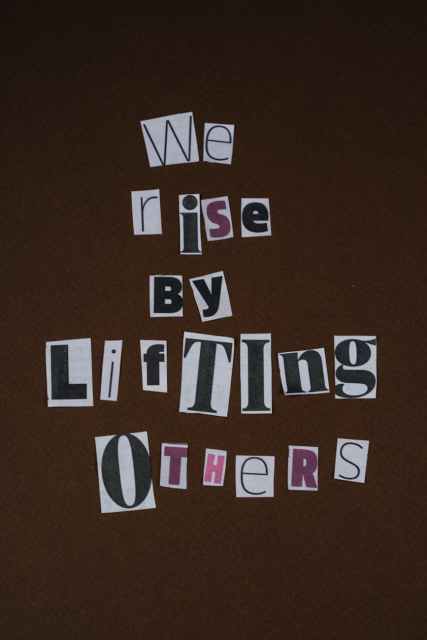
Now, ten months postpartum, I am more motivated than ever to finish my degree, for myself and my son. I want him to see what it looks like to keep going, even when the light at the end of the tunnel is too faint to make out. I want him to grow up knowing that knowledge is indispensable, education is power, and lifting others is a part of our purpose. These are key to an inevitable path to happiness.
I took time off after my C-section to recover physically and mentally, navigating postpartum depression without the safety net of paid leave. As a self-employed communications consultant, there was no paycheck waiting for me, no HR department checking in. Recovery happened in between diaper changes, dissertation edits, and client calls.
I’ve gone the extra mile to manage recovery, parenting, and doctoral coursework, but like many women, especially women of color, I have done it quietly while balancing family life. I do not always have childcare readily available. I have health conditions that need monitoring, like my colitis and my asthma, which result in more routine doctor appointments than most at my age.
My son accompanies me to appointments sometimes, and he enjoys chatting on the phone when I talk to my Chair, as if he already understands the importance of what I’m working toward. He is a good sport about it, and he loves to try to grab my fountain pens and “help” me type.
I often feel empowered knowing I can be a mom, a writer, a consultant, and a student working on a degree that is statistically difficult to achieve. I am among the 16.7 percent of Hispanic students who earn doctorates, and 2.6 percent of disabled students who earn a doctorate in education.
I know what it’s like to feel unseen in academic spaces, as if the systems around you weren’t built with you in mind. I aim to use this research to inform institutional practices that are more inclusive, accessible, and supportive of students from all walks of life.
This process has shaped me in ways I never imagined. It has made me more empathetic, resilient, and undoubtedly sure that the work I am doing matters, not just for me or my son, but for many others who deserve to thrive in higher education.
I’ve been the student who couldn’t rely on her Wi-Fi or cell signal, but I always found a way to make things work. Some people are more disadvantaged and are unable to do the same. I’ve learned what equity means when you’re living it, not just researching it.
My career goals are founded in service. I aim to utilize my research, writing, and strategic communication skills to influence policy, guide institutions, and champion the voices of historically underrepresented groups through education. I believe deeply in the power of storytelling, not only as a former journalist but as someone who has seen how narratives can shape access to opportunity.
This journey has not been easy, but it has been transformative. My experiences are woven into every part of who I am. It has reminded me that you can still take the next step forward even when you’re exhausted, overwhelmed, or unsure. And those steps matter.
Technological convergence is daunting; something that many are unable to understand with the exacerbating gap separating the wealthy from those in poverty. And I’m not the only one struggling with the digital divide. The divide is vast like a black hole, swallowing up knowledge faster than it flies in.
Let’s acknowledge some facts regarding obstacles to equity.
Seventy-three percent of students find that lack of support from their educators remains a significant barrier to their success in online courses. This statistic indicates a crucial gap in the education system. It’s challenging to pinpoint a single strategy that can effectively adapt to public education, especially in this political climate.
However, one strategy can come into play more than others. That approach is rooted in servant leadership, which sits at the intersection of transformational and authentic leadership.
Servant leadership is my favorite leadership style. Servant leadership is a powerful, emerging strategy in education that ensures that all students, particularly those from underserved communities, are supported to thrive. Unlike traditional top-down leadership models (transactional), servant leadership flips the script completely by focusing on empowering others, listening to their needs, and prioritizing their well-being.
It can be a game-changer for students facing barriers like the digital divide. And the digital divide is only going to become bigger as technological convergence evolves.
What Is Servant Leadership? Servant leadership, a philosophy coined by Robert K. Greenleaf, emphasizes that leaders should prioritize serving those they lead (Greenleaf, 1970). Rather than focusing on personal power or recognition, a servant leader’s primary goal is to support others in their growth, development, and success.
Greenleaf found that a servant leader has a social responsibility to be concerned about the marginalized and those less privileged. If inequalities and social injustices exist, a servant leader tries to remove them (Graham, 1991).
A leader uses less institutional power and control while shifting authority to those being led in becoming a servant leader. Servant leadership values a community of care (CoC) because it provides a face-to-face opportunity for individuals to experience interdependence, respect, trust, and growth (Greenleaf, 1970)
This leadership style creates an environment where everyone can succeed by embracing principles of empathy, active listening, and shared responsibility. According to Northouse’s book on Leadership Theories (2021), “conceptualizing refers to the capacity that gives leaders the ability to browse through a multitude of problems without any creative downfalls on them or the team” (p. 261).
Adopting the servant leadership mindset can significantly improve student outcomes, particularly for those facing technology-related challenges. It’s well-documented that hyper-urban and rural areas often remain disconnected due to systemic discrimination, which limits access to essential resources (Cabral, 2018).
Wang et al. found that exploring cultural elements happens when confronting and surpassing them through social and technological influence (Wang et al., 2014). Wang also found that political issues contribute to cultural norms (Wang et al., 2014).
For example, as pointed out, a system of expectations surrounding societal organizational culture provides a standard of behavior for employees, providing a reason for leadership Behavior; thus, a relationship between “authenticity, morality, and organizational cultures aligns accordingly” (Schein, 1985)
Scholars like Greene and Murphy (2021) argue that many of these technological barriers stem from unstable or inadequate access. However, some researchers, including Kersch and Lesley (2019), suggest that these gaps in education could be mitigated through curricular changes designed to support students navigating these challenges better.
The Connection Between Servant Leadership and the Digital Divide: There are many ramifications of the digital divide beyond access to technology. Support systems are needed to help students succeed in a digital world. Students from low-income backgrounds, particularly Hispanic and first-generation students, are often left behind because they don’t have the resources or guidance to navigate online learning environments successfully.
A servant leader in education doesn’t just stand at the front of the class or set policies from a distance; they listen to students’ concerns, offer guidance, and create spaces for growth.
Assuring all students have access to the tools they need to succeed and listening to their voices when challenges arise is one of the most salient parts of the process. Servant leaders can close the gap between technology and students by providing support and encouragement.
How Servant Leadership Transforms the Learning Experience:
Empathy Over Authority: Servant leaders approach education with empathy, understanding that each student has different obstacles to overcome. When students lack reliable internet or digital skills, empathy can translate into providing tangible solutions, whether it’s offering free access to tech resources or setting up one-on-one tech support sessions.
Listening to Student Needs: Listening is a core aspect of servant leadership. Leaders in education must listen to the voices of students to understand their experiences with the digital divide. Servant leaders act on what they hear, making sure that students feel supported, whether it’s survey data or direct feedback.
Creating a Community of Care: Servant leadership creates an environment that is safe and inclusive. Education starts with building a CoC where students feel valued and connected to their peers and to the technology that enables their success. This can be especially salient for Hispanic students attending Hispanic-Serving Institutions, where there may be a heightened sense of belonging when technology challenges are met with collaborative solutions.
Practical Steps for Implementing Servant Leadership in Education:
Provide Personalized Tech Support: Offering tutoring or assistance in navigating digital platforms ensures that students can fully engage with their courses, especially those without prior experience.
Collaborate with Students: Work with students to co-create solutions that address their digital struggles, from organizing community-driven tech drives to connecting them with local tech support services.
Mentorship and Advocacy: Serve as a mentor and advocate, not just for academic success, but for students’ digital fluency and access to technology. Ensure that all students have equal opportunities to succeed by advocating for policies that support digital equity.
As a result, the digital divide isn’t an insurmountable mountain. An increasingly digital world can be made more successful by educators and institutions adopting servant leadership principles.
Similarly, empirical studies have shown that when educators matched servant leadership with followers who desired it, this type of leadership had a positive impact on performance and organizational citizenship behavior (Meuser et al., 2011; Otero-Neira et al., 2016; Ozyilmaz & Cicek, 2015).
In doing so, we can create a future where technology serves as a tool for inclusion and opportunity, rather than a barrier to achievement. It’s not about how hard it is to climb the mountain; it’s about the run back down. The digital divide is something we have to learn to live with, and awareness in education equals awareness in the workplace. Vital progress of pedagogy starts in the praxis.
References
Carbajal, Jose (2018). “Patriarchal Culture’s Influence on Women’s Leadership Ascendancy,” The Journal of Faith, Education, and Community: Vol. 2: Iss. 1, Article 1. Available at: https://scholarworks.sfasu.edu/jfec/vol2/iss1/1
Graham, J. W. (1991). Servant leadership in organizations: Inspirational and moral.
Leadership Quarterly, 2, 105-119.
Greenleaf, R. K. (1970). The servant as leader. Westfield, IN: Greenleaf Center for Servant Leadership.
Hu, J., & Liden, R. C. (2011). Antecedents of team potency and effectiveness:
Examining goal and process clarity and servant leadership, Journal of Applied Psychology, 96(4), 851-862.
Schein, E. H. (1985). Organizational culture and leadership, by Edgar H. Schein. san … – JSTOR. JSTOR. Retrieved February 26, 2023, from https://www.jstor.org/stable/258322
Being a leader in education doesn’t often come with a personal handbook. Or if it does, it’s outdated; ill-equipped for the complexities of 21st-century classrooms and communities. As we continue to confront widening disparities in educational access, especially in the wake of the COVID-19 pandemic, one truth becomes clear: effective leadership isn’t just about policies or protocols. It’s about people, and the ability to lead with empathy, community, and transformation in mind.
Leadership in the Age of Digital Learning
The pandemic redefined what it means to teach and learn. As online learning became the norm, issues like internet accessibility rose to the surface, especially in rural and low-income areas where connectivity is often limited or unreliable. But beyond technology gaps, we also saw cracks in leadership communication, especially between administrators and educators.
Outdated systems, hierarchical thinking, and transactional leadership styles have created barriers that make it difficult for teachers and students to advocate for their needs. These gaps in communication are more than logistical—they’re structural. They reflect a need for new leadership paradigms that meet today’s challenges with empathy, collaboration, and innovation.
Instructional Leadership and the 21st Century Classroom
In a 1999 study of over 800 U.S. teachers, researchers found that educators’ expectations of leadership often clashed with the realities of administration. More recently, the Journal of Organizational and Educational Leadership reaffirmed the belief that school outcomes are closely tied to leadership effectiveness. The takeaway? Instructional leadership must go hand-in-hand with technological transformation and digital literacy.
Teachers need leaders who do more than manage: they need leaders who listen, collaborate, and help create space for professional reflection and growth. These are the hallmarks of transformational leadership, as opposed to transactional leadership, which focuses more on compliance, control, and routine.
Transformational vs. Servant Leadership: A Needed Blend
According to Hu & Linden (2011), transformational leadership builds confidence and work advocacy, but it’s servant leadership—with its focus on selflessness and empathy—that enhances both satisfaction and effectiveness in teams. When combined, these leadership approaches foster a culture of trust, transparency, and empowerment across all levels of education.
As Peter G. Northouse (2021) notes, leadership rooted in empathy and community connection is essential for long-term cultural change. It empowers teachers, administrative staff, and students, particularly those from marginalized backgrounds, who go on to shape the American workforce.
Creating Lifelong Learners and Leaders
Leadership in education isn’t just about student test scores or teacher evaluations. It’s about nurturing lifelong skills like digital literacy, critical thinking, and emotional intelligence. And it’s about ensuring every stakeholder, especially those in underserved communities, has equitable access to the tools and support they need to succeed.
The literature shows a clear need for stronger communication between principals and teachers. When leaders and educators collaborate toward shared goals of inclusivity and equity, they create ripple effects that extend far beyond the classroom.
DEI and the Need for Cultural Change
Diversity, equity, and inclusion (DEI) aren’t just buzzwords. They’re essential frameworks for reshaping a system that has historically privileged transactional over transformative leadership.
Transformative, adaptive leadership aligned with DEI principles is especially urgent in a post-pandemic world where disparity gaps have widened. While DEI work remains underdeveloped in many educational settings, it offers a path forward; one grounded in soft skills, compassion, and the recognition that authentic leadership starts with human connection.
Final Thoughts
To move toward a more inclusive and effective educational system, we need more than curriculum updates or policy changes. We need leaders who understand that communication, empathy, and community are the foundations of success, not just for students, but for educators and administrators alike.
As we reevaluate the leadership values necessary for the future, one thing is clear: no relationship in education can remain purely transactional. Leadership must mean something. And it must start with listening.
Exploring the Impact of Technology Access on the Educational Success of Disabled Latino Students in Community Colleges
May 10, 2024
ABSTRACT
Southern California’s Hispanic and Latino population is among the most highly enrolled in college institutions, partially due to their involvement in Hispanic-serving duties (Tagami & Reagan, 2022). However, graduating, especially when a disability is involved, is not often discussed (Tagami & Reagan, 2022). This conference proposal addresses the exceptional progress in educational disparity experienced by disabled Latino students in community colleges, with a primary focus on the profound impact of digital media. Incorporating theoretical insights from critical scholars such as Jean Baudrillard, Laurence Tamatea, Michel Foucault, Tom Shakespeare, and David Harvey, this research examines the delicate balance of access to technology, disability, ethnicity, and academic outcomes within the framework of community colleges in the contemporary postmodern era. The disabled community benefits from online educational communities through videos, language, and discussion (Narciso Jr., 2023). This study aims to explore how disabled Latino students navigate the digitally mediated educational environment, drawing on Baudrillard’s analysis of hyperreality and Harvey’s examination of globalization. Simulated environments and global reciprocity influence this era, which remains characterized by images. Understanding the benefits of this demographic in utilizing and accessing technology is crucial.
The research question of this study concerns how digital media in the classroom positively impacts the educational success of Latino students with disabilities in community colleges. Some ways include flexible classwork, online educational digital media, and finding community through discussion boards and online classes (Narciso Jr., 2023). This pivotal research question on the ubiquity of digital media seeks to explore the intersectionality of technology access, disability, ethnicity, and higher education outcomes within the context of community colleges. As researchers delve further into artificial intelligence, it is more crucial than ever to investigate the ongoing impact of technology on educational success. The research question aims to explore how access to technology can facilitate remarkable educational success for disabled Latino students, particularly in the postmodern era characterized by hyperreality, simulations, and the proliferation of digital media. By examining the impact of digital media on an online community of education, one can see the benefits for community college students. The frameworks of Jean Baudrillard’s hyperreality and David Harvey’s globalization provide a comprehensive understanding of the implications of these phenomena on the educational experiences of disabled Latino students.
There are strategies and interventions that community colleges can implement to bridge the digital divide and significantly enhance the educational success of Latino students with disabilities within the context of postmodern social, economic, and technological dynamics. If effectively implemented, these strategies can offer a brighter future for these students and improve their educational outcomes. This study will employ a qualitative methodology, focusing on small cluster groups to interview students about how online coursework has changed their perception of schooling since the advent of online education. The study could include an end-of-year survey, in addition to interviews, to understand how the online course benefited the students. Other methods include mixed methods, utilizing an instrument to understand the GPA of students who enroll in online classes, primarily using digital media to teach their students.
The digital divide uniquely manifests among disabled Latino students in community colleges. They harbor specific upsides in accessing and utilizing technology for educational purposes. Jean Baudrillard’s theories of simulacra and simulations apply to the digital experiences of disabled Latino students, influencing their engagement with academic content and digital media. Hyperreality and hyperrealism refer to Baudrillard’s concept of living in a technological simulation, unlike nature (Baudrillard, 1994). With so much hyperreality and hyperrealism existing in our modern world, it is clear that there is a crisis of representation where traditional forms of knowledge, authority, and truth remain in question, and that crisis manifests itself according to Harvey in various domains, such as art, literature, and politics (2008). However, through the crisis, there is a light at the end of the tunnel. An analysis of interviews will reveal the conditions of postmodernity, as described by David Harvey (2008), that influence the educational experiences and opportunities available to disabled Latino students in community colleges, particularly in terms of globalization, consumerism, and cultural fragmentation. Community colleges bypass the problems of postmodernity and utilize them to their advantage, pushing forward certificate completion and two-year degree programs at the student’s pace (Tagami & Reagan, 2022; Narciso Jr., 2023).
There are two theoretical concepts that Baudrillard and Foucault have based on social truths, representing state-sanctioned knowledge and individually, self-selected valued knowledge (Foucault, 1972, 1981; Baudrillard, 1994). Some studies raise one fundamental question, such as Tamatea’s compulsory coding and education (2019). The question to consider in this study is whether we are becoming more like machines or machines are becoming more like humans. With the rise of artificial intelligence and technological advances in education and the media, Baudrillard wrote that the vast influence of digital competency was tangible (1994). However, the study aims to challenge the downsides Baudrillard felt were probable in his analysis of simulacra. Tamatea’s ‘yes theory’ points towards technological success in early schooling through coding, a way of simulation by machine (2019). Community college success remains significant to specific theories that consider this framework. The research question and its subsequent sub-genres aim to make a unique contribution to the broader discourse on educational equity, access to technology, and social justice. By drawing insights from Baudrillard and Harvey, we aim to comprehend the complexities of contemporary digital media proliferation, particularly in the form of online communities, highlighting the urgency of the issue and the necessity for ongoing action. Furthermore, it aims to highlight the strategies and interventions employed by these institutions to continue bridging the digital divide and promoting educational equity.
Introduction
This research paper aims to shed light on the composite directions at play, contributing to the discourse on inclusive education, informing policy and practice to foster digital inclusivity, and gathering data on educational outcomes for disabled Latino students in community colleges. There is an intricate web of individual and environmental factors in the lives of disabled people, along with marginalized groups. When one adds more of a marginalized community to that fact, it becomes so much more of a topic to discuss, and social models for disabilities are often separate (Shakespeare, 2010). Minorities’ issues cannot undergo naivety, however. It creates a slightly different topic because it is a universal experience shared by all humanity. The world as it is currently known is defined by what Jean Baudrillard calls “Simulacra and Simulation.” While Baudrillard considered hyperrealism a detriment to society and globalization, there are strengths in digital educational communities (1994). The way education looks today is shaped by technology, moving beyond technological convergence and addressing the digital divide. Unfortunately, marginalized communities will be the most affected by this digital divide and will likely find the most success in technological use as a result. Simulacra is especially important in combating the digital divide and promoting educational success among community college students. Understanding how the digital community helps students is one of the main questions to ask during a qualitative study.
Literature Review
The proposed qualitative study challenges the concepts of meaning and truth, making it clear that individuals must possess the literacy necessary to see through traditional notions of meaning and truth. In a world dominated by simulacra, meaning becomes arbitrary, and truth becomes relative. However, communities can come together to determine what is accurate, truthful, and not. David Harvey’s “Condition of Postmodernity” focuses on cultural fragmentation and how traditional structures and identities are stabilized (2008). Cultural fragmentation refers to the combination of multiple cultures rather than maintaining many separate versions, which often occurs in digital communities. Various aspects of society are reflected through culture, economics, and politics, indicating instability and fluidity behind identities and their meanings, which is further exacerbated by the proliferation of media, consumer culture, and globalization. Hispanic and Latino students in many counties across California make up most enrolled students completing their academic careers (Tagami & Regan, 2022). However, many do that part-time through a community college (Johnson, 2016). When researchers add the disabled community, it becomes apparent that this is even harder to achieve, especially when disabled people are not a community that defines itself through culture, gender, or race. Theoretically, individuals in college or community college may have a different viewpoint and success rates due to the use of hyperrealism and its impact on the conditions of postmodernity’s cultural fragmentation and globalization. In Baudrillard’s “Simulacra and Simulation,” it is clear that there are four orders of simulation, defined by hyperreality. The death of the real and simulacra serves as a control mechanism, contributing to the critique of postmodern society (1994).
Theoretical Framework and Methodology
According to Tom Shakespeare, people with disabilities come from an oppressed viewpoint. A social model is proof of that, and it is logically impossible for a qualitative researcher to find disabled people who are not facing oppression, meaning that all marginalized communities have the disabled community within them, meaning that they are within and without accommodations universally because all disabilities are different (Shakespeare, 2010). Therefore, while a college can cater to the Hispanic community, they are not going to necessarily cater to the disabled community, creating a world that has a lack of free space. Only “barrier-free enclaves are possible,” which community college creates through the ease of digital courses. Researchers indicate that most accommodations occur at the community college level (Narciso Jr., 2023). This universal experience of humanity is shaped by the role of globalization in postmodernity. As Harvey argues, capitalism and its endless expansion and accumulation drive spatial and temporal restructuring processes that underpin the postmodern condition (2008). The restructuring process is evident through the expansion of the World Wide Web and the ability to connect with others who are not physically nearby. When one ties this in with Baudrillard’s concepts and framework behind hyperreality, it becomes clear that the significance of urbanization and the built environment helps individuals understand postmodernity and how there are focal points for the concentration of capital, culture, and power (Harvey, 2008; Baudrillard, 1995). How we view those things through digital media is significant for qualitative discussion. Capital culture and power find themselves through the digital connection of others and the sharing of capital experiences.
Conclusion
Therefore, the emergence and development of AI have accelerated the Age of Reason through the digital community. With the rise of online courses, educational digital media, including video content, online meetings, and discussions, are beneficial for student success at the community college level. As the work is decades old, being able to relate simulacra (simulation) to digital abstraction was an unintended beneficial consequence for individuals and society (Baudrillard, 1994). Digitalization’s existential status unknowingly brought educational ubiquity to the table. Ultimately, hyperrealism influences what people see and know, as well as how nature is perceived versus what the media wants us to see. However, it also creates an even digital playing field, where students can be part of a community while living their personal lives outside of school. Students should be able to distinguish between what it means to be digitally literate and what it does not. Baudrillard relates to David Harvey’s study of the “Condition of Postmodernity” because Harvey states there has been a change in cultural and political-economic practices since 1972 (Harvey, 2008; Baudrillard, 1994).
Furthermore, there are differences in communication, as well as the complexity and nuances of the industries of interest and the cultures. Consider a digital Plato‘s Cave, where reality is discernible through a digital shadow; therefore, Baudrillard notes, “Why speak when we can communicate” (1995). Their place in the simulacra brought them in contact with modernist theories and narratives. The success of community college students remains enhanced through communication technology.
References
Baudrillard, J. (1994). Simulacra and Simulation. Ann Arbor. University of Michigan Press.
Baudrillard, J. (1995). Simulacra and simulation. In Body, in theory: Histories of cultural materialism. University of Michigan Press.
Foucault, M. (1972). The archaeology of knowledge and the discourse on language. Translated by Alan Sheridan Smith. New York: Pantheon Books.
Foucault, M. (1981). The order of discourse. In R. Young (Ed.), Untying the text: A post-structuralist reader (pp. 48–78). Boston: Routledge & Kegan Paul.
Harvey, D. (2008). The Condition of Postmodernity. In S. Sidema, & J. Alexander, The New Social Theory Reader (pp. 235–242). New York: Routledge.
Shakespeare, T. (2010). “The Social Model of Disability.” The Disability Studies Reader. Ed. Lennard J. Davis. New York: Routledge. 266–73. Print. (Pre-print copy.)



 All's Well That Ends Well