The U.S. economy added just 33,000 jobs in July 2025, according to the Bureau of Labor Statistics. That’s a drastic drop from June’s revised total of 194,000 jobs. For context, economists expected around 175,000 new jobs. We fell significantly short.

July’s report signals a broader slowdown in job growth. While one month doesn’t define a trend, many professionals are understandably anxious. When growth slows, layoffs often follow. Freelancers feel the squeeze. Recent grads face fewer opportunities. Hiring freezes kick in.

So what can we do in times like these?

Servant Leadership Is More Important Than Ever

In tough economic times, good leadership matters more. But not the traditional top-down kind. Now is the time for servant leadership.

Servant leaders put people first. They provide support, empathy, and stability. They coach, uplift, and guide without ego. They ask, How can I help?

And they recognize that hope is a strategic advantage.

If you’re in a position of leadership right now, consider how you can create clarity and calm for your team, your peers, or even your online community. Compassion-driven leadership is needed in this very moment.

Learn Instead of Just Earn: Why Literacy Is the Key

When jobs are scarce, learning becomes survival. But we’re not just talking about college degrees. In today’s world, we need multiple forms of literacy:

  • Digital literacy — How systems work, how content flows, how to use platforms like LinkedIn and Indeed
  • Media literacy — Understanding how information is framed and shared online
  • Platform literacy — How to navigate job boards, remote hiring, and gig platforms

The goal? Know how everything works. Learn how the systems move so you can move through them, and around them if necessary.

If You’re Out of Work: What to Focus On

1. Keep updating your portfolio. Even if you’re not currently employed, you can keep working on projects, freelance tasks, writing samples, or mock case studies. Employers want to see momentum and proof that you’re still growing. Consider a writing challenge for your blog (like what I’m doing right now) or create a collection of social media posts that drive engagement for a marketing or SEO role.

2. Stay open to freelance or contract work. Many employers are cutting full-time roles but still need help. Contract gigs can fill in financial gaps and keep your skills sharp. Yes, freelancing means buying your own health insurance. But it also means flexibility and survival. Right now, survival matters.

3. Don’t underestimate your effort. You’re not alone. Many talented people are in the same position. For example, one job I applied to a couple of weeks ago had 954 job applicants. Another one had over 1600. The U.S. has over 330 million people, and only 33,000 new jobs were added. That’s not on me or you.

4. Keep working on that small business. Staying busy is best, and while staying busy does not always mean being profitable, it does mean that there is a way to contribute to your community. And in turn, the community will support you. For those who sell goods, consider farmers’ markets. Get chronically online. Open that Etsy or Shopify. Interact with others online and watch how organic engagement draws people in.

5. Have empathy for yourself. It’s okay to be tired. It’s okay to feel stuck or stagnant. Sometimes, you find yourself meditating, but you might wonder why you’re being still when you need to be working. It’s okay. Just don’t confuse stillness with failure, because we aren’t failures. We are surviving. And if you’re trying, you’re doing more than enough.

If You Have a Job: Hold It Carefully, But Strategically

If you’re currently employed, be mindful of how you contribute. Help others where you can. Be someone who uplifts. But also: keep your options open. Update your resume, refresh your skills, and quietly prepare for what’s to come, which will probably include further drastic economic instability.


Sources:


Written in 2024 and updated in 2025

In The New Social Theory Reader by Steven Seidman and Jeffrey C. Alexander, one of the most pivotal figures explored is Jürgen Habermas—a philosopher and sociologist whose theories on law and democracy continue to shape contemporary discourse. His work, featured in Chapter One, unpacks the complex relationship between democratic governance and the legal system, offering a powerful framework for understanding how modern societies function (and do not).

At the heart of Habermas’s philosophy is the concept of communicative action—the idea that rational discourse and mutual understanding are essential for democracy to thrive. In his view, democracy is only as strong as the public’s ability to engage in meaningful, reasoned dialogue. The law, then, becomes more than a set of rules—it transforms into a reflection of collective will and a safeguard for justice and equality.

As Habermas puts it:

“What makes communicative reason possible is the linguistic medium through which interactions are woven together, and forms of life are structured.”

The Public Sphere and Deliberative Democracy

A key component of Habermas’s theory is the concept of the public sphere—a space where individuals gather as equals to discuss shared concerns. This concept is central to how he defines democracy: a system where deliberative democracy can flourish, diverse viewpoints can be expressed, and consensus can be reached through open and inclusive discussion.

In this setting, the law serves as a codification of the collective dialogue that takes place within the public sphere. It formalizes shared norms into structures that govern social behavior, ensuring that society reflects the values that its people have negotiated.

However, Habermas’s optimism is tempered by realism—especially given the historical context of post–World War II Europe. As he observed:

“Just when it could emerge as the sole heir of the moral practical self-understanding of modernity, it lacks the energy to drive ahead with the task of imposing social and ecological restraints on capitalism at the breathtaking level of global society”
(Seidman, 2008, p. 35).

Critique of Modernity: Technology, Power, and the Lifeworld

Habermas is sharply critical of how money, power, and technology distort public discourse. In his view, these forces create deep divides and diminish the public’s ability to engage in authentic communication. He warns of what he calls the “colonization of the lifeworld”—when bureaucratic systems and instrumental logic invade everyday human interaction, stripping individuals of autonomy and meaning.

He is particularly wary of how technological advancement can reinforce social inequality. Access to information, platforms for discourse, and the ability to participate meaningfully in democratic processes are increasingly tied to power and privilege.

“The systemic integration attained through money and power must retain its dependence upon socially integrative processes of civic self-determination in accordance with the Constitutional understanding of the legal community.”
(Seidman, 2008, p. 42).

Why Habermas Still Matters

Habermas’s work continues to influence a wide array of disciplines, including legal theory, political science, and media studies. His ideas have sparked critical conversations about deliberative democracy, legal pluralism, and the role of civil society in democratic engagement.

For researchers and practitioners alike, Habermas offers more than theory—he offers a roadmap for reform. Policymakers, educators, and activists can draw from his work to promote transparency, accountability, and inclusive civic participation. His framework enables us to assess whether our institutions genuinely serve democratic values—or merely simulate them.

Final Thoughts

Habermas reminds us that democracy isn’t just about laws. It’s about voices. It’s about creating spaces where people can speak, be heard, and reach a mutual understanding. As we continue to confront digital influence, economic inequality, and political division, his vision of the public sphere and communicative rationality becomes more urgent than ever.

In an age where algorithms often replace dialogue, Habermas calls us back to conversation.

Written in 2025

It’s been a while since I’ve done a free write.

So, here I am. Just sitting with my thoughts. Feeling okay. Not great, not awful. Just okay.

Lately, I’ve found myself ruminating. About everything and nothing at the same time. The paradox of politics has been especially loud in my head. We live in a moment where standing for something should matter more than ever, and yet we’re watching people fall for anything.

The divide between left and right feels enormous, but maybe we’re looking in the wrong direction. Perhaps it’s not about the dichotomy between what’s left or right. There has to be something else.

I look over at the book I’ve been reading, Pedagogy of the Oppressed by Paulo Freire. Suddenly, the thought bubble is taken over by the little speck of light you see when you’re floating to the bottom of the sea. Small, but bright.

Maybe we should be looking up and down.

Because let’s be honest: we’re not on the up and up.


The Weight We Carry

Photo by Ahsanjaya on Pexels.com

Many millennials—often burdened by debt, high rent, and economic instability—are living in multigenerational households. As of 2021, approximately 18% of millennials (ages 27–42) were living with their parents or other older relatives (Pew Research Center).

Millennials have lived through wars, pandemics, and now the normalization of fascist rhetoric in American public life. From 9/11 to Iraq and Afghanistan, to COVID-19, to the destabilizing effects of misinformation and mass surveillance, we’ve been through it. And now Gen Z is dealing with it too. And so will Gen Alpha, which is a shame.

Photo by Anna Shvets on Pexels.com

Coming together still feels like a dream. But dreams don’t happen unless we make moves. And the community needs to hit the ground running. We’re all going to have to pick up the slack.

Time does not stop for anyone.


Idiocracy, In Real Time

Photo Courtesy of The Guardian

I finally watched Idiocracy the other day. It’s satire. But barely. It’s a little scary how books and movies help us make sense of our present day.

In the U.S., most adults read at a 7th to 8th-grade level, according to the National Center for Education Statistics (NCES). Post-pandemic studies have shown a decline in literacy, particularly among young people.

This is why my son has a “banned books” shelf, for all stages of his life. I am afraid that this type of information might slip through his tiny hands if I don’t provide it. So I will. I will teach him. The most radical thing I can do, as a parent, is teach my son what the schools will not.

Knowledge is the last vestige of reality. We’re watching it slip through our phone screens. Anti-intellectualism, algorithm-driven thinking, and an overreliance on AI-generated content have reshaped how we think, what we value, and how we interact. Like Baudrillard predicted, we’ve become a nation of simulations.

We’re watching the downfall of the United States in real time.

And it’s not some abstract future. It’s now.

This is literally something that no amount of therapy, medication, or Love Island could fix, due to economic instability like this. Our stock market is inflated, and the tariffs we will and already are paying will not help.

And then there’s still half of America that doesn’t realize that. Still.


What We Need: Community, Care, and Clarity

However, there is hope.

Creator: Jae Hong | Credit: AP

Copyright: Copyright 2025 The Associated Press. All rights reserved

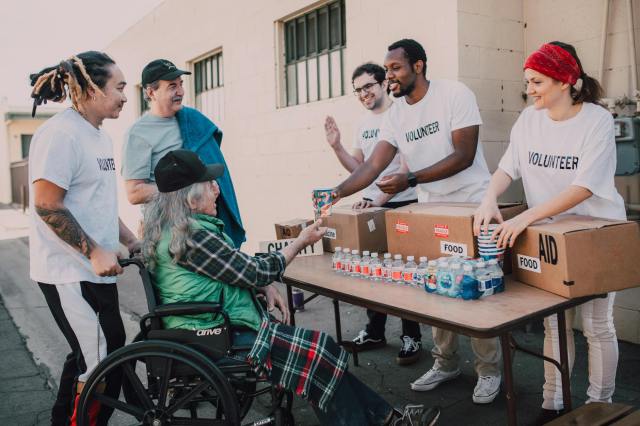
In California, we’ve seen mutual aid in action—from organizing during ICE operations to recovering from catastrophic wildfires. In July 2024, reports of targeted ICE activity in Los Angeles renewed the urgency around community defense, and the response was swift: neighbors supported one another. Legal aid groups mobilized. Volunteers stepped in.

We’re more than just voters. We’re protectors of the community. There may be a drastic digital divide that the wealthy abhorrently take advantage of — and people are starting to see it.

This isn’t just about left or right.

It’s about transcending fascism. About resisting late-stage capitalism. About caring for one another in a system that’s tried everything to convince us that care is a weakness. It’s about a community of care.

It’s about grassroots organizing, building community resilience, and mitigating misinformation. It’s about refusing to back down even when things feel impossible.


The population is waking up and putting their foot down. Enough is enough.

There’s still time to enact a call to action.

There’s still time to make a change.


Print Capitalism, National Consciousness, and the Problem with Imagined Unity

Benedict Anderson’s Imagined Communities: Reflections on the Origin and Spread of Nationalism explores how nationalism itself is not an organic development, but a socially constructed phenomenon—an “imagined community” built through shared language, culture, and crucially, the rise of print capitalism.

It’s a fascinating idea: that nations are not bound by physical borders but rather by the stories we tell ourselves and each other. Citizens build a sense of belonging through newspapers, novels, and other printed materials, one that gives people the illusion of unity with others they would never meet in person. Anderson argues that this shared sense of identity, while powerful, is imagined. And like many imagined ideas, it can be wielded for both cohesion and control.

From Anderson’s perspective, the press plays a key role in this construction. Journalism becomes not just a source of information, but a vehicle for reinforcing nationalism. At its best, the media is supposed to serve as a societal watchdog. However, under capitalism, and particularly when a handful of billionaires control the press, those ideals are often replaced by narratives that serve power, not the people.

In the same way state-run media has shaped public perception in countries like North Korea, Vietnam, or China (as Anderson notes on pages 282–283), Western media, though less overtly controlled, often operates in similar ways. Ownership, agenda, and ideology filter what gets published, and who gets heard. The result? A narrative that normalizes colonization, glorifies the past, and renders oppression and exploitation invisible to the mainstream.

And even though much of the media we consume today is digital rather than printed, the impact remains. Words are still “printed” on screens, and they still construct a national identity; one that often leans heavily into conservative values, especially in the U.S., where Christianity and nationalism frequently go hand in hand.

Now, to be clear: having pride in your country isn’t inherently problematic. However, when a selective history and curated information shape national pride, things become murky. For example, in certain rural or conservative parts of the U.S., public school curricula are shaped by school boards that may actively omit or distort historical realities, glossing over colonization, slavery, and the actual mechanics of war. Omission doesn’t just limit education; it undermines the national consciousness that Anderson described. Without honest reflection, the “imagined community” becomes more myth than memory.

Capitalism and the Narrative of Truth

Ideologies such as Marxism and socialism were founded on principles of equity and solidarity. However, when capitalism becomes the dominant force behind the circulation of information—especially when profit and power are involved—those ideals can be easily co-opted. Greed alters the public narrative, and we see this play out in real time through today’s media coverage.

A Case Study in Media Framing

Take, for example, the ongoing starvation of Palestinian infants and children. A leaked internal memo from The New York Times in 2024 reportedly instructed journalists not to refer to Palestine as an “occupied territory” or to use terms like “genocide” in their reporting. Regardless of where one stands politically, it’s clear that such editorial decisions shape public perception. When specific terms are off-limits, it becomes harder for readers to access the full scope of the issue, and easier for a particular narrative to dominate the conversation. In this case, media objectivity is compromised in favor of language that supports nationalist or colonialist perspectives.

It’s not just about one conflict and its framing. It’s about how newsrooms, under the pressure of corporate and political interests, contribute to constructing national identity in ways that may exclude or silence others. They become complicit. When journalism becomes selective in its truth-telling, it undermines its purpose and reinforces a worldview that favors power over people.

The Tech-Nationalism Feedback Loop

Nationalism, as Anderson reminds us, is a modern invention. It evolves alongside technology, and as our means of communication become faster and more centralized, so too does the spread of nationalist ideology. We see this not just in the U.S., but in places like China, where digital firewalls and media censorship shape the public’s perception of national identity. There, access to platforms like Facebook or Instagram is restricted not only for security, but also to protect a specific narrative.

Secular Allegiance and the Flattening of Identity

Anderson also notes how nationalism can take on secular forms, replacing religious or ethnic affiliations with allegiance to the nation-state. In theory, this could be a unifying force; something that helps people move beyond divisions and find common ground. In practice, though, it often flattens identity, pushing marginalized communities to conform to dominant norms or risk exclusion.

Conclusion: Who Gets Left Out?

This tension between imagined unity and lived reality is perhaps the most pressing issue with nationalism today. When media and technology become tools of influence rather than inquiry, they no longer create bridges between people. They create barriers.

Anderson’s work doesn’t just help explain the origins of nationalism; it offers a lens for questioning the stories we’re told and the systems that tell them. It invites us to ask the following question: Who benefits from these imagined communities? Who gets left out of the story?

Written in 2017

In 2003, Ian Urbina, a graduate student at the University of Chicago, abandoned his doctoral dissertation after completing a small journalism internship with an investigative reporter, which gave him a taste of reporting.

That taste landed him a job at one of the largest news media outlets in the US, a handful of awards, and a few investigative pieces that were turned into feature films.

That’s where his love of journalism has culminated over the past 14 years. 

A Fulbright scholar who worked and lived in Havana for three years, he was enrolled in a dual degree program with majors in cultural anthropology and history. He received a degree in history from Georgetown University in 1995. 

Urbina wasn’t expecting to find himself with the platform he has as a writer. Things just happened that way. He says his life gets weirder the deeper you go.

“I’m kind of an oddball, and so my day-to-day is pretty different than the norm,” he said.

Urbina’s typical day as an investigative journalist consists of long hours. Currently on book leave, he sDCs his days at home near The New York Times’ Washington, D.C., Bureau. 

He wakes up at the crack of dawn, around 4 in the morning, because that’s when he feels he works better. He has one main editor he works with in DC.

Urbina has his own office conveniently in the backyard. 

“I am a bit distractible, and do much better in kind of a deprivation chamber,” he said.

Urbina credits luck for his position at the Times. Little by little, he worked his way up the totem pole through freelancing. A stint with Think Tank is the moment that changed Urbina’s life, thrusting him into a mainstream career as a journalist. He learned everything there is to know about journalism “on the fly” at the DC Bureau metro desk, because he was clueless.

“I knew how to string together a sentence and make it occasionally somewhat polished, but I didn’t really know newspaper writing and all that entails,” he said.

After a year and a half at the metro desk, Urbina moved on to bureau chief. He managed an area from Kentucky to Ohio, noting that it was a challenging job because it was not a local paper — this was a paper on a national scale.

One day, Urbina asked his editor if he could take a break from the news rat race and spend a year researching documents for an article.

His editor said Go for it.

Urbina’s most recent piece, “Outlaw Ocean,” was not only his longest stint at three years, but it was also a dangerous and stressful assignment. It’s currently being turned into a book and a movie project. 

His editor was not a fan of the series, which also added to the list of obstacles surrounding the completion of his research.

Investigating overseas requires taking several precautions, including ensuring that you have a reliable translator. Without one, a journalist is entirely out of luck. No matter how good a writer you are, without a translator, nothing will be done properly, Urbina says.

Violence was a common occurrence while reporting in other countries.

The things he saw included murder on camera, sex trafficking, slavery, and arms trafficking.

Urbina says that spacing out trips, along with knowing who you hire, helps with the investigative process abroad.

“The difficulty (with reporting overseas) is the reporting itself,” he said.”You’re chasing really bleak stuff.”

His findings on fracking in 2011, in a series called “Drilling Down,” helped show the US how dangerous the government’s want for natural gas really was. Before Democrats were against the practice, fracking was seen as a gold mine, while few questioned whether it was detrimental to the government. Urbina, however, questioned it.

“That series was tough, it was aggressive, and we got really strong pushback from the (oil) industry,” he said.

Urbina felt that the documents surrounding the fracking piece were some of the craziest things he had read as an investigative journalist.

“So like, everyone knew there was radioactivity in the waste coming out of these wells,” he said. “But no one knew how much radioactivity.”

The fracking, which caused drastic leaks that seeped into sewage treatment plants, was utterly unknown to the nation until it was investigated.

 It took hours of poring over documents and piecing together each part of the puzzle little by little, but in the end, it worked out for him. That’s one of the key things to being a journalist–sifting through documents.

“If you can name the monster, you can beat the monster, and that’s true with document hunting,” he said.

Urbina had a team compile an extensive archive of the documents found, still accessible on the Times today. There have been no corrections made to the database, which contains approximately 500 pages of documents.

“Drilling Down” took at least four months to report, Urbina says. As far as requesting documents through the Freedom of Information Act (FOIA), Urbina typically expects a response within at least a year. 

A beat, data, documents, and spreadsheets are the tools for any journalist’s future. It’s also essential to consider distribution afterward. A reporter’s job is to break news, not follow it. 

What is key to investigative reporting is finding a new way to tell old stories, or new stories. 

That’s the space that Urbina lives in.

“You’re not done when you finish the story,” he said. “Don’t just put it in your paper.”

By Ashlyn N. Ramirez


“Justice is possible without a knowledge of God’s Law.” — Alasdair MacIntyre
“Struggles for recognition occur in a world of exacerbated material inequality.” — Nancy Fraser

We like to think justice is simple. Fair. Earned. But what if the systems we rely on to define justice were never built for everyone in the first place?

In my studies, I found myself pulled between two powerful voices: Alasdair MacIntyre and Nancy Fraser. They don’t write textbooks. They write blueprints for understanding who gets to decide what’s fair—and who’s left out.

MacIntyre speaks in traditions. He says justice is shaped by culture, by religion, by inherited values. Justice, for him, isn’t universal—it’s rooted in communities shaped by Puritanism, Catholicism, and Judaism. If those are the traditions you’re part of, maybe his logic feels familiar. But for others, it can feel exclusive. It left me wondering: if your history isn’t part of those narratives, do you still get to belong?

Fraser, on the other hand, meets us in the present. She writes about what we can see: food insecurity, health gaps, systemic racism, and gender-based violence. Her lens is urgent, intersectional, and sharp. She says it’s not enough to redistribute wealth—you must also recognize identity. You can’t discuss equality without addressing visibility.


When Tradition Doesn’t See You

MacIntyre’s work made me pause. He believes we inherit rationality through community. That truth is shaped by tradition. The liberal media and secular politics have lost sight of deeper values. He’s not entirely wrong.

However, I don’t come from the traditions he centers on. And I don’t believe justice should be reserved only for people who follow a specific moral lineage. Justice, to me, can’t be something you earn through inheritance. It has to be something we build—together.

Irene Chu calls MacIntyre’s logic deeply institutional. He’s focused on structure. On moral blueprints. But I kept asking myself: what about people who are navigating systems that were never made with them in mind?


Seeing Ourselves in the Struggle

Fraser is different. She calls out material inequality—not just in paycheck size, but in access to healthcare, housing, and even clean air. Her work hit home. As someone who has lived through environmental racism and felt the physical cost of inequality, her ideas weren’t just theory. They were familiar.

Fraser argues for two kinds of justice: redistribution (who gets what) and recognition (who gets seen). She says you can’t have one without the other. Pride parades, she notes, aren’t just celebrations—they’re statements. Visibility is political.

She also doesn’t let systems off the hook. Fraser is critical of neoliberalism, identity tokenism, and top-down reform. She’s grounded in feminist theory and understands that structural change requires cultural and symbolic transformation too.


Where They Meet—and Where They Don’t

Both MacIntyre and Fraser believe justice isn’t working. But their solutions come from different places. One looks to the past; the other looks to systems and structures that still dominate the present.

They both criticize liberalism’s failures. Both challenge how Enlightenment ideals left out too many people. But only one of them, in my opinion, shows a path forward that includes all of us.

MacIntyre invites us to consider what we inherit. Fraser challenges us to change what we’ve normalized.


Why It Matters to Me

As a doctoral student researching the digital divide, I witness these frameworks being played out every day. Some students never had access to laptops or high-speed internet. That’s not just a tech issue—it’s a justice issue. Fraser’s lens helps me see that clearly.

But I also understand how culture shapes belief. That’s MacIntyre’s territory. Why some still resist digital learning. Why access isn’t just about money, but mindset.

Ultimately, both theorists provide tools. Fraser equips me to fight for equity. MacIntyre reminds me that beliefs are inherited—and that means they can be challenged.


Justice Isn’t Neutral. It’s Personal.

I’ve spent years trying to understand why justice seems so distant for some and so readily assumed for others. This journey through MacIntyre and Fraser didn’t provide me with a single perfect answer. But it gave me a better question:

Whose justice? Which rationality?

I think we’re all still trying to figure that out.


Ashlyn N. Ramirez is a doctoral candidate, writer, and researcher who explores media, identity, and access in the digital age.

Written in 2023

“Go back to where you came from.” That was the top phrase I heard the entire time I’ve been a resident of the California Bible Belt.

There’s nothing original about growing up in the Inland Empire. It’s the suburbs—yet somehow still considered rural in parts. It’s a place where underrepresented populations are growing in number, but so are Trump flags and right-wing extremism.

In 2020, Riverside County—where I reside—declared racism a public health crisis. But racism has always been here. It’s in the air, in the politics, and sometimes literally in the air—I developed severe asthma from poor air quality, a byproduct of environmental racism. I once lived next to a house raided by the FBI for extremist activity. My local representative, Ken Calvert, welcomed Congresswoman Marjorie Taylor Greene to attend a church service in my community—during a tour with indicted rapist Congressman Matt Gaetz.

It’s the kind of place where, in 2014, “patriots” blocked a road with linked arms to stop a bus of Central American immigrants, convinced they were defending land that was never theirs to begin with. This community sits on stolen land—look up the Temecula Indian Massacre.

And I live here.


Assimilation Is Not Safety

Being multigenerational doesn’t shield me from anything. I still live with my parents after my divorce. I still face systemic oppression—in healthcare, in schools, and in the workplace. I’ve spent half my life trying to break into a profession that doesn’t want me there. Not here. Not where my presence is questioned at every turn.

At 28, I took a DNA test and discovered I’m Indigenous. But I don’t know what tribe I came from. That’s erasure. That’s trauma. That’s assimilation. And no amount of “blending in” will save us.


Journalism Was Never Just a Job

I built a journalism career piece by piece. Assistant Opinion Editor at Cal State Fullerton’s Daily Titan. Reporter. Editor. Columnist. I investigated homelessness in Orange County and covered political unrest. In 2017, I helped cover a CSUF lecturer’s altercation with the campus Republican club and the protests that followed. That work resurfaced recently—because the threats haven’t gone away.

I’ve written for luxury magazines, indie rock blogs, and newspapers across Southern California. I helped de-platform a right-wing extremist on The Intercept. My team placed third in the California College Media Awards and was a finalist for the LA Press Club. I was proud. But even with those wins, self-doubt lingered—because race and class constantly press back.

I have two degrees, including a Master of Science in Communications and Journalism Innovation, and I’m earning a doctorate in Education. But even now, I know what it means to be overlooked.


Beyond DEI

Diversity, equity, and inclusion have become marketing buzzwords. DEI can be a trap—another way to tokenize BIPOC voices instead of truly listening.

I used to think my passion was journalism. But what I’ve come to realize is that my real passion is learning. It’s education. It’s digital literacy. It’s helping others navigate a world built to exclude them. I’m currently a full-time doctoral student researching the intersection of media, digital access, and educational equity.

Innovation starts with the words we write—in the classroom, on the internet, and in print. That’s how we build new pathways.


Rewriting My Own History

I write poetry now—mostly dark. It’s how I process. I look at the media landscape and feel haunted. I watch journalism become clickbait. I watch misinformation flood the platforms. I watch the rise of new precedents in media law that mirror the darkest parts of our history.

But I also see possibility.

Without writers, there is no record. Without journalists, there is no truth in print. I lost my culture through assimilation, but I refuse to stay disconnected from my heart.

Through research, education, and writing, I’ve traced pieces of my family tree. I’ve rebuilt what was erased. I’ve claimed space. And I’ve done it all while living with invisible illness, chronic pain, and neurodivergence.


Why I Keep Going

Why do I keep writing? Why am I still fighting for space in rooms that were never designed for me?

Because breaking generational cycles matters. Because education matters. Because there are students—readers—leaders—like me, still searching for a story that feels like home.

I’m not just chasing a degree. I’m chasing the freedom to write the truth, to teach it, and to make sure someone else doesn’t have to grow up wondering where they really come from.

In the end, we all become the exact same specks of atmospheric dust. But while I’m here, I’m going to make it count.


Written by Ashlyn Ramirez – Writer, Researcher, Educator

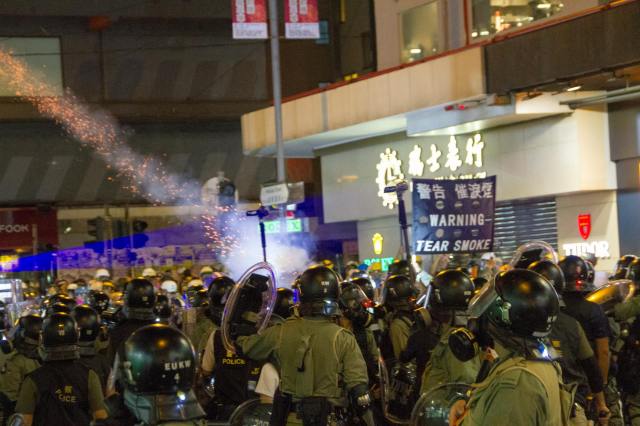
Nov. 9, 2016. The day after Presidential Candidate Donald J. Trump was elected into office brought heightened demonstrations across the nation. Groups of protestors set their sights on vandalizing media property in Los Angeles. Photo by Ashlyn Ramirez.

President Trump’s win over former Secretary of State and First Lady Hillary Rodham Clinton is something that has not only left a permanent distaste for diehard progressives– it’s also the cause of newfound yellow journalism.

But this is my opinion. Take it how you will.

Journalists are here to report the truth without bias. But the Trump Administration has hurled a cesspool of vitriol for the past three years at anyone who has questioned them.

People have been fired. People have been hurt because of misinformation. That damage is irreparable. Does this mean that journalism has become saturated?

No one thought that another country would pierce the soul of democracy here. Unfortunately that’s exactly what happened. And with the recent findings behind Trump trying to coax Ukraine’s president into another election fraud, journalists like me are wondering how this is going to impact the future later.

I read in one of my textbooks that over 200,000 journalists have been laid off since the early 2000’s. As far as this year goes, about 7,200 journalists have been laid off so far.

Once I joined the Daily Titan, Cal State Fullerton’s student newspaper, I was made well aware of how the term “fake news” would change my future.

A closeup of Pro-Trump demonstrators’ signs on Cal State Fullerton’s campus March 13, 2017. President Trump hadn’t even been in office for three months. Photo by Ashlyn Ramirez.

Yes, I’ve been directly called this tasteless term, over this article linked here that I wrote. It’s insulting and dehumanizing as a student to see those leading your country effectively making your career more hostile and violent.

In fact, I had an entire Letter to the Editor written about a basic new piece I wrote almost three years ago. It was so crass that the editorial board heavily redacted it. We were flabbergasted. At this point, I can’t even find it online anymore. I guess it was that bad.

Part of this happened because I was a crucial asset to the editorial section–and also wrote countless opinion pieces that often denounced President Trump. The entire student body–or at least whoever read the paper– knew my name then. Speaking out as not only a journalist but a journalist of color has become increasingly harder over such a short period of time.

Video footage from a Pro-Trump demonstration–just months after the Trump Administration took office.

Writing those pieces has given me jobs. It’s also caused many to turn me away, especially in a part of California that isn’t even close to being blue. But even those that are blue can lack media literacy all the same.

Opinion is not news and it never has been. How much more can be done to inform a reader about what’s fact and what’s not?

Sure, you can throw a disclaimer on a piece. You can write that this is an opinion article. And it’s unlikely you’ll see an opinion piece grace the front page smack in the middle anyways.

However, you’re only going to see what your thoughts will allow. Just like those currently in power.

To this day, our President insists on attacking any news media that is not considered conservative. It’s disgusting and vile. It’s a very real threat to the First Amendment, our human rights and our democracy.

This is how the media became saturated to the point of a pop culture joke. Blogging exacerbated the lack of source credibility and those that aren’t fond of our country saw our weakness and took advantage of it. That’s why fighting back against “fake news” is more important than ever. But it’s a match that can only be strategically won.

No one knows everything. Even the media. That’s why objectivity and research are vital to make a sound, informed opinion. And then it’s time to spread information–fact checking is everything. Even if the current administration doesn’t care for any of it.

“Fake news” is a term that an entire newsroom will either laugh or roll their eyes at. But since the general public lacks the media literacy needed to really differentiate from what’s legitimate and what’s not, it’s a problem that has to be addressed through the next generations.

It’s going to take more than writing in your Twitter bio that your opinions don’t represent your work. Without passing down media literacy to the public, there’s no way journalism is going to ride out this wave.

It’s going to get messy. Even other countries are feeling the burn.

Trying to start a journalism career in a rapidly changing industry is hard enough. Once you add the threat of yellow journalism into the mix, things start to get more complicated. Combating a monster that was probably created through the acts of Russia and various Republican representatives was something no one ever thought would be a thing.

Now, what does this mean for future elections? The key to changing everything is awareness, facts and voting. Without any of these things, a president can become a tyrant. Just like how the government relies on checks and balances, journalists have to rely on their ethics. Everyone’s a skeptic. It’s a journalist’s job to localize and humanize their writing for the general public to pay attention.

I was taught to not even register to vote. Old school journalists take ethics to a level that isn’t really seen anymore. It’s something that future journalists must keep in mind. Times are changing with us, but our core stays the same. Yellow journalism has been around for quite some time and we, as journalists, have to get craftier at handling it.

Those that utilize the internet and social media to spread their views ultimately push credible sources out the window. It’s to the point where many people have become so skeptical that science isn’t even something they want to believe in.

This is a problem that can only be fixed with understanding reality.

The next time you see an aunt or uncle on Facebook posting links to bogus news sites, don’t call them out in person. If you can, teach through education. Not everyone is going to listen to sources that don’t cater to their needs, but there’s always a middle ground to stand on while defending yourself.