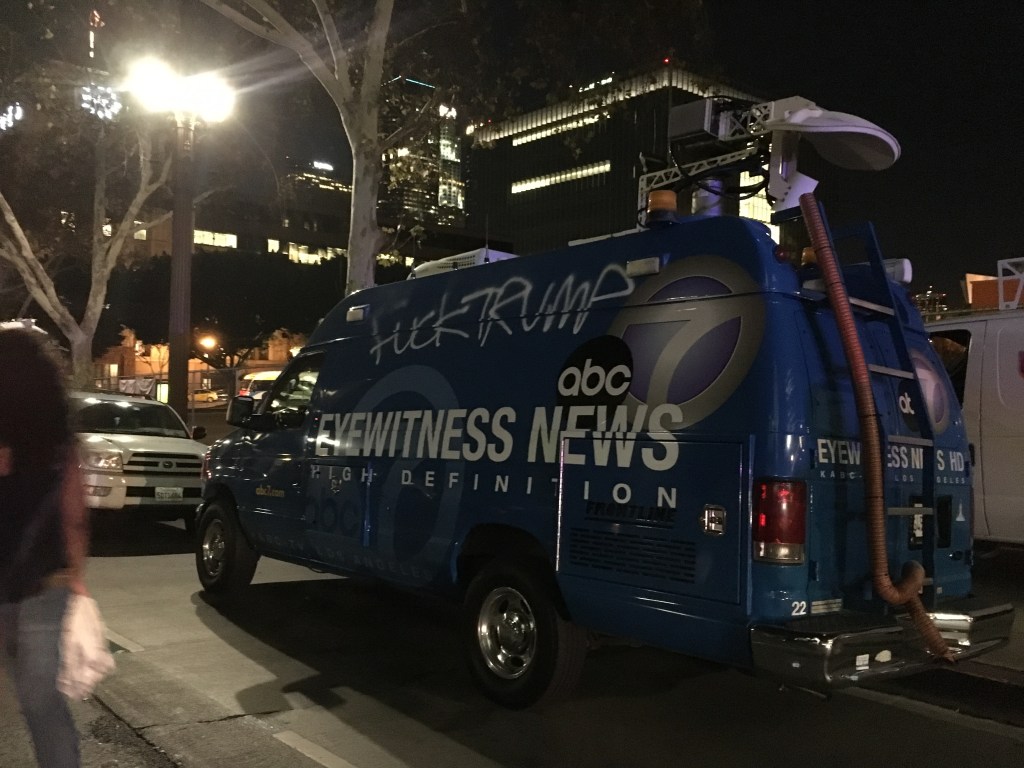
Nov. 9, 2016. The day after Presidential Candidate Donald J. Trump was elected into office brought heightened demonstrations across the nation. Groups of protestors set their sights on vandalizing media property in Los Angeles. Photo by Ashlyn Ramirez.

President Trump’s win over former Secretary of State and First Lady Hillary Rodham Clinton is something that has not only left a permanent distaste for diehard progressives– it’s also the cause of newfound yellow journalism.

But this is my opinion. Take it how you will.

Journalists are here to report the truth without bias. But the Trump Administration has hurled a cesspool of vitriol for the past three years at anyone who has questioned them.

People have been fired. People have been hurt because of misinformation. That damage is irreparable. Does this mean that journalism has become saturated?

No one thought that another country would pierce the soul of democracy here. Unfortunately that’s exactly what happened. And with the recent findings behind Trump trying to coax Ukraine’s president into another election fraud, journalists like me are wondering how this is going to impact the future later.

I read in one of my textbooks that over 200,000 journalists have been laid off since the early 2000’s. As far as this year goes, about 7,200 journalists have been laid off so far.

Once I joined the Daily Titan, Cal State Fullerton’s student newspaper, I was made well aware of how the term “fake news” would change my future.

A closeup of Pro-Trump demonstrators’ signs on Cal State Fullerton’s campus March 13, 2017. President Trump hadn’t even been in office for three months. Photo by Ashlyn Ramirez.

Yes, I’ve been directly called this tasteless term, over this article linked here that I wrote. It’s insulting and dehumanizing as a student to see those leading your country effectively making your career more hostile and violent.

In fact, I had an entire Letter to the Editor written about a basic new piece I wrote almost three years ago. It was so crass that the editorial board heavily redacted it. We were flabbergasted. At this point, I can’t even find it online anymore. I guess it was that bad.

Part of this happened because I was a crucial asset to the editorial section–and also wrote countless opinion pieces that often denounced President Trump. The entire student body–or at least whoever read the paper– knew my name then. Speaking out as not only a journalist but a journalist of color has become increasingly harder over such a short period of time.

Video footage from a Pro-Trump demonstration–just months after the Trump Administration took office.

Writing those pieces has given me jobs. It’s also caused many to turn me away, especially in a part of California that isn’t even close to being blue. But even those that are blue can lack media literacy all the same.

Opinion is not news and it never has been. How much more can be done to inform a reader about what’s fact and what’s not?

Sure, you can throw a disclaimer on a piece. You can write that this is an opinion article. And it’s unlikely you’ll see an opinion piece grace the front page smack in the middle anyways.

However, you’re only going to see what your thoughts will allow. Just like those currently in power.

To this day, our President insists on attacking any news media that is not considered conservative. It’s disgusting and vile. It’s a very real threat to the First Amendment, our human rights and our democracy.

This is how the media became saturated to the point of a pop culture joke. Blogging exacerbated the lack of source credibility and those that aren’t fond of our country saw our weakness and took advantage of it. That’s why fighting back against “fake news” is more important than ever. But it’s a match that can only be strategically won.

No one knows everything. Even the media. That’s why objectivity and research are vital to make a sound, informed opinion. And then it’s time to spread information–fact checking is everything. Even if the current administration doesn’t care for any of it.

“Fake news” is a term that an entire newsroom will either laugh or roll their eyes at. But since the general public lacks the media literacy needed to really differentiate from what’s legitimate and what’s not, it’s a problem that has to be addressed through the next generations.

It’s going to take more than writing in your Twitter bio that your opinions don’t represent your work. Without passing down media literacy to the public, there’s no way journalism is going to ride out this wave.

It’s going to get messy. Even other countries are feeling the burn.

Trying to start a journalism career in a rapidly changing industry is hard enough. Once you add the threat of yellow journalism into the mix, things start to get more complicated. Combating a monster that was probably created through the acts of Russia and various Republican representatives was something no one ever thought would be a thing.

Now, what does this mean for future elections? The key to changing everything is awareness, facts and voting. Without any of these things, a president can become a tyrant. Just like how the government relies on checks and balances, journalists have to rely on their ethics. Everyone’s a skeptic. It’s a journalist’s job to localize and humanize their writing for the general public to pay attention.

I was taught to not even register to vote. Old school journalists take ethics to a level that isn’t really seen anymore. It’s something that future journalists must keep in mind. Times are changing with us, but our core stays the same. Yellow journalism has been around for quite some time and we, as journalists, have to get craftier at handling it.

Those that utilize the internet and social media to spread their views ultimately push credible sources out the window. It’s to the point where many people have become so skeptical that science isn’t even something they want to believe in.

This is a problem that can only be fixed with understanding reality.

The next time you see an aunt or uncle on Facebook posting links to bogus news sites, don’t call them out in person. If you can, teach through education. Not everyone is going to listen to sources that don’t cater to their needs, but there’s always a middle ground to stand on while defending yourself.
The change that has amassed through such advances like technology is something that has become ingrained in our society globally.

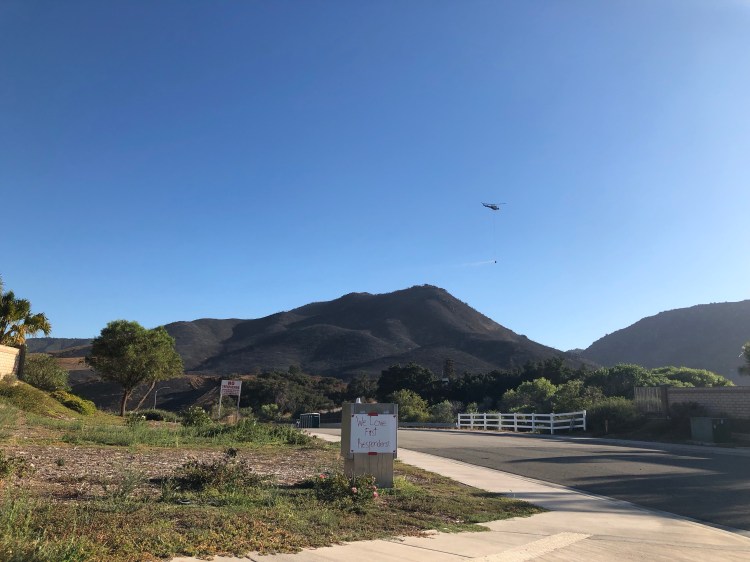
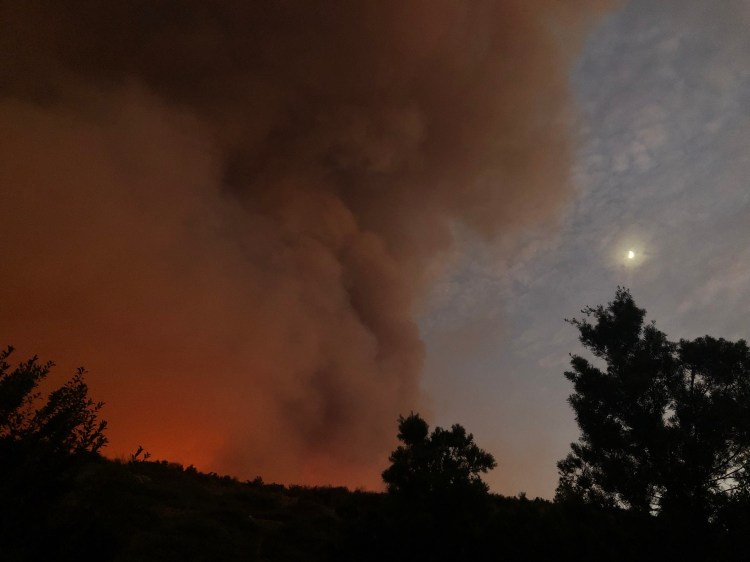
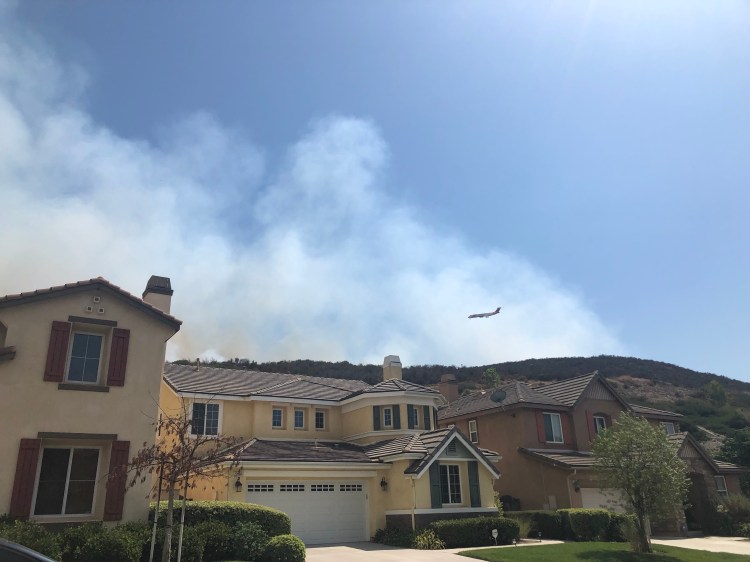
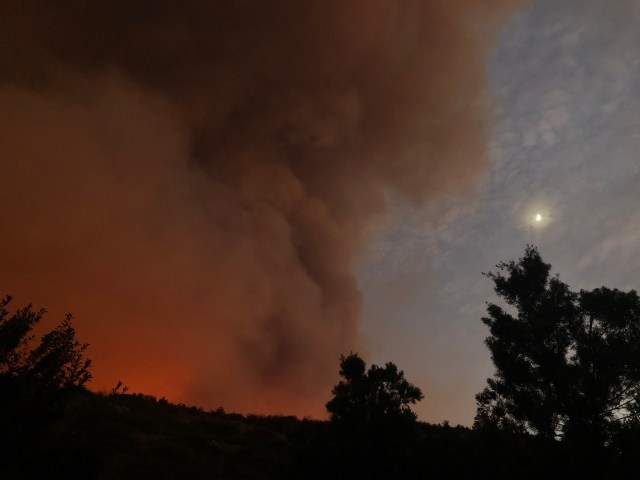
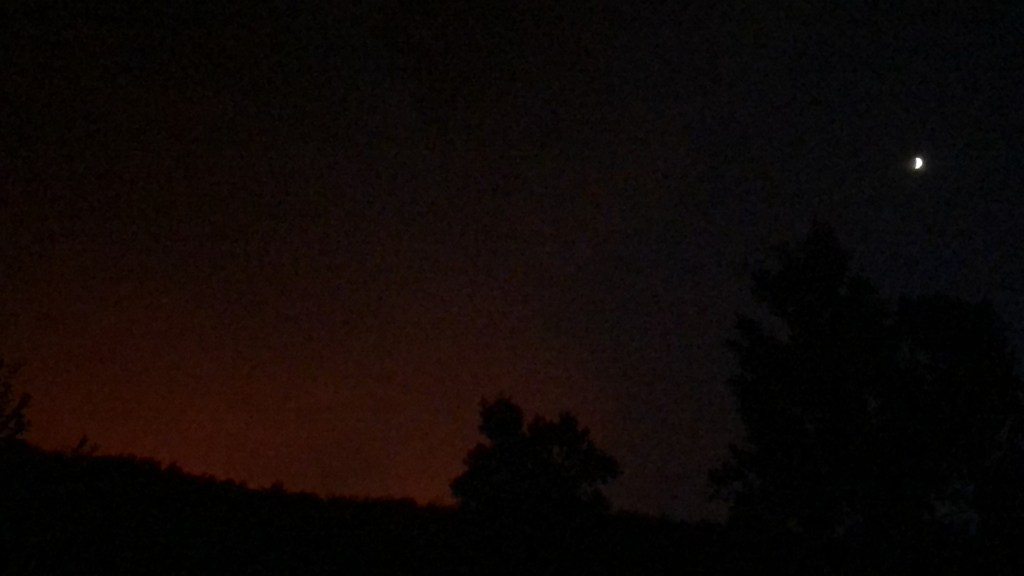
Views from the Tenaja Fire near Murrieta and Wildomar, California on September 7, 2019. Photography by Ashlyn N. Ramirez.

When the media merges with dozens of other mediums that can help push forward bits of information at the speed of light, it’s incredible what digital convergence has done over hundreds of years.

While many feared that these kind of advancements would topple the media industry, they’ve actually made it innovative and creative in a way that no one ever realized was possible. Think of every dystopian novel out there– the major fear was that technology would get into the wrong hands, thus getting out of hand.

Although that may have been the case in some ways, it’s not the only way to look at how our world has changed through simply being able to attain a mass amount of information in seconds.

Learning multimedia is not easy. To some it is first nature, to some it is a little bit of an unwanted appendage that you really grew to respect anyways. There’s a reason why some choose to learn in a class setting instead of watching youtube videos on their own. Trying to wing something doesn’t normally end with enticing results. This is where media literacy comes into play.

It’s a journalist’s job to be a watchdog. Without holding fast to that basic identity that has really help change the course of the entire world, it’s no wonder that most corporate media tends to end up slipping up at some point.

In a world that oftentimes only sees white and black, one must come to ponder why the United States ends up with problems so vast that many can’t help but scorn when they hear about what’s going on with politics or in their city lately. Because of social media, we’ve all become isolated.

What would you do in order to go against the grain? Is it wrong to not want to be complacent sometimes? Unfortunately Millennials, Generation Z and those after are stuck with footing the bill that has become climate change. Without digital convergence and media literacy, the world would be doomed.

Change is needed now, immediately, every single day. Without it, there is no future for journalism, or anyone for that matter.

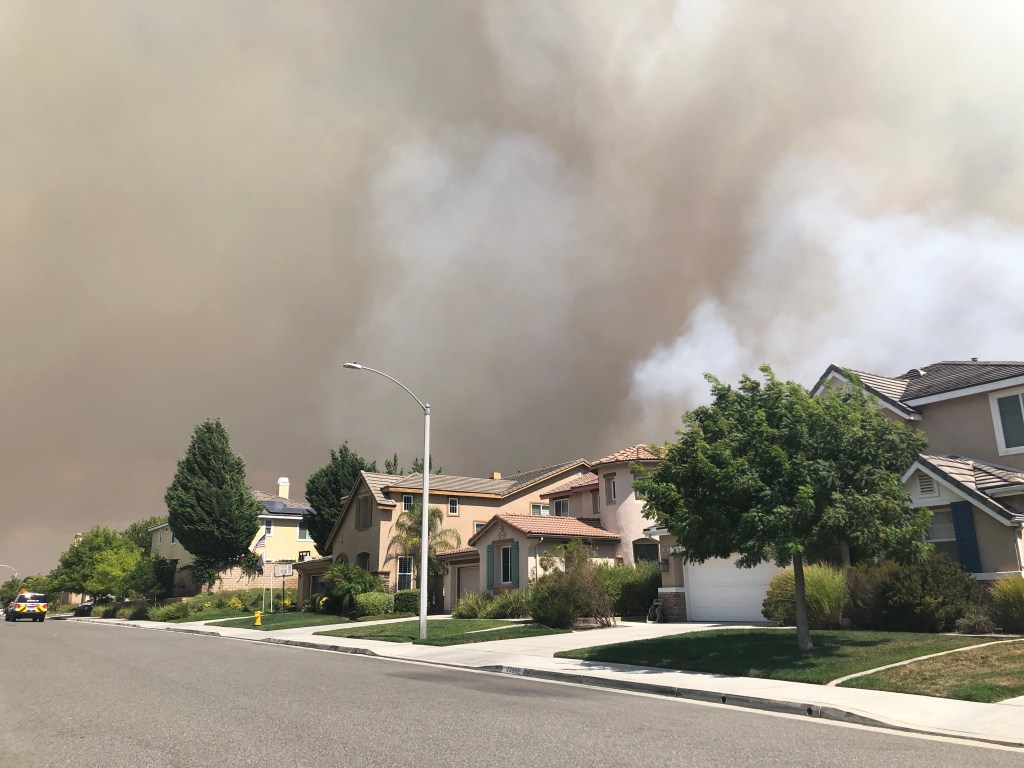
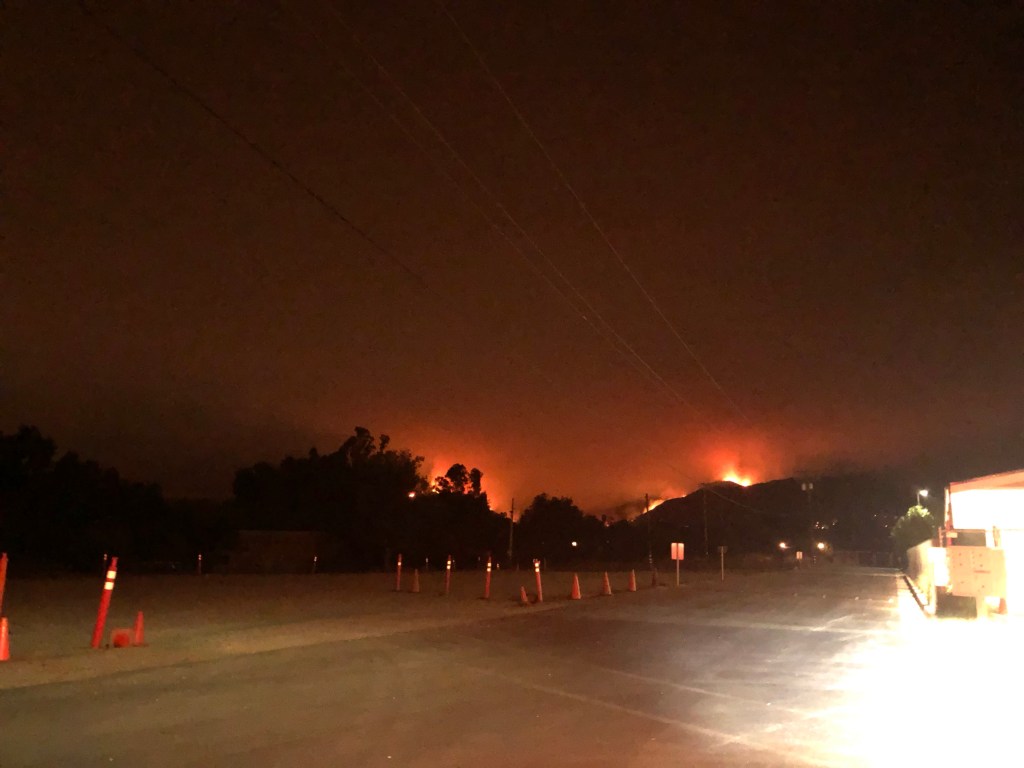
I just watched a fire burn the hills behind the house I currently live in. The Tenaja fire in Southern California. That’s the impact of climate change. I packed my bags the second I saw smoke because after doing some calculations, I realized that the fire was barely 2000 acres from my house.

On September 5th, 2019, evacuations were ordered for Montanya Place, Bonita Place, Belcara Place and Lone Oak way, according to the Riverside County Fire Department in Southern California, about 60 miles south of Los Angeles and San Diego. Many residents who waited until it was mandatory to leave hurried to leave to avoid the looming smoke in the sky. Photo by Ashlyn N. Ramirez.

The fire stopped a bit over 1900 acres, according to reports from Cal Fire. The hills behind my house burned. With four animals at my house, what would I have done if I wasn’t ready when the first evacuation orders had came? It was a mess that I wasn’t planning on tackling.

Since then, there’s been a few outbreaks in the same exact area. And as some scientific models found online that are reposted through various weather journalists across the pacific, October is looking like it’s going to be dry instead of wet.

Without advancements that digital convergence has excelled with, there would be no way that I could have the media literacy enough to explain to you how it feels to predict a fire coming to the back door of your house. All through the means of checking government agencies’ websites, Twitter posts through hashtags and the local media.

My house is fine, but the thought of another fire happening always remains. Grim reminders of what Paradise, California went through are painful as I imagine another fire tornado coming down the hillside. But with vigilance comes safety. Knowing what you’re up against, thanks to the internet and media literacy, is life changing sometimes.

Even though Paradise is quite far from where I am, the way the suburbs are set up out here are almost the same. Homes tightly nestled against the mountain range, the Santa Rosa Plateau and the Cleveland National Forest. The amount of fire hazards out here are crazy. Throw in a little bit of monsoon weather that causes lightning strikes and boom! There’s fire weather for you.

I’m not great at math or science but I am a journalist fascinated with the phenomenon of climate change. It’s something that many people would know little about without the use of technology today.

Although many still don’t realize when there’s some bias in their news program, it’s important to support individuality and continue to champion the truth–for everyone.

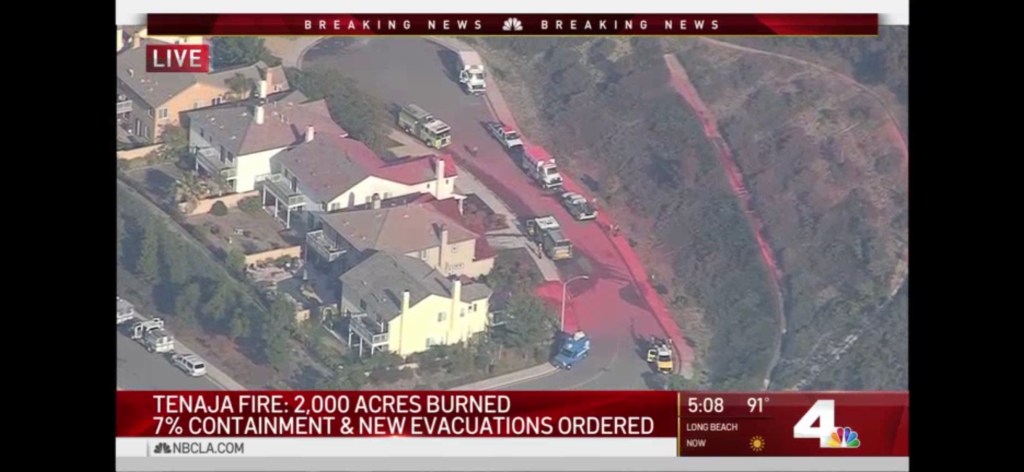
Screenshots from NBC 4 News in Los Angeles, courtesy of Twitter.

As a journalist, you learn to look at things for both the big picture and the small. These are the things that help keep one objective enough to truly get culture. Without it, you’ll go complacent or misinformed.

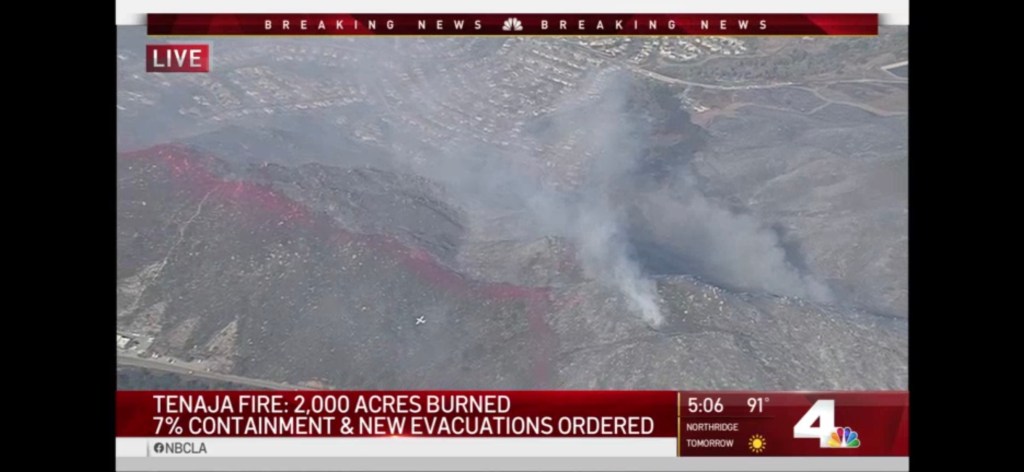
Screenshots from NBC 4 News of the Tenaja Fire, courtesy of Twitter.

This is why it’s imperative to know digital convergence inside and out. It could save your life and your property sometimes. This kind of danger will continue as climate changes impacts us in ways we aren’t ready for.