Even digital media nine years ago can be showcased on WordPress for those on a computer or those using a phone. Just like that, a picture can travel from a blog across the entire social media spectrum. The Brooklyn Bridge in New York City. Photography by me.
Based on your experience with WordPress, what are your impressions with working with WordPress—the pros and cons? It started as a blogging platform but has evolved—should it still be relegated for small blogs, or do you see enterprise use? Are there any blogs that you regularly follow? Pick one and critique it. Why do you like this blog? What is it about the content that makes you go back? How about the design/layout?
I learned the ins-and-outs of an almost daily student news publication during my time at Cal State Fullerton. I was on the editorial staff. Little did I know that an entire digital media spread was humanly possible to transfer from print to the web through a sole content management system.
It’s not effortless. It’s tedious. But the reach and possibilities that stem from WordPress are too immaculate to touch.
Any beginner can develop a website through this platform and become a business owner or a blogger. Or both. The management after is fairly seamless.
But friendly to everyone? Maybe not totally. That’s why there’s experts in WordPress though. We have to make money somehow.
The fact that every individual starts off with the same edit screen no matter what widgets they download makes it so that as a writer, I can easily take the skills and ideas put into another client’s website and repurpose it until my fingers fall off.
It’s like how these TikTok ferret videos of the SAME ferret keep appearing everywhere. Once it’s on the internet, it’s forever right?
Just like that, there’s a Tweet embedding into my blog post with the act of a copy-and-paste of a URL link. WordPress is teachable to a novice wanting to learn. Fixable when altering is needed. And it’s mobile-friendly with their own simple iPhone application. From blogs to media publications and even e-commerce websites, WordPress can do it all.
I feel like WordPress is the top of the list like how Adobe Premiere Pro is more well-known than Final Cut Pro. You’re paying for both the name and the goodies that come with it. This also low-key means that paying for good service prevails for a permanent revenue stream.
Even the crappiest, most mundane business can make money if they have the literacy or hire someone that harbors that capability.
With WordPress you can monetize in more than one way and expand it through sharing. But you have to know how to make all of that happen too… which is why using different tiers of paid WordPress services work for all business backgrounds.
WordPress propels small business consumerism to large markets. Think of it as like, going viral.
Downside? Those less skilled in the digital realm that lack those really good widgets are going to have some really boring pages. In the end, it’s about making minimalism pop. And WordPress captures that essence.
If you know how to work WordPress, you’ll embolden your chances of maintaining the type of clientele who doesn’t want to take the time to pick up a website and the subsequent blogging that comes along with it.
I know it’s going to sound crazy but I’m not big on following bloggers right now. I used to be huge on following artists on another platform we all know as Tumblr. It was mainly for the aesthetic and being able to talk through pictures. Sometimes, pictures being worth more than a thousand words is way better than actually having a thousand words to sift through.
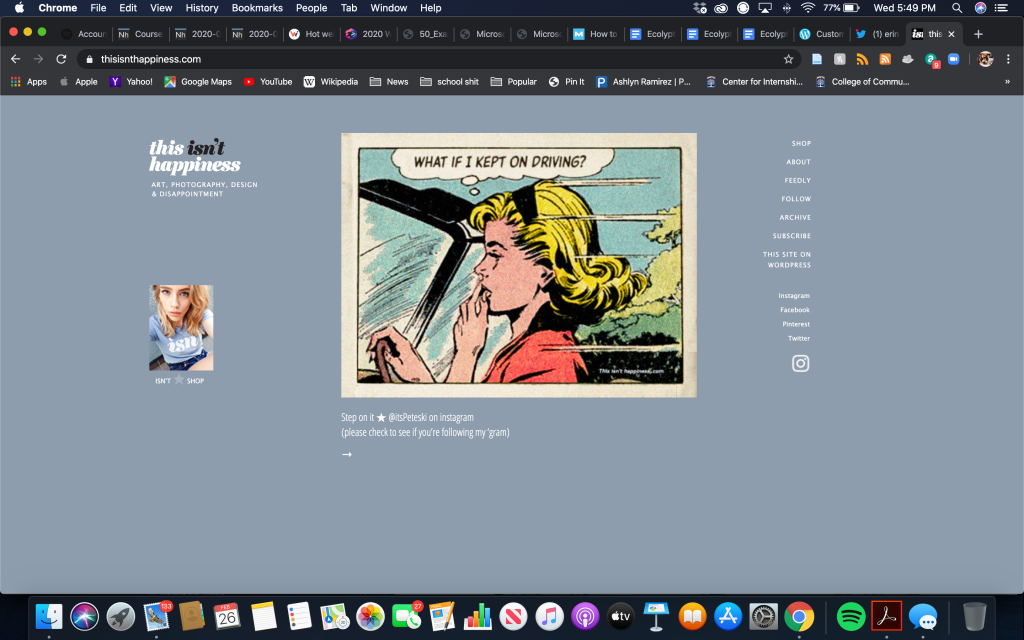
For example, look at the blogger on Tumblr known as user ‘thisisnthappiness’:
A theme is consistently followed that draws people in that focuses heavily on the visual aspect. In short it’s all about showing, not exactly telling.
Their blog is on Tumblr, has its own separate domain and is transferred to WordPress. That means the reach as an artist online is subsequently global. For example, this blogger has been around long enough to maintain these platforms and even open up an e-commerce section to make money off of instead of advertisements.
The fact that simplicity can tell a story is something that consumers vie for when consuming content online is very telling. With the options that WordPress offers to their users, it’s clear that their model is pertinent to content creation in the future.
I’ve went from print journalism to marketing, public relations, advertising and back again. For now, I’m trying to stay in the social media manager realm because it allows me to write blogs.
Meaning I get to exercise my journalistic creativity on the regular. But seriously though, I cannot express enough how underpaid and undervalued I am as a content creator. I’m marketing a brand to retain clients and often I’m still stuck cleaning a break room.
How can I continue to create an organic outreach that reaches real customers when I’m not taken seriously?
This is why I’m in school. I’m kind of hoping that with the next tier of degree in my life, I’ll get taken a little more seriously. I want to help companies grow and I’m generally not given the resources or time to make that genuine connection happen.
Unfortunately living in the metropolitan area that would see my value in Southern California is a six-figure endeavor. I’m talking like, almost a quarter of a million dollars a year just spent on living comfortably.
And I’m not at that point in my life yet. I don’t know if I’ll ever be close. It seems like my generation really got the short end of the stick and somehow it was so bad that the impact has trickled down to literally everyone except the 1 percent.
Yeah, not at all surprising how the difference between minimum wage at $15000 annually vs $15/hr at $31000 annually is the cost of a car. Few of those a year with social media making it viral is some cheap ass cynical marketing.
Connecting to an audience in a prolific way is something that I crave. I constantly find myself reading these feel good stories but the problem here is that they’re all bandaids for some kind of poor practice. There’s better ways to connect to an audience.
I like to do it in writing because I have social anxiety. But then that anxiety took over my words too. Being in this program has really changed me. It’s caused me to become more humble but to also see that I’m worth more than minimum wage.
Journalism is the core of the communications field. The digital convergence that happens with public relations, marketing and advertising is propelled by media convergence. I have always felt like journalists are held to a higher standard than anyone else. This is because the public trusting us is vital to democracy.
We need to strive to do better. I will never not express how important it is to keep going for the optimum outcome. I know that not everyone in the Newhouse School is there for a journalism degree. Some might hate writing entirely. But when we all work together and pay mind to the ethics behind our careers, our lives are a little bit easier.
I hope I can take the inspiration I draw from this program and really make a difference in the world through telling news via different mediums. I’ve always been a writer. A poet too. But there’s an urgency I feel regarding closing the gap that is the digital divide by exposing misinformation and promoting social awareness as our whole world inches further into the future.
I feel like I really understand why good marketing, advertising, PR and journalism will always go hand in hand with each other. One cannot function without the other in our realm.
The amount of mediums is way too many to count and hard to keep track. Right now I’m loving podcasts because it’s a really old idea with a modern twist attached to it.
Multimedia is this whole different ballgame that really gives writers new and creative ways to tell the stories that they write. If journalists like myself can’t keep up with that, we’re going to slowly lose the media literacy we’ve grown to have.
Digital convergence isn’t going to stop, so we need to hop on the bandwagon and ensure that what does come out is used to the fullest extent of the product or service’s capabilities.
Having a free press is my everything. It’s a gift unlike any other. It’s used as a curse, in some situations. I respect it above all else though, always. If more people lose their respect towards this profession, we’re going to see more open hatred across the board.
I feel like so many demographics have been looked over until recently. And this new wave of marketing towards the younger generations through the likes of big data collection is super creepy. Highly intriguing to watch change happen so quickly though.
Who would’ve known that AARPANET would turn into this massive worldwide conglomerate that corporations are fighting to control the access to? A social awakening is happening that is only going to continue to grow.
As human behavior continues to change, we’re currently seeing something unlike anything that’s been recorded by historians before. It’s not Ancient Aliens or anything, but it’s still pretty great.
The ways culture is portrayed across the world is solely because the internet is here to allow for mass sharing. I’m all here for it. Let’s keep sending memes.
It’s so hard to say what else lies in the future. I’m kind of hoping that eventually I’ll have some brain implant that’ll allow a laptop to type my thoughts for me since my carpal tunnel will probably eventually take my hands out.
Other than that, all I can do is hope that there will be some regulations that will keep customization convenient and 75 percent less invasive. Wait no, maybe like 95 percent less invasive. I’m hoping for the best.
Kind of seems like we’re living in a dystopian universe already though. At least we’re all in this together, right?
Classes like this one have taught me a handful of useful tidbits for the future. I feel like this blog has also helped me express my feelings, opinions and what not to the best of my ability. All while getting to drop facts in between.
I’ve got a glorified diary. I plan on using it as much as I can.
I have to pre-write to write.
It’s insane how all of the topics discussed over the term are things I’ve already recognized in real life but never knew the proper terminology for. I’m so excited to continue learning.
As someone who suffers from massive anxiety to the point where I can’t check my email or grades, being able to free-flow while weaving in my understanding of class topics helps me truly get the stuff that I’m reading and watching.
I guess this is essentially the tip of the iceberg with the beginning of my graduate school career. I’m over here, hand writing my last blogs for this class while thinking about my finals. Stressing. Multimedia for one and a case study for another.
The thing that I’ve truly enjoyed about this course though is the way I can now analyze and tie in the importance of digital/media convergence. I can especially see it because I recently got a new job-which at the time of typing this bit I am probably going to never go back-and I happened to be in an office setting instead of being at home.
Totally new to me. Even this program is. But I do enjoy being able to still feel like I’m in a classroom learning, instead of trying to teach something myself with very little to no direction.
So last week, all of a sudden I was staring at three computer screens. Holy second screen experience! And a keyboard and a mouse that work! I’ve been working from a broken laptop for almost a year! This is nuts!
I was able to take what I’ve learned in journalism from my undergrad and what I’ve learned about journalism innovation at my short time at Syracuse and really do a lot of work in a short amount of time. It took me 57 hours, but I got them set up with social media posts across six platforms until the end of March.
It was easily enough work to earn a grand. Turns out they thought it was worth half of that. All of this work I put into this company to make them look good and it kind of wasn’t worth the effort.
Honestly though the fact that this client thought that it was okay to pay me California minimum wage is really the result of the lack of media literacy in the country. It’s super simple to look up the average wage of a social media manager in the United States.
Add in a copy editor and marketing/personal assistant to the mix and the costs add up. I digress, though.
I’m over here incredibly upset that I’m late on my work at a super crucial time but at the same time I’m grateful that the little bit I’ve taken from this program I’ve already learned how to use to further my career path.
And I got to really experience a true multi-screen experience for a little bit that I wouldn’t have before. Even if the client was lackluster, Syracuse got me there and helped me see my worth.
There’s always people that need someone to write and edit for them. Until then I’m going to write my little heart out on this blog and hope that it provides context into myself as a person.
I’ve seen what places like Vox and the Washington Post have done for journalism. I’m writing about the Washington Post for my case study. Those are things that can be applied to basically every aspect of communications. I’m constantly intrigued with the versatile manner that journalism fits within this broad industry.
However with the way things keep changing, it’s crucial to continue to revamp and rebrand the communications industry as a whole. Especially the media, both new and old.
I can’t express enough how amazing it is to take these skills that I’ve honed over the years and use them to better something else.
Considering how my alma matter is potentially shutting down the newspaper that I gained all of these skills from as a writer, I feel like the best way I can combat the reality of a dying newspaper by furthering my knowledge in multimedia. Period.
News needs to be told. We just have to understand the obstacles that we are dealt with.
Two years ago, I wrote the review for @Harry_Styles debut album for @thedailytitan and now I’m happy to support not only my favorite artist, but the student journalists behind this well-written review and the paper that helped me find my voice 🥰 https://t.co/hRgiEl6niV
Being able to connect to consumers is the best way to continue to close the digital divide. Now we just need WiFi accessible to everyone. I hope to see that in the near future. Everyone should have the opportunity to have access to a virtual library.
Without access to simple things like blogging, student journalism and student-ran communications groups across the nation, we will never be able to dominate in the media literacy field.
Student newspapers are vital and @thedailytitan is one of the best around. Many reporters you read began their careers at the DT. It needs to be kept alive. https://t.co/tygyYboFKP
I want to see a day where being a digital era journalist is considered just as important as any STEM major. I don’t think people understand how much goes into becoming an expert on a topic, hunting down verifiable sources and putting together a package that works across a multitude of platforms.
Being a watchdog is hard right now. It’s like trying to get an alcoholic to quit drinking when they just aren’t ready. But if we, as journalists, are able to gain trust and understanding, then the public might be ready to trust us later.
With the next round of presidential elections looming in the corner, I feel like finding new ways to innovate news and find news is more important than ever.
When you help more than 1,200 Members on average each monthwith Stolen Vehicle Assistance, you get some really interesting calls. Like this one from 2019. #BeSafeOutThere
One of my many ads that I’m getting on Twitter currently. I happened to just start working at a trucking commercial insurance place so, makes sense.
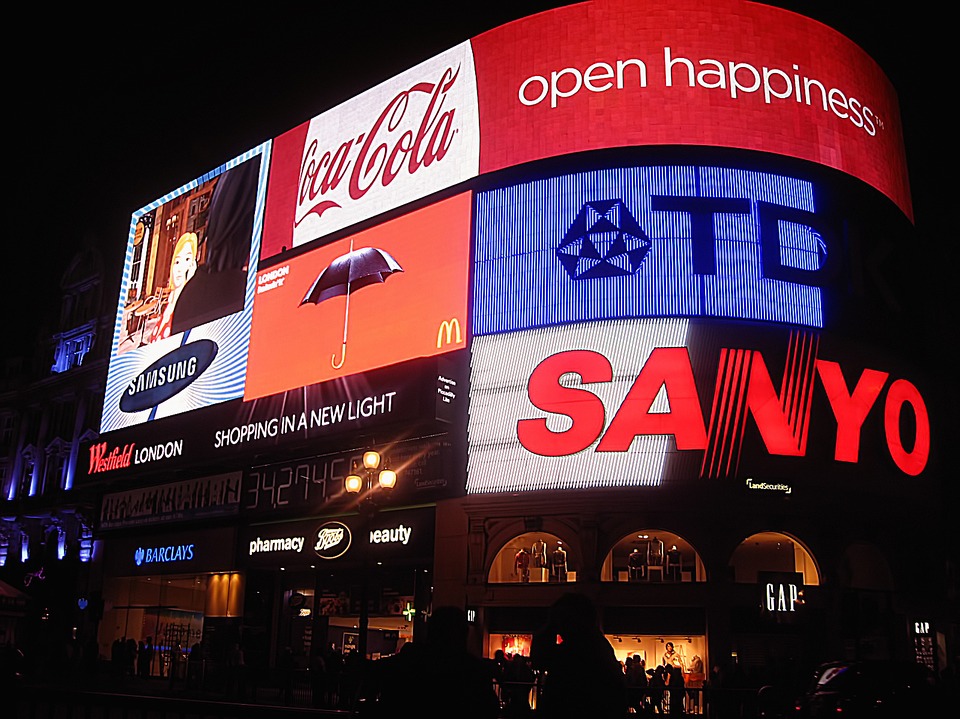
No, I don’t want to spend 15 minutes watching commercials during an hour-long episode of Game of Thrones. However, I’ll admit that I’ve found services and products through ads frequently.
The streaming service Hulu lets you choose your ad experience, so some places it’s not so bad to deal with. If I have to watch ads, I’d rather do it at the expense of having some sort of personalization. Mainly because I could benefit from it later.
But if you’re on Facebook, Instagram or Twitter, expect the ad experience to be vastly different. Since I’m using vaping to quit smoking–which is really hard to do when you’re stressed out by the way–I regularly get ads regarding cancer lawsuits against that company. It’s funny, because now a previous Marlboro CEO is running what’s supposed to stop us from vaping.
Seems that smoking, at all, is specifically aimed at a teenage demographic. Even without ads, look at what marketing has done now. I’m 27 and I’m over here huffing these things everywhere. But how did that happen? Because of the way these things were essentially marketed and then advertised to us. All of it matters.
Digital convergence is everywhere. It’s one of the biggest things I’ve learned about the past quarter. And now I’m here at 1 am on a Thursday morning, working at a brand new marketing job at 7 am…at a place where I can’t really get any extra work done.
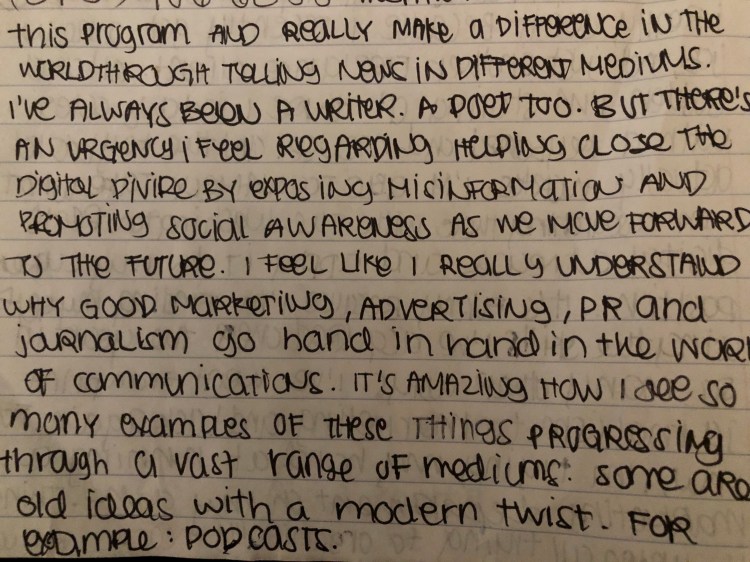
Although I’m determined to publish the two blogs that I’ve written regarding these topics the past two weeks. This particular blurb about advertising took up quite a few front and back pages in my notebook.
From my notebook. The blog before the blog.
It’s imperative I get my feels out, as some might say. And in short, I’m really creeped out that I, along with many others, have to zen out this weird big brother dystopia out of a George Orwell novel that no one thought was actually going to happen.
Except maybe another writer. I mean, I figured we all knew by now that no facet of our lives is really private.
Ads are meant to personalize, they just go to a whole other level. There’s been a lot of outrage, especially amongst women. I mean, if you have any smart device, all of you other devices are going to know what your routine is to a tee.
But sometimes algorithms and whatever mess up, leaving huge molten craters behind. Some people can’t have children. Or might have miscarried. And they’ll still get baby ads. Other women have realized that the ad experience trickles even down to your damn period app.
It’s disgusting to think that we have no privacy in our lives. These are like, the kinds of things that mortified me growing up. I grew up in a family so tight-knit that it was actually considered textbook dysfunctional. Just not the type one usually thinks of. It’s an overbearing lifestyle.
This is how I feel with ads. Seriously. I’m really, really “zenning” it out though. And uhhh, how many of these ads that we are seeing are really vetted and valid? Not everyone is going to check the comments before purchasing that Furbo dog camera treat dispenser off Facebook. They will just think it looks cool.
The lack of transparency and accountability behind companies buying ad time is so astronomical that it’s laughable. So many people end up unhappy after being scammed by these strange ad things on their favorite social media page.
If there’s so much digital and media convergence, why isn’t everyone else catching up in terms of media literacy? It’s pretty sad. It’s pretty simple.
Not only are the public hindered by the second screen experience, they’re now engrossed by the digital divide. And no one wants to address the monsters behind native advertising and brand marketing. But we all keep going on.
I spent Wednesday at my new job messing with everyone’s privacy settings. Heavily. And for a Mac user to figure it all out on a Windows desktop was phenomenal. But it reminded me that even if I completely disabled these settings, everyone’s smart phones connected to WiFi would give away their information to whoever wants it anyways.
Even the fact that I follow more left-leaning politicians on Twitter means that my ads are well…very snowflake-y. I’ll get ads for products, services and pushing blogs that are 95 percent clickbait. And let’s not even discuss the spam emails. I’m getting hundreds of emails a day. Professional some, but mostly stuff like date Groupons.
Every time I complain about some sort of ache or pain, you can count on good ol’ WebMD shooting me a trusty email about overlooked cancer symptoms. It’s creepy. It’s invasive. However it’s highly convenient, especially in a world where instant gratification is key from all angles.
You can’t get away from it. I’ve continuously blog-preached that those in the communications field have to adapt to these types of rapid change or else it could mean the end of our industry as we know it.
So how do we harness a demon that’s transitioning into a monopoly? It’s so vital to strive for strong ethics in communications. If people don’t believe what they see, they won’t partake or consume in what’s put in front of them.
In short, is everything in life about pulling at the heartstrings behind our love for humanism? What about transparency and the simple act of being genuine? There’s so many questions left unanswered, so that’s why it’s crucial to continue to learn how our field truly connects to others.
Why are influencers so popular? Because they are also effectively closing the digital divide. It’s not just Kim Kardashian with ‘Flat Tummy Tea’ or Cardi B constantly repping Fashion Nova. If you have any type of following online, it’s that much easier to get your foot in the door as a brand influencer. I’m not sure if it’s good or bad. It just depends on what it’s being used for.
I mean why not be a walking advertisement. If you have any type of following or adhere to some sort of niche, it’s possible to become that. If enough educated individuals in journalism hop on this bandwagon, it could mean a life or death difference for this particular industry.
I don’t have all of the answers. It’s impossible to do so with everything, especially technology, constantly changing. But that’s also the scary beauty in the profession. No one can be a complete expert in it and no one ever will be–there is ALWAYS something to learn.
It’s clear that continued research and expansion into the impact of advertising and marketing is imperative for the future. When all fields of communication thrive, everyone involved prospers.
Marketing needs advertising, who needs public relations…and they all need journalism. And since journalism needs monetization to exist, knowing the ins and outs of marketing and advertising is essential.
Seeing what types of advertising are beneficial is also completely needed. In short, not all types of advertising are good for the seriousness of journalism. Such as native advertising. I can’t explain how frustrating it is to see the lines blurred so much to where people fail to harness any concept of media literacy. The complacency is astounding.
I’d rather deal with organic and inorganic outreach than native advertising. Although it’s sad when you can tell that likes or follows were bought, not earned. I can’t knock what pays someone’s bills too much.
Even brand marketing is better than native advertising. Anything where it seems like I’m going to be an actual human. All in all, this industry is like unique ways to push a form of telemarketing. A new way to connect to consumers without having to show up on their doorstep to convince them that your product or service is worthwhile.
Everyone wants organic outreach the most. But making that happen when you aren’t internet-savvy is pretty much like climbing Mt. Everest with improper protective gear.
Advertising is a numbers game. It’s like giving an investigative journalist raw data in a folder and telling them to find the story in it. You have to be completely calculated to plan out an advertising or marketing campaign.
It’s planning the future of an enterprise. And if you can’t sell it with your soul, that’s where brand marketing and native advertising come into play though. I can run around in circles talking about how much I hate or love their outcome for any general brand.
How many times will you check your social media platforms while reading this blog?Probably a bit–I can guarantee even the most anti-social is tapped in somehow. Media convergence is prevalent right now and it’s taken a whack at the digital divide.
So about the Big Five.
Everyone has one of the Big Five of social media: Facebook, Instagram, YouTube aka Google, Twitter and LinkedIn. They all cater to vastly different parts of the internet but at this point, they’re pretty vital to any part of the communications industry.
I’m not a big fan. I grew up outside and whatever, like every other millennial. But being able to navigate through each medium is way to have success as a multimedia journalist in this age, especially when those catalysts aren’t always used for the greater good.
I mean, I’m here to tell the truth and that’s where my loyalties lie. I’m only good at words and the Big Five that came with the rise of the internet have changed the way that words are taken in.
So it’s only natural to take what I’ve learned and apply them in other places. It’s constant trial and error. It’s a challenge. It’s pretty fun and exhausting at the same time.
Why care about the Big Five?
I can’t speak for everyone in my field but I do know that we all probably learned the same exact ethics to get where we are now. I want to adhere to those ethics while still using the Big Five in a way that is beneficial to those that come across my platforms.
Presidential candidate Bernie Sanders and his campaign are pinnacles in effective ways to use social media, even when social media giants might not completely be in tune with you.
The federal minimum wage at the beginning of the decade vs. the federal minimum wage at the end of the decade.
Whether it’s through social media, email or cell phone, this presidential campaign is really hitting the ground running, relying on communication to get their point across.
It’s happening! #BernieForHBCU takeover of the Blavity Politics account!
For example, let’s look at Twitter. I’ve discussed before how Twitter’s CEO Jack Dorsey harbors a soft side for conservatives and white nationalists. Even with supposed consistent moderation and a more supposed “paid political ads” ban, Twitter is still used daily by our current President in order to push his narratives.
In short, Twitter has a huge loophole that can’t be closed.
Mark Levin speaking one week after I took office. This was always a planned COUP and the Radical Left Democrats will suffer at the polls in 2020! pic.twitter.com/XHd5grQUaM
And his Twitter following continues to grow. At 66.9 million followers as of 6 pm PST, the only president with more followers than Donald Trump is Barack Obama, with just under 111 million followers to count.
I mean, our previous POTUS was a master at communication via social media. And he still continues to be. To say his tweets are drastically different than President Trump’s is a massive understatement.
Need I post more to show the difference? I feel like there’s this clear notion of catering to a certain audience. It’s either left or right. And in-between isn’t acceptable with either side.
While Obama pushes for unity, Trump is pushing for ratings like our country is another season of the Apprentice. We all know that Rasmussen has a huge conservative-leaning bias. Where are you getting your facts from, President? Seems like you’re picking and choosing a narrative to fit your fancy. Who is really the “fake news” then?
Honesty and transparency is absolutely everything nowadays.
I wonder how many jobs will turn me down over this opinion. But it’s really all common sense to me. Use your platform right and spread awareness across the nation.
Or the world.
Even Taylor Swift got on board with that one. Here’s just a recent example of it. We all know that she finally got political last election, too.
This means that being able to innovate journalism is the only way to beat this blatant growing use of citizen journalism as propaganda that the right has really latched onto. It’s not about the rights of who is conservative and who is considered liberal. It’s about basic human rights, as well as the need for truth across the board.
Facebook is another problem. We’ve seen Mark Zuckerberg in action, trying to run around questions from Congress time and time again.
Rep. @AOC called BS on Facebook not fact checking political ads right to Mark Zuckerberg’s face pic.twitter.com/79OZLpjyFS
All memes aside, these big tech people don’t have everyone’s best interests in mind. That’s why it’s up to those in the communications industry to harness those tools and use them for the better of society.
Our children are at risk, too.
YouTube and Google struggled with the lasting impact of alarming videos seeping into children’s videos for a few years, along with the complicit nature behind executives. If you want to read more about the YouTube kid video debacle, check out this highly extensive Medium post by James Bridle here.
To be honest, the issue highlighted in the article above is what needs to be addressed. All of these things occur because we really don’t have a clue how to keep new age propaganda from spreading.
What happened to vigilance? We’re really out here questioning scientists over climate change but not questioning those that create content to rot out our brains?
Therefore, it only makes sense to push out saturation with more mindful content. In all reality, the job trickles down to content creators.
Enter journalism. We’ve seen how the Washington Post has managed to expand their reach into far parts of the internet that many haven’t touched. And now, people in the communications industry are starting to catch on.
Maybe we can’t teach media literacy to those that are on the older spectrum. You only want to know what you seek. But the younger generations? Ready to learn and do better than us. Our lives and the way they will end up all falls on them.
This is why so many journalists are jumping on TikTok.
This is why even President Trump has a Twitch.tv channel, even if he has barely used it yet. The greatest way to garner a relationship with the public is through online transparency. And the younger we get, the more we kind of seem to care about it.
If you can’t beat them, join them. If we’re able–as multimedia journalists–to break into a new market, we’re able to not only commercialize sustained journalism, but we can spread the truth.
TikTok is full of funny videos. Twitch.tv is an Amazon affiliate meant to cater to online streaming gamers. How do you spread news through these mediums? Through letting people get a slice of life as a reporter.
It really all comes down to conversation. People want to leave their two cents in real-time. That’s why Twitter, for example, is so vital for journalists.
Live commentary and updated breaking news is an amazing and useful way to connect to whatever community you’re local to.
I use this example a lot, but living in one of California’s major fire zones means that following journalists on different platforms via social media is a way that I can stay safe. It also means that I can contribute on the ground as a freelance journalist in order to protect and inform others through something as simple as a hashtag.
At this point, hashtags are universal and make life that much more accessible.
Look at what is happening in Hong Kong right now. Riots are prevalent. Citizens are getting hurt because they want democracy. If there wasn’t such a big societal need for the Big Five, would the world be able to know about this kind of obvious government corruption?
Just because we are America doesn’t mean that we aren’t vulnerable. The facade that we are devoid of problems is highly problematic. That’s another reason why it’s imperative to keep pushing against the norm.
Facebook is not a valid news source, sorry to all the Aunts and Uncles out there that think it is. But a valid news source can use Facebook to push an even more valid narrative. On top of that, it’s a way to communicate to readers and make their experiences better with each article or livestream.
It’s going to take time and effort. And to be honest, we really don’t have a lot of time left.
With climate change, homelessness and gun control looming over our heads, on top of another presidential election, it’s clear that moves need to be made in order to gain public trust, especially for those who feel alienated in modern society. Which happens to be both sides of the political spectrum.
We have to know how to use the Big Five for the sake of everyone with internet access. It’s all about humanity and survival of the fittest. Because we aren’t going anywhere.
Once one of the Big Five falls, another will pop up to take its place. Since this particular industry is subjected to constant change, learning how to stay ahead of the game is key to staying afloat.
I’m right there with the rest of the older millennials. Technology is an enigma that I’ve been forced to master and come to terms with. I’ll always be in the learning stage with this profession, although that’s really the fun in it.
But seeing the innovations in communication is the biggest reason why the industry draws me in. Connection is everything.
Some people are homebodies, and not by choice. Some have major social anxiety, like myself, where it’s far easier to make a difference behind a computer screen. Some people have double lives to lead–I’m talking about multiple careers in order to keep a roof over their heads.
Some people want to know more than what they’ve been told. Some people just want more personalization. Some people just want to buy things they might not see in real life.
Social media helps fuel relief in all of those areas, when used correctly. Overall, it’s really a full-time job to be an expert in this field. Since the rise of the Big Five, there’s now more side hustles than ever. If you can harness that side hustle with intricate techniques, you can have a following.
And having a following not only makes money, but has a lasting impact on those that adore what you do just as much as you.
We can’t get away from social media and the impact it has had on the media, marketing, advertising and the realm of public relations. So it’s like the old saying goes: if you can’t beat ’em, join ’em.
Being able to understand and harness these new catalysts for communications helps us understand how commercialization, personalization, entertainment and media have all intertwined.
I decided to jump into the world of print journalism. I’ve found through the years that I’ve also had to learn to master various other platforms as well.
Multimedia rules our generation and while it’s sometimes scary and a pain to learn, it’s something that every journalist needs to get in order to push their career forward. It’s truly something that is a gift and a curse.
In the easiest terms, it’s a way to document memories without having so much of it on paper. What you say or do on the internet is out there forever.
Right now America is watching the impeachment inquiries of President Donald Trump. You can watch it on the television. You can watch it online just about anywhere–Facebook, Instagram, YouTube, various media and probably even Twitch. I happened to catch it on Twitter.
Bill Taylor revealed significant new information in his testimony, saying his aide was told by Gordon Sondland that President Trump cared more about investigating Joe Biden than about Ukraine.https://t.co/FY0VHKvOcMpic.twitter.com/qNCbTgaJ3V
Yes, a social media website. How does that happen? I’m sure I’m not the only one to see it, and the internet gives everyone a way to pay attention. Whether at work, in school or at home, there’s a way to check in on what pertains to your life.
Now social media can be personalized to a point where you can see information while doing other things. We’re all multi-tasking. It’s also a case of the second screen experience.
There’s little tools like Google Home and Amazon Alexa that will tell you news headlines in real time while you go about your day. There’s all these ways to stay tapped in.
When the information is good, it’s that much easier to put trust in the second screen experience. But I feel like just how many journalists now operate with a disclaimer in order to differentiate from their bias, it’s important that every other part of the industry does the same.
For the most part, it does happen. But there’s still a few bad apples here and there.
Twitter is also a place where we can now see real-time commentary. It’s a place where we’ve seen every part of the communications industry flourish.
Public relations has a fast way to react to damage control and everyone can effectively communicate with each other in a way never seen before the digital era. However, if the intentions of good aren’t there, we’re just looking at more propaganda.
For example, think about how big oil companies are trying to push the narrative that they’re looking for a “greener” route to do their business. It’s clear that there is not.
Or what about how private energy companies like Pacific Gas and Oil or Southern California Edison can continue to push that shutting off power during fires is only beneficial to the fact that they are no longer liable if there’s a massive natural disaster that might have been their fault?
Thanking people for their “patience” is really the bare minimum. However it’s all they can do to not make anymore people blow up on them.
There’s also the fact that because of social media and callout culture, there’s no reason to attempt to hide anything from the public anymore. If there’s a farce, expect it to be revealed. Like..in the case of Californian Governor Gavin Newsom. Taking money from those he has recently scorned.
Cal-Unicornians: read this. Retweet it. Understand that Gavin Newsom is lying to you. Consider how terrible the reporting has been; radio, TV, newspapers repeating the lie that PG&E was acting outside the wishes of regulators. https://t.co/BO6wDl9MGC
Unfortunately Twitter is a place where misinformation is a problem. That’s why it’s up to those in our field to be able to make things clearer for those without the media literacy to spot a scam. And it’s important to be able to keep an open line between companies and those that use their services.
.@GavinNewsom We’re not interested in apologies. We want a company who knows how to manage their business, and demonstrates competence in building, and supporting an effective infrastructure in the Worlds 5th largest economy. Clearly this is not @PGE4Me#PGE
If we, as journalists, don’t continue to learn innovative ways to utilize social media, it’ll probably overtake us. With the next presidential elections looming, it’s clear that we need to be wary of what’s to come.
But with vigilance, it’s apparent that the world is ready for the truth to be told and for personalization to come with it.
Can you imagine a time before you could record your dogs every moment they do something remotely funny? Me either. But I’ve personally taken a step back from digital technology recently, for a time. Now my use is in full force. Dog multimedia all the time. Photo by Ashlyn N. Ramirez.
“What would your average day look like without access to digital technology?”
It’s hard to say whether or not I’ve been able to live a life without the use of digital technology. I guess that use was minimal while growing up. I enjoyed being outside and in the moment.
I mean, I even had a skateboard from Toys R’ Us. I was rockin’ on. At least I thought.
But in the end, I’ve really spent over two decades connected to some kind of screen. Even if it wasn’t initially an iPad or iPhone.
That want for catching things as they happen has transferred from one catalyst to the next. This is how journalism continues to adapt and evolve.
Considering how the news has recently jumped to this medium, it’s no wonder that multimedia journalists have to use a combination of digital technology and old school proficiency to do what they want to do.
Not everything is what it seems, but they all make for great examples.
The Washington Post has now changed its description of ISIS founder Abu Bakr al-Baghdadi from “Terrorist in Chief” to “Austere Religious Scholar” to “Extremist Leader” pic.twitter.com/h899LvZVLX
When you have to focus on using your five senses to figure out something, some will come to realize that digital technology just makes the process faster. It’s still just as tedious though. Immediate doesn’t mean perfect.
Without digital technology, my online schooling wouldn’t be possible. Neither would my profession. Nothing would be instantaneous.
Therefore, I feel like I’d end up spending most of my time hanging out at home. Maybe even writing a crappy book because I’m really just that bored?
Sometimes it comes down to an existential moment.
A piece of mindfulness and enlightenment. Then you’ll appreciate the technology you have that much more.
Right before I started this graduate program, I took my first break from technology. And it wasn’t even that big of a break. If anything, I just stopped communicating through my phone. Only in person instead. It’s something that rejuvenated my life and helped me connect to my old self again.
And my old self always loves a good scoop, found through hard work and perseverance.
Never would I thought that at some point in my life, I would have access to research, data and statistics all in the palm of my hands. I always compliment Twitter and Reddit for their ability to quickly share news globally. It’s something that while many may not use those platforms still, there’s still enough buzz about them to keep them around.
But think about the scrutiny that comes with this gift. Everyone that’s a later millennial remembers the Monica Lewinsky scandal. It’s something that former President Bill Clinton has actually been able to recover from.
Our current president continues to use digital technology in order to bend the law for him, thus harming our democracy while getting his agenda. How is it that a women gets shamed online and loses everything?
All while our president is the center of a handful of investigative inquiries.
Digital technology often causes bias and misinformation. However, if we didn’t have it at all, there’d be no way to really keep a set of checks and balances in our country. We simply wouldn’t know who is running our country at all. Instead, we have to work off of.
The one thing about waking up and not touching your phone is that everything seems sweeter. Making that calendar, brushing your teeth and hair, a good exfoliating face wash…all of that has more meaning. It’s about the simple things. And when I took the time to slow down, I really got to catch up on a few things–my sleeping, free writing, watching Netflix, art, cleaning, cooking AND reading.
I even picked up photography again.
Catching things in the moment is one of my favorite past times. Even if it’s blurry. Not everything has to be so serious. Photo by Ashlyn N. Ramirez.
I don’t even remember the last time I read a book for pleasure. But I highly recommend The Book of Mindfulness. Suddenly, all this time I spent sitting on my phone was taken up with actually taking time to care for myself.
That way when I did start getting back online for school, I was more careful to really handle my time management the best I can.
Sure, I’m writing this in the middle of the night after a random spark of inspiration. Yes, I binge watched the Netflix series Prank Encounters. My fingers hurt from cracking them. I can definitely say that I am not stressed anymore though.
If you can let go from the necessity of needing an online presence, I feel like it’s ultimately that much easier to create one on your own without even trying.







 All's Well That Ends Well