So, here I am. Just sitting with my thoughts. Feeling okay. Not great, not awful. Just okay.
Lately, I’ve found myself ruminating. About everything and nothing at the same time. The paradox of politics has been especially loud in my head. We live in a moment where standing for something should matter more than ever, and yet we’re watching people fall for anything.
The divide between left and right feels enormous, but maybe we’re looking in the wrong direction. Perhaps it’s not about the dichotomy between what’s left or right. There has to be something else.
I look over at the book I’ve been reading, Pedagogy of the Oppressed by Paulo Freire. Suddenly, the thought bubble is taken over by the little speck of light you see when you’re floating to the bottom of the sea. Small, but bright.
Maybe we should be looking up and down.
Because let’s be honest: we’re not on the up and up.
Many millennials—often burdened by debt, high rent, and economic instability—are living in multigenerational households. As of 2021, approximately 18% of millennials (ages 27–42) were living with their parents or other older relatives (Pew Research Center).
Millennials have lived through wars, pandemics, and now the normalization of fascist rhetoric in American public life. From 9/11 to Iraq and Afghanistan, to COVID-19, to the destabilizing effects of misinformation and mass surveillance, we’ve been through it. And now Gen Z is dealing with it too. And so will Gen Alpha, which is a shame.
Coming together still feels like a dream. But dreams don’t happen unless we make moves. And the community needs to hit the ground running. We’re all going to have to pick up the slack.
Time does not stop for anyone.
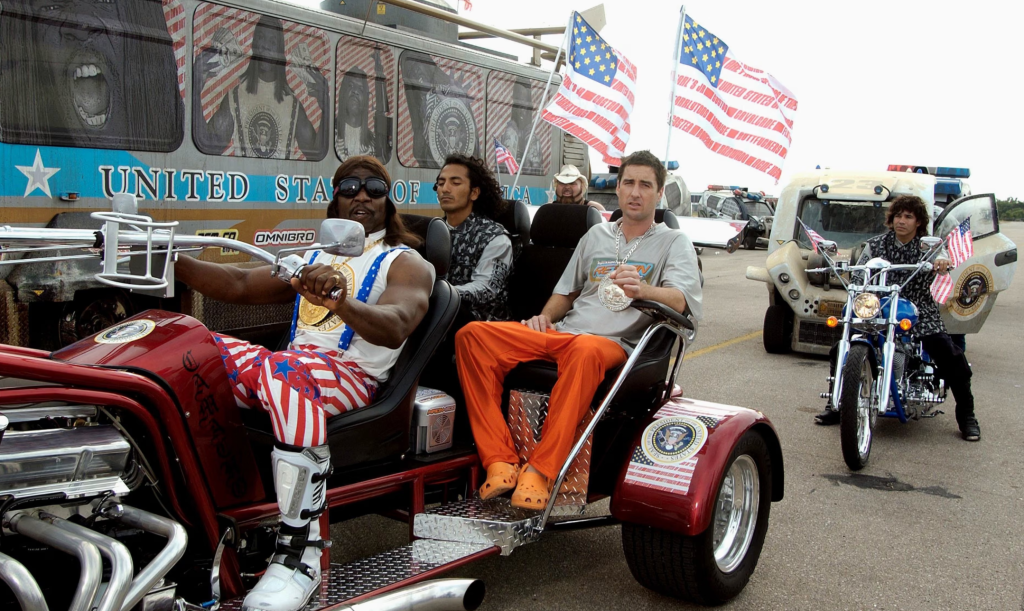
Idiocracy, In Real Time
Photo Courtesy of The Guardian
I finally watched Idiocracy the other day. It’s satire. But barely. It’s a little scary how books and movies help us make sense of our present day.
In the U.S., most adults read at a 7th to 8th-grade level, according to the National Center for Education Statistics (NCES). Post-pandemic studies have shown a decline in literacy, particularly among young people.
This is why my son has a “banned books” shelf, for all stages of his life. I am afraid that this type of information might slip through his tiny hands if I don’t provide it. So I will. I will teach him. The most radical thing I can do, as a parent, is teach my son what the schools will not.
Knowledge is the last vestige of reality. We’re watching it slip through our phone screens. Anti-intellectualism, algorithm-driven thinking, and an overreliance on AI-generated content have reshaped how we think, what we value, and how we interact. Like Baudrillard predicted, we’ve become a nation of simulations.
We’re watching the downfall of the United States in real time.
And then there’s still half of America that doesn’t realize that. Still.
What We Need: Community, Care, and Clarity
However, there is hope.
Creator: Jae Hong | Credit: AP
Copyright: Copyright 2025 The Associated Press. All rights reserved
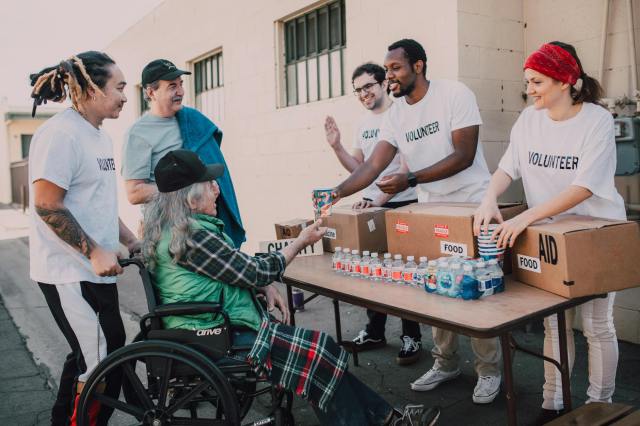
In California, we’ve seen mutual aid in action—from organizing during ICE operations to recovering from catastrophic wildfires. In July 2024, reports of targeted ICE activity in Los Angeles renewed the urgency around community defense, and the response was swift: neighbors supported one another. Legal aid groups mobilized. Volunteers stepped in.
We’re more than just voters. We’re protectors of the community. There may be a drastic digital divide that the wealthy abhorrently take advantage of — and people are starting to see it.
This isn’t just about left or right.
It’s about transcending fascism. About resisting late-stage capitalism. About caring for one another in a system that’s tried everything to convince us that care is a weakness. It’s about a community of care.
It’s about grassroots organizing, building community resilience, and mitigating misinformation. It’s about refusing to back down even when things feel impossible.
The population is waking up and putting their foot down. Enough is enough.
I admit that it hurts a little—but not entirely—to understand a Spanish meme on Twitter or Instagram. I don’t use a Spanish keyboard on my iPhone. And try talking to other fluent Spanish speakers with Google Translate. I can’t compete.
In short, I probably understand about 30 percent of what’s said to me, and that’s being generous. I religiously use subtitles when watching Narcos: Mexico. To say it’s just embarrassing is an understatement. Finding a solution to my first-world problem ended up with long-term plans for the future.
Straddling Two Worlds with One Language
It’s awkward being multiracial but monolingual. I’m the less than half of US-born Hispanics whose Spanish is forever subpar. I’m also part of the less than half of 1.4 million Filipinos surveyed in 2013 that live in California and do not speak Tagalog, Visayan, or Ilocano.
Pew Research Center data shows that over 60 percent of Hispanic-born citizens in the United States speak Spanish. And U.S. Census Bureau projections found that the share of those who speak only English at home rose from 26 percent in 2013 to 34 percent in 2020.
But 95 percent of all Latino adults see the value in learning how to read and write in Spanish.
So Where Do We Fit In?
So, where does the third of non-Spanish but Hispanic-identifying speakers fit in? There are 10 million Americans that identify as multiracial. What cultures do they identify with best?
My sense of culture is chaotic. Probably not by choice. None of my tattoos match. I feel more like a “Valley Girl” than anything. A language barrier is always an excuse for staying mute on the matter. Growing up in rural Southern California, I never realized just how much I would be missing out by never picking up either of my native languages.
Language Lost, Identity Fractured
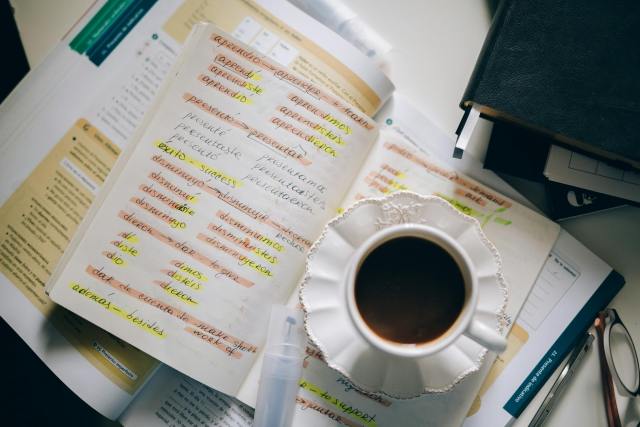
I have a handful of Spanish-English dictionaries that we’ve barely touched. At 29, I’m too old to pick up a second language thoroughly. Eighteen is the cut-off for learning a new language well, according to Scientific American. When faced with the debacle of my monolingualism in public, I usually smile and say that I can’t roll my tongue for an “r.”
Therefore, I’m not going to try.
Trust me, learning Spanish in high school pales compared to someone who has spoken Spanglish their entire life. I yearn to code-switch and never will.
I lack an identity except being a third-generation American, which is less than impressive these days.
The Cultural Disconnect Is Real
Being light-skinned yet part of a multitude of beautiful yet underrepresented groups made for an interesting upbringing. It shows a stark difference between first-generation immigrants and the latter.
People who speak Tagalog or Spanish—primarily Spanish—will come up to me to strike up a conversation. In Costco, at the DMV, whatever. The blank stare they get in response that turns into a nervous laugh is always met with an eyeful of disappointment when realizing that I’m entirely white-washed.
“Why didn’t your parents teach you any other languages?” — the general question I feel — masked behind a blank stare with a hint of disdain. The ability to speak the Ilocano dialect was never something my maternal grandmother taught to anyone. My great-grandparents took the language with them when they passed. My mom never knew her father, a Hispanic and native military man who died before birth.
My paternal grandmother and my older family on her side speak Spanish, while the younger generations know very little. I could never understand why until I got older.
A Legacy of Survival
People seemingly tend to look down on others who share their heritage but lack the native language. Statista found that 7.3 million Americans in multiracial relationships identify as Hispanic. But you have to consider the term itself is a colloquial monolith.
I didn’t choose only to speak English. Colonialism did that for me. Not every person gets a chance to hold onto the cultures that represent their identity. All I can continue to do is look on with envy at those that can migrate their entire conversation to a different language like nothing. And I can also advocate for change.
My entire racial identity, my whole family, gentrified themselves over a century to assimilate and survive. The part left the Philippines for Hawaii before World War II. The rest fled Sonora, Mexico, and settled in the most significant Yaqui indigenous settlement in all of Arizona.
With some long-winded, extensive research, I’ve realized that both my mom and dad’s parents felt it was better to keep all aspects of culture at home and exude as much whiteness as possible. I developed a sense of fractured yet eloquent cultures through other avenues: vast amounts of literature, food, music, and art.
Rewriting the Future
I hope to instill those values in my future children—while allowing them to learn more than what English has to offer. While I may never really know where my indigenous roots lie because colonialism took those languages from my generation, I don’t plan on leaving my family to figure out their identities on their own.
Thirty years ago, there wasn’t a push to have bilingual children like there is now. Interracial marriage is still a relatively new concept. It was a survival tactic for survival in a nation ruled by white, wealthy men. When I look into U.S. census records, I don’t see a sole family name there. The fact that immigrants had to swallow their cultures to fit into America’s bubble is egregious.
Taken during the 2017 Point In Time Count outside of Downtown Fullerton.
By Ashlyn Ramirez
Fullerton Mayor Bruce Whitaker tries to walk a fine line on the city’s housing crisis. He acknowledges the growing problem of homelessness but then throws up his hands and says he’s powerless to do anything about it.
“I think it’s very important that people can find adequate living space without consuming their entire incomes,” Whitaker told the Daily Titan, the student newspaper at California State University, Fullerton. But he was quick to add in the 2017 interview that “the government itself is part of the culprit of driving prices up.”
The city of Fullerton still accepts state and federal money to provide affordable housing. Since that 2017 interview, the city has received millions of dollars towards various ventures to clean up the streets.
Orange County also recently received $5,764,931 in federal funding for homeless assistance. It’s not clear where all of the money goes while a strained community struggles to make ends meet.
Somehow, millions of dollars turn into only 145 new units since 2017, with 45 still in construction. The New Vista Shelter consists of eight homes for transitional youth ages 18-24. Yet, Fullerton accounts for almost 1,500 unsheltered individuals alone, and Orange County as a whole saw a 43 percent rise in homelessness since then.
The problem could be even worse as the reports do not factor in people living out of their cars or “couch surfing.” In Orange County, the backdrop for the crisis is one of the nation’s wealthiest communities, a landed aristocracy served by teachers, nurses, and shopkeepers who can’t afford what passes for affordable housing in the county.
Throw in demand created by Cal State Fullerton and its working-class student body, and the magnitude of the problem starts to take shape. How made is it? The title of the American Civil Liberties Union 2019 report on Orange County — “This Place is Killing Me” — says it all.
Local government must address the humanitarian crisis presented by homelessness through permanent and affordable housing, the ACLU report concludes.
The ACLU found the county can house their homeless but will not due to lack of political will. On top of that, the report found living conditions in affordable housing are just as bad–if not worse–than sleeping on the street.
CSUF graduate student Christopher Rael, 33, said he was short on tuition one semester at community college during the 2008 recession. He saved money for school, and life happened. The money was gone to a cause. There was no one to fall back on.
“For example, when I was sleeping in my car, I did have a job at the time. So that huge misconception about pulling yourself up by your bootstraps? I was doing that,” said Rael. But he was only getting 6 hours per week. And it’s hard to live off $80 weekly in any part of California, even over a decade ago.
Rael said his parents weren’t “equipped” to support an adult in college. So, he found himself sleeping in his car. Telling anyone his situation was not an option. Sometimes, you have to pay for tuition or pay for a roof over your head.
When at a financial aid meeting to understand the metrics behind FAFSA’s Expected Family Contribution, Rael said, “I explained that I could show that I’m literally homeless. I could walk you out to my car right now, where all my stuff is in my back seat. And he [the worker] looked me square in the face, and I’ll never forget his words.”
The worker told Rael that he could lie to him [about being homeless], and it wasn’t a risk that he was willing to take. But another worker, a Havard-trained psychologist, was able to secure financial assistance for him.
CSUF has one of the highest cases of housing and food insecurities in the state system, according to a 2018 report. Out of 23 schools, CSUF is also the least-funded public university in the entire CSU system.
The price of living there simply does not fit the mold of a budget college experience.
In 2016, City Council-member Jennifer Fitzgerald spoke about wanting to steer CSUF away from its commuter school status. She also spoke about her efforts to end homelessness in Fullerton. “I’ve worked really hard over the last four years on ending homelessness in our community,” Fitzgerald said.
She said she wanted to “expand affordable housing for students.” It’s been almost five years since then. It’s been ten years since Fullerton knew about their ten-year-plan to eradicate homelessness.
Fullerton does not want affordable, permanent housing or shelters near the university. Unless it’s volunteer work that they can leave when done with their good deed for the day. Why? Because the university does not fall under a designated geographic location required to have affordable housing there.
With almost 20 percent of unsheltered individuals living out of their car in the past year, there’s no doubt there are college students who can’t afford a place or a commute.
Addressing an underrepresented community
According to a county report, the average median income for a Fullerton resident is $80,000. That’s almost 60 percent more than the average American, who makes about $47,216 a year.
Relying on a median income to address affordable housing issues drives out locals, single families, educators, and college students alike, said Fullerton Personnel Commissioner and Climate Action Campaign Advocate Jose Trinidad Castaneda, 29.
Castaneda, a Fullerton resident and public servant is also a full-time board member of Abundant Housing in Los Angeles, an organization focused on promoting affordable housing. He monitors 17 city council meetings virtually during his current workweek. Having served as a translator for five years, Castaneda’s interest in the lack of affordable housing began out of necessity.
“My housing story began when I was looking for housing myself, and I found that nothing was affordable,” he said. So in 2018, Castaneda began organizing to get accessory dwelling units approved and drop the fees bound to them–just one way to combat the lack of affordable housing statewide.
Whitaker was not available for comment at the time of this publication. Fullerton City Councilmember Fitzgerald was also not available for comment when reached out on LinkedIn and email. Fullerton City Councilmember Jesus Silva replied with a thumbs up on LinkedIn with no further analysis.
Moving forward by acknowledging the past and present
The lack of comment years later is telling of a hidden narrative. It’s too little, too late for many to call any part of Fullerton their home unless you’re white, white-passing, or financially stable.
“The city is segregated,” Castaneda said. “It’s economically, financially, and racially segregated.”
By 2019, ACLU SoCal found violations in the housing that Orange County offers–including abuse, harassment, neglect, and lack of cleanliness. And just like in 2016, reports existed to guide officials towards ending homelessness.
Part of the problem is policies impacting those with mental health or substance abuse issues, keeping them from the help they need. Castaneda believes that there are not enough types of housing units geared towards very low-income residents.
“I think the police and sheriff are just acting according to the councils’ will. And city councils and elected leaders have done everything to tell themselves and tell their constituents that doing anything to help solve homelessness or help people in need is only going to attract more homeless people,” said Castaneda.
When it comes to Whitaker, Castaneda says he doesn’t even listen to him anymore. He does not find him a credible source.
No accountability remains commonplace amongst local officials.
A 2016 Fullerton Housing Authority reported that those in charge of reaching yearly goals for projects like multi-family rental housing and low-income housing loans failed to do so. Almost a million dollars went towards extremely low-income renters in only one fiscal year.
Other years there was nothing spent at all.
Lack of oversight happened because of the minimal amount of housing units subsidized by donors. Therefore, there’s no track of specific rent-controlled projects and the demographics of people who need them.
Another public document found almost $100,000 spent solely on monitoring/policing expenditures and about $2,700 in relocation in the 2018-2019 fiscal year. The same year, the ACLU published their piece on Orange County’s negligent emergency shelters.
If a one-way bus ticket costs $4 for an adult, that money will send at least 675 unsheltered out of the city that maybe could not go into a shelter.
The most common story told by residents is one of the voices falling upon deaf ears. Fullerton’s government spent money allocated for homeless assistance on one-way bus tickets before, said Castaneda.
A beacon of ocean waves and sunny skies is where the lost get sent across counties and institutions, culminating into other pits of gentrification.
While Rael finishes his M.A., he teaches underprivileged communities in Long Beach. Over the years, he’s created school programs that give back to those on Skid Row. He believes adding sociology classes into the high school curriculum and taking police officers out of schools is a start to combating poverty’s stigmas young.
Until the pandemic ends, though, Rael plans on staying put for the safety of his students. So, there are other ways he gives back to a community that he was a part of not long ago.
“I don’t put it on the Internet. But every day, when I walk to the coffee shop, I come out with donuts. They’re not just for me. You know what I mean; people are sleeping outside that can use breakfast. You know it’s a little bit like that that makes a major difference,” he said.
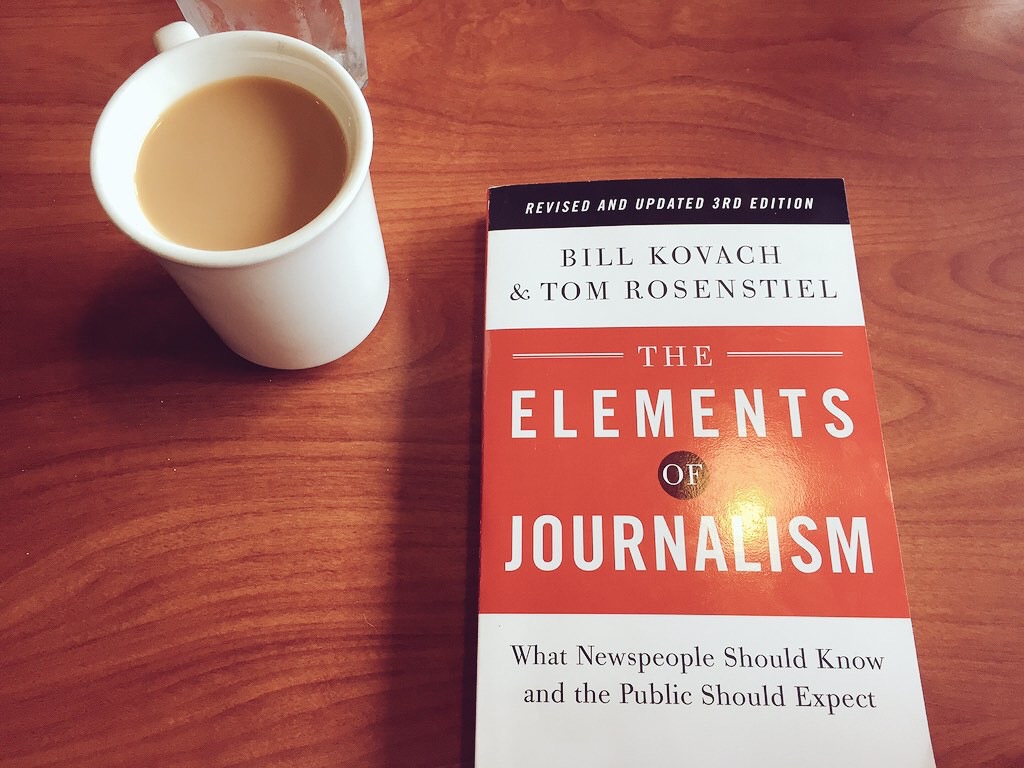
Social media is an unlikely strong asset to the elements of journalism. Photo by me | 2013
I met a small group of like-minded women that lived near San Francisco when I was maybe ten-years-old, living eight hours away. My parents didn’t particularly enjoy it, but they were like older sisters to me at the time.
We messaged through AIM chat like we were buddies that went to different schools. I can’t sit here and recall a conversation today, but I can discuss the impact it had to meet other creative people at that age.
To date, I don’t meet many other writers in my small town. When you’re a journalist, the circle gets even smaller. Therefore any support you get matters; remote support is so much more than one can think.
So here’s part of the inspiration I drew from–something that social media gave me and continues to give to so many others around the world: interactive engagement and consistent communication.
Also, thanks to Wikipedia for existing during those long nights with lonely, angry insomnia. Which actually was a little bit of asthma and sleep apnea too. But I digress.
Eventually I celebrated my 18th birthday at Bubba Gump Shrimp with my parents and two of my internet friends there. We all happen to follow each other on social media today. They do not know that I still have my gift from that day, almost a decade ago. A black, minimal yet strongly bound and empty notebook for me to write in.
That was the first push I had to follow a dream that seemed to be fading with the dying print media industry.
My internet friends and I are not close anymore but I get the comfort of knowing when I open my Instagram, I’ll see a post from up north or in South Korea. One of them got married in the past year and the pictures were breathtaking. In times like these, those thoughts are comforting.
The midpoint for a random but empowering kinship? A simple Linkin Park message board attached to the official website in 2001.
Next came designing Xangas, one of the first [and many] underground blogging platforms. And then, Myspace. I knew HTML, simple website design, blogging and photo manipulation before I left high school in 2010.
At such a young age, I never realized that I was a part of a prolific moment meant to change the way that humans interact forever. For so long, we were bound by our physical capabilities to move, to see, to feel.
Now, you can connect with someone hundreds of miles away. All of this with the touch of a button. In an era where internet bullying had just become a tangible pain [that now 59 percent of teenagers endure], I found solace from the bullying I experienced in public online.
This was unheard of at the time.
And the internet is still a very toxic place to inhabit. In fact, over three quarters of high school students two years ago did not understand the concept of media literacy, a Stanford University study found. People cannot tell between advertisements and the latter.
Since social media is mixed with all facets of communications, it’s clear that e-commerce is stepping on the toes of the press. Implementing a strong strategy to bring in various consumers through the means of education is imperative for survival.
That’s why I enjoy the career path I chose and the learning that comes with it. I am interested in how human interaction changes through the various modes of engagement over this particular modern age.
Since digital interaction is blowing up right now, it’s clear that addressing the digital divide was going to have to happen sometime. Media and digital convergence will continue to rise and the wealth gap will follow along with it.
Especially with the struggles we’re facing with COVID-19, also known as the Coronavirus. The digital divide is a staggering problem grown wildly out of control since the loss of net neutrality. COVID-19 makes it worse.
It’s clear that the use of internet and the products aligned with it [smartphones, laptops, etc.] has gone up, according to Pew Research Center and other internet study trends.
But the amount of unique consumers isn’t going up at all. Only half of the world has internet access. Why is that?
That means that our internet is designed for those who are privileged enough to afford it. That’s not right. The digital divide is real and it’s going to cause problems in an era where a pandemic changed the course of history.
Studying what these statistics mean for us is how those in the communications field can assist in helping businesses stay afloat.
I have gained a lot already from this program about what it takes to use the skills I enjoy, such as writing, and use them to better the lives of both small and big business. I hope to find out more about why social media works in the ways that it does. What does this mean for our future, especially while we are all stuck in self-isolation?
What does the rise of social media engagement reliance mean for the way we process physical emotions in reality? Can social media be a saving grace or is it wrapped up in a wealth disparity gap that we might never break down?
Whatever the case is, it’s 3 am on the west coast so I’m going to wrap this up, add in some outbound links and pictures later. This is the first thing that I’ve really finished since I started my own quarantine a month ago. It’s moments like this where I don’t feel as defeated.
I just want future generations, or even older generations to realize the good behind the internet and why we need to understand the impact of social media–mentally and culturally.
Every bit matters right now. And we’ve all got the time to read.
Even digital media nine years ago can be showcased on WordPress for those on a computer or those using a phone. Just like that, a picture can travel from a blog across the entire social media spectrum. The Brooklyn Bridge in New York City. Photography by me.
Based on your experience with WordPress, what are your impressions with working with WordPress—the pros and cons? It started as a blogging platform but has evolved—should it still be relegated for small blogs, or do you see enterprise use? Are there any blogs that you regularly follow? Pick one and critique it. Why do you like this blog? What is it about the content that makes you go back? How about the design/layout?
I learned the ins-and-outs of an almost daily student news publication during my time at Cal State Fullerton. I was on the editorial staff. Little did I know that an entire digital media spread was humanly possible to transfer from print to the web through a sole content management system.
It’s not effortless. It’s tedious. But the reach and possibilities that stem from WordPress are too immaculate to touch.
Any beginner can develop a website through this platform and become a business owner or a blogger. Or both. The management after is fairly seamless.
But friendly to everyone? Maybe not totally. That’s why there’s experts in WordPress though. We have to make money somehow.
The fact that every individual starts off with the same edit screen no matter what widgets they download makes it so that as a writer, I can easily take the skills and ideas put into another client’s website and repurpose it until my fingers fall off.
It’s like how these TikTok ferret videos of the SAME ferret keep appearing everywhere. Once it’s on the internet, it’s forever right?
Just like that, there’s a Tweet embedding into my blog post with the act of a copy-and-paste of a URL link. WordPress is teachable to a novice wanting to learn. Fixable when altering is needed. And it’s mobile-friendly with their own simple iPhone application. From blogs to media publications and even e-commerce websites, WordPress can do it all.
I feel like WordPress is the top of the list like how Adobe Premiere Pro is more well-known than Final Cut Pro. You’re paying for both the name and the goodies that come with it. This also low-key means that paying for good service prevails for a permanent revenue stream.
Even the crappiest, most mundane business can make money if they have the literacy or hire someone that harbors that capability.
With WordPress you can monetize in more than one way and expand it through sharing. But you have to know how to make all of that happen too… which is why using different tiers of paid WordPress services work for all business backgrounds.
WordPress propels small business consumerism to large markets. Think of it as like, going viral.
Downside? Those less skilled in the digital realm that lack those really good widgets are going to have some really boring pages. In the end, it’s about making minimalism pop. And WordPress captures that essence.
If you know how to work WordPress, you’ll embolden your chances of maintaining the type of clientele who doesn’t want to take the time to pick up a website and the subsequent blogging that comes along with it.
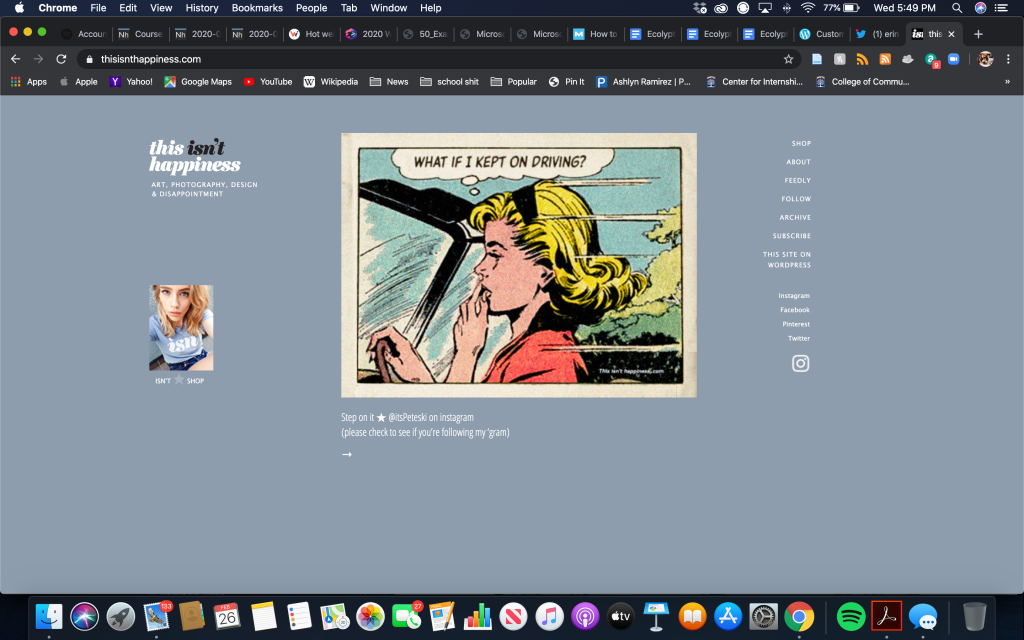
I know it’s going to sound crazy but I’m not big on following bloggers right now. I used to be huge on following artists on another platform we all know as Tumblr. It was mainly for the aesthetic and being able to talk through pictures. Sometimes, pictures being worth more than a thousand words is way better than actually having a thousand words to sift through.
For example, look at the blogger on Tumblr known as user ‘thisisnthappiness’:
A theme is consistently followed that draws people in that focuses heavily on the visual aspect. In short it’s all about showing, not exactly telling.
Their blog is on Tumblr, has its own separate domain and is transferred to WordPress. That means the reach as an artist online is subsequently global. For example, this blogger has been around long enough to maintain these platforms and even open up an e-commerce section to make money off of instead of advertisements.
The fact that simplicity can tell a story is something that consumers vie for when consuming content online is very telling. With the options that WordPress offers to their users, it’s clear that their model is pertinent to content creation in the future.
I’ve went from print journalism to marketing, public relations, advertising and back again. For now, I’m trying to stay in the social media manager realm because it allows me to write blogs.
Meaning I get to exercise my journalistic creativity on the regular. But seriously though, I cannot express enough how underpaid and undervalued I am as a content creator. I’m marketing a brand to retain clients and often I’m still stuck cleaning a break room.
How can I continue to create an organic outreach that reaches real customers when I’m not taken seriously?
This is why I’m in school. I’m kind of hoping that with the next tier of degree in my life, I’ll get taken a little more seriously. I want to help companies grow and I’m generally not given the resources or time to make that genuine connection happen.
Unfortunately living in the metropolitan area that would see my value in Southern California is a six-figure endeavor. I’m talking like, almost a quarter of a million dollars a year just spent on living comfortably.
And I’m not at that point in my life yet. I don’t know if I’ll ever be close. It seems like my generation really got the short end of the stick and somehow it was so bad that the impact has trickled down to literally everyone except the 1 percent.
Yeah, not at all surprising how the difference between minimum wage at $15000 annually vs $15/hr at $31000 annually is the cost of a car. Few of those a year with social media making it viral is some cheap ass cynical marketing.
Connecting to an audience in a prolific way is something that I crave. I constantly find myself reading these feel good stories but the problem here is that they’re all bandaids for some kind of poor practice. There’s better ways to connect to an audience.
I like to do it in writing because I have social anxiety. But then that anxiety took over my words too. Being in this program has really changed me. It’s caused me to become more humble but to also see that I’m worth more than minimum wage.
Journalism is the core of the communications field. The digital convergence that happens with public relations, marketing and advertising is propelled by media convergence. I have always felt like journalists are held to a higher standard than anyone else. This is because the public trusting us is vital to democracy.
We need to strive to do better. I will never not express how important it is to keep going for the optimum outcome. I know that not everyone in the Newhouse School is there for a journalism degree. Some might hate writing entirely. But when we all work together and pay mind to the ethics behind our careers, our lives are a little bit easier.
I hope I can take the inspiration I draw from this program and really make a difference in the world through telling news via different mediums. I’ve always been a writer. A poet too. But there’s an urgency I feel regarding closing the gap that is the digital divide by exposing misinformation and promoting social awareness as our whole world inches further into the future.
I feel like I really understand why good marketing, advertising, PR and journalism will always go hand in hand with each other. One cannot function without the other in our realm.
The amount of mediums is way too many to count and hard to keep track. Right now I’m loving podcasts because it’s a really old idea with a modern twist attached to it.
Multimedia is this whole different ballgame that really gives writers new and creative ways to tell the stories that they write. If journalists like myself can’t keep up with that, we’re going to slowly lose the media literacy we’ve grown to have.
Digital convergence isn’t going to stop, so we need to hop on the bandwagon and ensure that what does come out is used to the fullest extent of the product or service’s capabilities.
Having a free press is my everything. It’s a gift unlike any other. It’s used as a curse, in some situations. I respect it above all else though, always. If more people lose their respect towards this profession, we’re going to see more open hatred across the board.
I feel like so many demographics have been looked over until recently. And this new wave of marketing towards the younger generations through the likes of big data collection is super creepy. Highly intriguing to watch change happen so quickly though.
Who would’ve known that AARPANET would turn into this massive worldwide conglomerate that corporations are fighting to control the access to? A social awakening is happening that is only going to continue to grow.
As human behavior continues to change, we’re currently seeing something unlike anything that’s been recorded by historians before. It’s not Ancient Aliens or anything, but it’s still pretty great.
The ways culture is portrayed across the world is solely because the internet is here to allow for mass sharing. I’m all here for it. Let’s keep sending memes.
It’s so hard to say what else lies in the future. I’m kind of hoping that eventually I’ll have some brain implant that’ll allow a laptop to type my thoughts for me since my carpal tunnel will probably eventually take my hands out.
Other than that, all I can do is hope that there will be some regulations that will keep customization convenient and 75 percent less invasive. Wait no, maybe like 95 percent less invasive. I’m hoping for the best.
Kind of seems like we’re living in a dystopian universe already though. At least we’re all in this together, right?
Classes like this one have taught me a handful of useful tidbits for the future. I feel like this blog has also helped me express my feelings, opinions and what not to the best of my ability. All while getting to drop facts in between.
I’ve got a glorified diary. I plan on using it as much as I can.
I have to pre-write to write.
It’s insane how all of the topics discussed over the term are things I’ve already recognized in real life but never knew the proper terminology for. I’m so excited to continue learning.
As someone who suffers from massive anxiety to the point where I can’t check my email or grades, being able to free-flow while weaving in my understanding of class topics helps me truly get the stuff that I’m reading and watching.
I guess this is essentially the tip of the iceberg with the beginning of my graduate school career. I’m over here, hand writing my last blogs for this class while thinking about my finals. Stressing. Multimedia for one and a case study for another.
The thing that I’ve truly enjoyed about this course though is the way I can now analyze and tie in the importance of digital/media convergence. I can especially see it because I recently got a new job-which at the time of typing this bit I am probably going to never go back-and I happened to be in an office setting instead of being at home.
Totally new to me. Even this program is. But I do enjoy being able to still feel like I’m in a classroom learning, instead of trying to teach something myself with very little to no direction.
So last week, all of a sudden I was staring at three computer screens. Holy second screen experience! And a keyboard and a mouse that work! I’ve been working from a broken laptop for almost a year! This is nuts!
I was able to take what I’ve learned in journalism from my undergrad and what I’ve learned about journalism innovation at my short time at Syracuse and really do a lot of work in a short amount of time. It took me 57 hours, but I got them set up with social media posts across six platforms until the end of March.
It was easily enough work to earn a grand. Turns out they thought it was worth half of that. All of this work I put into this company to make them look good and it kind of wasn’t worth the effort.
Honestly though the fact that this client thought that it was okay to pay me California minimum wage is really the result of the lack of media literacy in the country. It’s super simple to look up the average wage of a social media manager in the United States.
Add in a copy editor and marketing/personal assistant to the mix and the costs add up. I digress, though.
I’m over here incredibly upset that I’m late on my work at a super crucial time but at the same time I’m grateful that the little bit I’ve taken from this program I’ve already learned how to use to further my career path.
And I got to really experience a true multi-screen experience for a little bit that I wouldn’t have before. Even if the client was lackluster, Syracuse got me there and helped me see my worth.
There’s always people that need someone to write and edit for them. Until then I’m going to write my little heart out on this blog and hope that it provides context into myself as a person.
I’ve seen what places like Vox and the Washington Post have done for journalism. I’m writing about the Washington Post for my case study. Those are things that can be applied to basically every aspect of communications. I’m constantly intrigued with the versatile manner that journalism fits within this broad industry.
However with the way things keep changing, it’s crucial to continue to revamp and rebrand the communications industry as a whole. Especially the media, both new and old.
I can’t express enough how amazing it is to take these skills that I’ve honed over the years and use them to better something else.
Considering how my alma matter is potentially shutting down the newspaper that I gained all of these skills from as a writer, I feel like the best way I can combat the reality of a dying newspaper by furthering my knowledge in multimedia. Period.
News needs to be told. We just have to understand the obstacles that we are dealt with.
Two years ago, I wrote the review for @Harry_Styles debut album for @thedailytitan and now I’m happy to support not only my favorite artist, but the student journalists behind this well-written review and the paper that helped me find my voice 🥰 https://t.co/hRgiEl6niV
Being able to connect to consumers is the best way to continue to close the digital divide. Now we just need WiFi accessible to everyone. I hope to see that in the near future. Everyone should have the opportunity to have access to a virtual library.
Without access to simple things like blogging, student journalism and student-ran communications groups across the nation, we will never be able to dominate in the media literacy field.
Student newspapers are vital and @thedailytitan is one of the best around. Many reporters you read began their careers at the DT. It needs to be kept alive. https://t.co/tygyYboFKP
I want to see a day where being a digital era journalist is considered just as important as any STEM major. I don’t think people understand how much goes into becoming an expert on a topic, hunting down verifiable sources and putting together a package that works across a multitude of platforms.
Being a watchdog is hard right now. It’s like trying to get an alcoholic to quit drinking when they just aren’t ready. But if we, as journalists, are able to gain trust and understanding, then the public might be ready to trust us later.
With the next round of presidential elections looming in the corner, I feel like finding new ways to innovate news and find news is more important than ever.
When you help more than 1,200 Members on average each monthwith Stolen Vehicle Assistance, you get some really interesting calls. Like this one from 2019. #BeSafeOutThere
One of my many ads that I’m getting on Twitter currently. I happened to just start working at a trucking commercial insurance place so, makes sense.
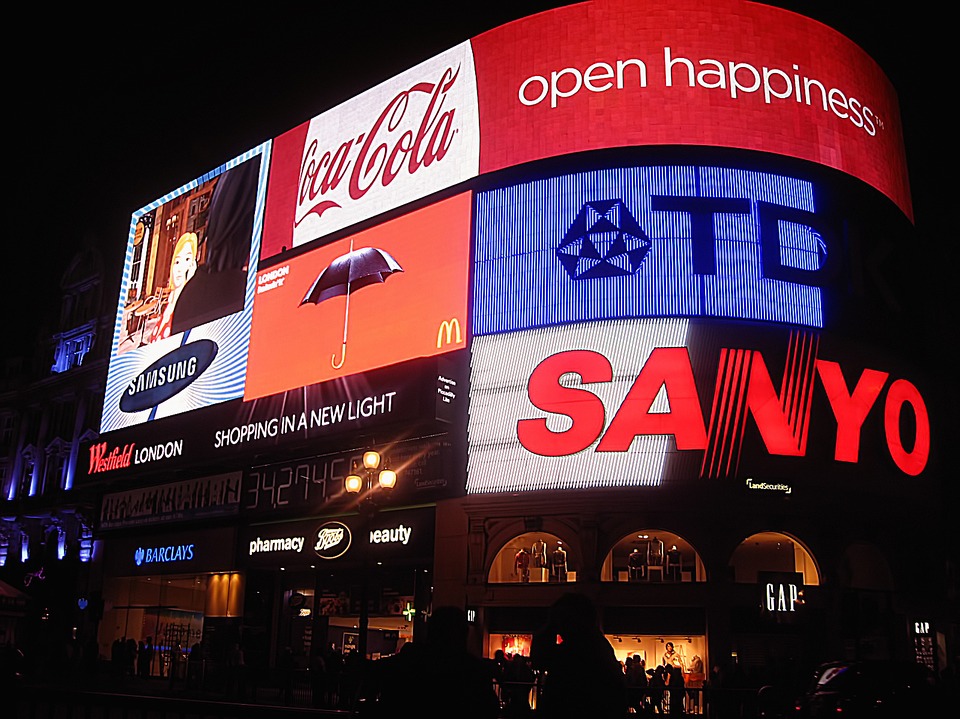
No, I don’t want to spend 15 minutes watching commercials during an hour-long episode of Game of Thrones. However, I’ll admit that I’ve found services and products through ads frequently.
The streaming service Hulu lets you choose your ad experience, so some places it’s not so bad to deal with. If I have to watch ads, I’d rather do it at the expense of having some sort of personalization. Mainly because I could benefit from it later.
But if you’re on Facebook, Instagram or Twitter, expect the ad experience to be vastly different. Since I’m using vaping to quit smoking–which is really hard to do when you’re stressed out by the way–I regularly get ads regarding cancer lawsuits against that company. It’s funny, because now a previous Marlboro CEO is running what’s supposed to stop us from vaping.
Seems that smoking, at all, is specifically aimed at a teenage demographic. Even without ads, look at what marketing has done now. I’m 27 and I’m over here huffing these things everywhere. But how did that happen? Because of the way these things were essentially marketed and then advertised to us. All of it matters.
Digital convergence is everywhere. It’s one of the biggest things I’ve learned about the past quarter. And now I’m here at 1 am on a Thursday morning, working at a brand new marketing job at 7 am…at a place where I can’t really get any extra work done.
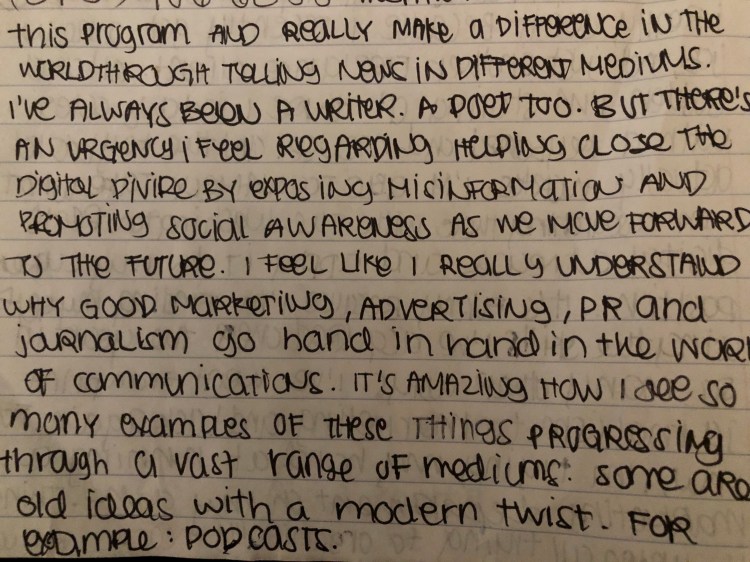
Although I’m determined to publish the two blogs that I’ve written regarding these topics the past two weeks. This particular blurb about advertising took up quite a few front and back pages in my notebook.
From my notebook. The blog before the blog.
It’s imperative I get my feels out, as some might say. And in short, I’m really creeped out that I, along with many others, have to zen out this weird big brother dystopia out of a George Orwell novel that no one thought was actually going to happen.
Except maybe another writer. I mean, I figured we all knew by now that no facet of our lives is really private.
Ads are meant to personalize, they just go to a whole other level. There’s been a lot of outrage, especially amongst women. I mean, if you have any smart device, all of you other devices are going to know what your routine is to a tee.
But sometimes algorithms and whatever mess up, leaving huge molten craters behind. Some people can’t have children. Or might have miscarried. And they’ll still get baby ads. Other women have realized that the ad experience trickles even down to your damn period app.
It’s disgusting to think that we have no privacy in our lives. These are like, the kinds of things that mortified me growing up. I grew up in a family so tight-knit that it was actually considered textbook dysfunctional. Just not the type one usually thinks of. It’s an overbearing lifestyle.
This is how I feel with ads. Seriously. I’m really, really “zenning” it out though. And uhhh, how many of these ads that we are seeing are really vetted and valid? Not everyone is going to check the comments before purchasing that Furbo dog camera treat dispenser off Facebook. They will just think it looks cool.
The lack of transparency and accountability behind companies buying ad time is so astronomical that it’s laughable. So many people end up unhappy after being scammed by these strange ad things on their favorite social media page.
If there’s so much digital and media convergence, why isn’t everyone else catching up in terms of media literacy? It’s pretty sad. It’s pretty simple.
Not only are the public hindered by the second screen experience, they’re now engrossed by the digital divide. And no one wants to address the monsters behind native advertising and brand marketing. But we all keep going on.
I spent Wednesday at my new job messing with everyone’s privacy settings. Heavily. And for a Mac user to figure it all out on a Windows desktop was phenomenal. But it reminded me that even if I completely disabled these settings, everyone’s smart phones connected to WiFi would give away their information to whoever wants it anyways.
Even the fact that I follow more left-leaning politicians on Twitter means that my ads are well…very snowflake-y. I’ll get ads for products, services and pushing blogs that are 95 percent clickbait. And let’s not even discuss the spam emails. I’m getting hundreds of emails a day. Professional some, but mostly stuff like date Groupons.
Every time I complain about some sort of ache or pain, you can count on good ol’ WebMD shooting me a trusty email about overlooked cancer symptoms. It’s creepy. It’s invasive. However it’s highly convenient, especially in a world where instant gratification is key from all angles.
You can’t get away from it. I’ve continuously blog-preached that those in the communications field have to adapt to these types of rapid change or else it could mean the end of our industry as we know it.
So how do we harness a demon that’s transitioning into a monopoly? It’s so vital to strive for strong ethics in communications. If people don’t believe what they see, they won’t partake or consume in what’s put in front of them.
In short, is everything in life about pulling at the heartstrings behind our love for humanism? What about transparency and the simple act of being genuine? There’s so many questions left unanswered, so that’s why it’s crucial to continue to learn how our field truly connects to others.
Why are influencers so popular? Because they are also effectively closing the digital divide. It’s not just Kim Kardashian with ‘Flat Tummy Tea’ or Cardi B constantly repping Fashion Nova. If you have any type of following online, it’s that much easier to get your foot in the door as a brand influencer. I’m not sure if it’s good or bad. It just depends on what it’s being used for.
I mean why not be a walking advertisement. If you have any type of following or adhere to some sort of niche, it’s possible to become that. If enough educated individuals in journalism hop on this bandwagon, it could mean a life or death difference for this particular industry.
I don’t have all of the answers. It’s impossible to do so with everything, especially technology, constantly changing. But that’s also the scary beauty in the profession. No one can be a complete expert in it and no one ever will be–there is ALWAYS something to learn.
It’s clear that continued research and expansion into the impact of advertising and marketing is imperative for the future. When all fields of communication thrive, everyone involved prospers.
Marketing needs advertising, who needs public relations…and they all need journalism. And since journalism needs monetization to exist, knowing the ins and outs of marketing and advertising is essential.
Seeing what types of advertising are beneficial is also completely needed. In short, not all types of advertising are good for the seriousness of journalism. Such as native advertising. I can’t explain how frustrating it is to see the lines blurred so much to where people fail to harness any concept of media literacy. The complacency is astounding.
I’d rather deal with organic and inorganic outreach than native advertising. Although it’s sad when you can tell that likes or follows were bought, not earned. I can’t knock what pays someone’s bills too much.
Even brand marketing is better than native advertising. Anything where it seems like I’m going to be an actual human. All in all, this industry is like unique ways to push a form of telemarketing. A new way to connect to consumers without having to show up on their doorstep to convince them that your product or service is worthwhile.
Everyone wants organic outreach the most. But making that happen when you aren’t internet-savvy is pretty much like climbing Mt. Everest with improper protective gear.
Advertising is a numbers game. It’s like giving an investigative journalist raw data in a folder and telling them to find the story in it. You have to be completely calculated to plan out an advertising or marketing campaign.
It’s planning the future of an enterprise. And if you can’t sell it with your soul, that’s where brand marketing and native advertising come into play though. I can run around in circles talking about how much I hate or love their outcome for any general brand.
How many times will you check your social media platforms while reading this blog?Probably a bit–I can guarantee even the most anti-social is tapped in somehow. Media convergence is prevalent right now and it’s taken a whack at the digital divide.
So about the Big Five.
Everyone has one of the Big Five of social media: Facebook, Instagram, YouTube aka Google, Twitter and LinkedIn. They all cater to vastly different parts of the internet but at this point, they’re pretty vital to any part of the communications industry.
I’m not a big fan. I grew up outside and whatever, like every other millennial. But being able to navigate through each medium is way to have success as a multimedia journalist in this age, especially when those catalysts aren’t always used for the greater good.
I mean, I’m here to tell the truth and that’s where my loyalties lie. I’m only good at words and the Big Five that came with the rise of the internet have changed the way that words are taken in.
So it’s only natural to take what I’ve learned and apply them in other places. It’s constant trial and error. It’s a challenge. It’s pretty fun and exhausting at the same time.
Why care about the Big Five?
I can’t speak for everyone in my field but I do know that we all probably learned the same exact ethics to get where we are now. I want to adhere to those ethics while still using the Big Five in a way that is beneficial to those that come across my platforms.
Presidential candidate Bernie Sanders and his campaign are pinnacles in effective ways to use social media, even when social media giants might not completely be in tune with you.
The federal minimum wage at the beginning of the decade vs. the federal minimum wage at the end of the decade.
Whether it’s through social media, email or cell phone, this presidential campaign is really hitting the ground running, relying on communication to get their point across.
It’s happening! #BernieForHBCU takeover of the Blavity Politics account!
For example, let’s look at Twitter. I’ve discussed before how Twitter’s CEO Jack Dorsey harbors a soft side for conservatives and white nationalists. Even with supposed consistent moderation and a more supposed “paid political ads” ban, Twitter is still used daily by our current President in order to push his narratives.
In short, Twitter has a huge loophole that can’t be closed.
Mark Levin speaking one week after I took office. This was always a planned COUP and the Radical Left Democrats will suffer at the polls in 2020! pic.twitter.com/XHd5grQUaM
And his Twitter following continues to grow. At 66.9 million followers as of 6 pm PST, the only president with more followers than Donald Trump is Barack Obama, with just under 111 million followers to count.
I mean, our previous POTUS was a master at communication via social media. And he still continues to be. To say his tweets are drastically different than President Trump’s is a massive understatement.
Need I post more to show the difference? I feel like there’s this clear notion of catering to a certain audience. It’s either left or right. And in-between isn’t acceptable with either side.
While Obama pushes for unity, Trump is pushing for ratings like our country is another season of the Apprentice. We all know that Rasmussen has a huge conservative-leaning bias. Where are you getting your facts from, President? Seems like you’re picking and choosing a narrative to fit your fancy. Who is really the “fake news” then?
Honesty and transparency is absolutely everything nowadays.
I wonder how many jobs will turn me down over this opinion. But it’s really all common sense to me. Use your platform right and spread awareness across the nation.
Or the world.
Even Taylor Swift got on board with that one. Here’s just a recent example of it. We all know that she finally got political last election, too.
This means that being able to innovate journalism is the only way to beat this blatant growing use of citizen journalism as propaganda that the right has really latched onto. It’s not about the rights of who is conservative and who is considered liberal. It’s about basic human rights, as well as the need for truth across the board.
Facebook is another problem. We’ve seen Mark Zuckerberg in action, trying to run around questions from Congress time and time again.
Rep. @AOC called BS on Facebook not fact checking political ads right to Mark Zuckerberg’s face pic.twitter.com/79OZLpjyFS
All memes aside, these big tech people don’t have everyone’s best interests in mind. That’s why it’s up to those in the communications industry to harness those tools and use them for the better of society.
Our children are at risk, too.
YouTube and Google struggled with the lasting impact of alarming videos seeping into children’s videos for a few years, along with the complicit nature behind executives. If you want to read more about the YouTube kid video debacle, check out this highly extensive Medium post by James Bridle here.
To be honest, the issue highlighted in the article above is what needs to be addressed. All of these things occur because we really don’t have a clue how to keep new age propaganda from spreading.
What happened to vigilance? We’re really out here questioning scientists over climate change but not questioning those that create content to rot out our brains?
Therefore, it only makes sense to push out saturation with more mindful content. In all reality, the job trickles down to content creators.
Enter journalism. We’ve seen how the Washington Post has managed to expand their reach into far parts of the internet that many haven’t touched. And now, people in the communications industry are starting to catch on.
Maybe we can’t teach media literacy to those that are on the older spectrum. You only want to know what you seek. But the younger generations? Ready to learn and do better than us. Our lives and the way they will end up all falls on them.
This is why so many journalists are jumping on TikTok.
This is why even President Trump has a Twitch.tv channel, even if he has barely used it yet. The greatest way to garner a relationship with the public is through online transparency. And the younger we get, the more we kind of seem to care about it.
If you can’t beat them, join them. If we’re able–as multimedia journalists–to break into a new market, we’re able to not only commercialize sustained journalism, but we can spread the truth.
TikTok is full of funny videos. Twitch.tv is an Amazon affiliate meant to cater to online streaming gamers. How do you spread news through these mediums? Through letting people get a slice of life as a reporter.
It really all comes down to conversation. People want to leave their two cents in real-time. That’s why Twitter, for example, is so vital for journalists.
Live commentary and updated breaking news is an amazing and useful way to connect to whatever community you’re local to.
I use this example a lot, but living in one of California’s major fire zones means that following journalists on different platforms via social media is a way that I can stay safe. It also means that I can contribute on the ground as a freelance journalist in order to protect and inform others through something as simple as a hashtag.
At this point, hashtags are universal and make life that much more accessible.
Look at what is happening in Hong Kong right now. Riots are prevalent. Citizens are getting hurt because they want democracy. If there wasn’t such a big societal need for the Big Five, would the world be able to know about this kind of obvious government corruption?
Just because we are America doesn’t mean that we aren’t vulnerable. The facade that we are devoid of problems is highly problematic. That’s another reason why it’s imperative to keep pushing against the norm.
Facebook is not a valid news source, sorry to all the Aunts and Uncles out there that think it is. But a valid news source can use Facebook to push an even more valid narrative. On top of that, it’s a way to communicate to readers and make their experiences better with each article or livestream.
It’s going to take time and effort. And to be honest, we really don’t have a lot of time left.
With climate change, homelessness and gun control looming over our heads, on top of another presidential election, it’s clear that moves need to be made in order to gain public trust, especially for those who feel alienated in modern society. Which happens to be both sides of the political spectrum.
We have to know how to use the Big Five for the sake of everyone with internet access. It’s all about humanity and survival of the fittest. Because we aren’t going anywhere.
Once one of the Big Five falls, another will pop up to take its place. Since this particular industry is subjected to constant change, learning how to stay ahead of the game is key to staying afloat.
I’m right there with the rest of the older millennials. Technology is an enigma that I’ve been forced to master and come to terms with. I’ll always be in the learning stage with this profession, although that’s really the fun in it.
But seeing the innovations in communication is the biggest reason why the industry draws me in. Connection is everything.
Some people are homebodies, and not by choice. Some have major social anxiety, like myself, where it’s far easier to make a difference behind a computer screen. Some people have double lives to lead–I’m talking about multiple careers in order to keep a roof over their heads.
Some people want to know more than what they’ve been told. Some people just want more personalization. Some people just want to buy things they might not see in real life.
Social media helps fuel relief in all of those areas, when used correctly. Overall, it’s really a full-time job to be an expert in this field. Since the rise of the Big Five, there’s now more side hustles than ever. If you can harness that side hustle with intricate techniques, you can have a following.
And having a following not only makes money, but has a lasting impact on those that adore what you do just as much as you.
We can’t get away from social media and the impact it has had on the media, marketing, advertising and the realm of public relations. So it’s like the old saying goes: if you can’t beat ’em, join ’em.
Being able to understand and harness these new catalysts for communications helps us understand how commercialization, personalization, entertainment and media have all intertwined.
I decided to jump into the world of print journalism. I’ve found through the years that I’ve also had to learn to master various other platforms as well.
Multimedia rules our generation and while it’s sometimes scary and a pain to learn, it’s something that every journalist needs to get in order to push their career forward. It’s truly something that is a gift and a curse.
In the easiest terms, it’s a way to document memories without having so much of it on paper. What you say or do on the internet is out there forever.
Right now America is watching the impeachment inquiries of President Donald Trump. You can watch it on the television. You can watch it online just about anywhere–Facebook, Instagram, YouTube, various media and probably even Twitch. I happened to catch it on Twitter.
Bill Taylor revealed significant new information in his testimony, saying his aide was told by Gordon Sondland that President Trump cared more about investigating Joe Biden than about Ukraine.https://t.co/FY0VHKvOcMpic.twitter.com/qNCbTgaJ3V
Yes, a social media website. How does that happen? I’m sure I’m not the only one to see it, and the internet gives everyone a way to pay attention. Whether at work, in school or at home, there’s a way to check in on what pertains to your life.
Now social media can be personalized to a point where you can see information while doing other things. We’re all multi-tasking. It’s also a case of the second screen experience.
There’s little tools like Google Home and Amazon Alexa that will tell you news headlines in real time while you go about your day. There’s all these ways to stay tapped in.
When the information is good, it’s that much easier to put trust in the second screen experience. But I feel like just how many journalists now operate with a disclaimer in order to differentiate from their bias, it’s important that every other part of the industry does the same.
For the most part, it does happen. But there’s still a few bad apples here and there.
Twitter is also a place where we can now see real-time commentary. It’s a place where we’ve seen every part of the communications industry flourish.
Public relations has a fast way to react to damage control and everyone can effectively communicate with each other in a way never seen before the digital era. However, if the intentions of good aren’t there, we’re just looking at more propaganda.
For example, think about how big oil companies are trying to push the narrative that they’re looking for a “greener” route to do their business. It’s clear that there is not.
Or what about how private energy companies like Pacific Gas and Oil or Southern California Edison can continue to push that shutting off power during fires is only beneficial to the fact that they are no longer liable if there’s a massive natural disaster that might have been their fault?
Thanking people for their “patience” is really the bare minimum. However it’s all they can do to not make anymore people blow up on them.
There’s also the fact that because of social media and callout culture, there’s no reason to attempt to hide anything from the public anymore. If there’s a farce, expect it to be revealed. Like..in the case of Californian Governor Gavin Newsom. Taking money from those he has recently scorned.
Cal-Unicornians: read this. Retweet it. Understand that Gavin Newsom is lying to you. Consider how terrible the reporting has been; radio, TV, newspapers repeating the lie that PG&E was acting outside the wishes of regulators. https://t.co/BO6wDl9MGC
Unfortunately Twitter is a place where misinformation is a problem. That’s why it’s up to those in our field to be able to make things clearer for those without the media literacy to spot a scam. And it’s important to be able to keep an open line between companies and those that use their services.
.@GavinNewsom We’re not interested in apologies. We want a company who knows how to manage their business, and demonstrates competence in building, and supporting an effective infrastructure in the Worlds 5th largest economy. Clearly this is not @PGE4Me#PGE
If we, as journalists, don’t continue to learn innovative ways to utilize social media, it’ll probably overtake us. With the next presidential elections looming, it’s clear that we need to be wary of what’s to come.
But with vigilance, it’s apparent that the world is ready for the truth to be told and for personalization to come with it.













 All's Well That Ends Well