Taken during the 2017 Point In Time Count outside of Downtown Fullerton.

By Ashlyn Ramirez

Fullerton Mayor Bruce Whitaker tries to walk a fine line on the city’s housing crisis. He acknowledges the growing problem of homelessness but then throws up his hands and says he’s powerless to do anything about it. 

“I think it’s very important that people can find adequate living space without consuming their entire incomes,” Whitaker told the Daily Titan, the student newspaper at California State University, Fullerton. But he was quick to add in the 2017 interview that “the government itself is part of the culprit of driving prices up.” 

The city of Fullerton still accepts state and federal money to provide affordable housing. Since that 2017 interview, the city has received millions of dollars towards various ventures to clean up the streets.

Orange County also recently received $5,764,931 in federal funding for homeless assistance. It’s not clear where all of the money goes while a strained community struggles to make ends meet.

Somehow, millions of dollars turn into only 145 new units since 2017, with 45 still in construction. The New Vista Shelter consists of eight homes for transitional youth ages 18-24. Yet, Fullerton accounts for almost 1,500 unsheltered individuals alone, and Orange County as a whole saw a 43 percent rise in homelessness since then.

The problem could be even worse as the reports do not factor in people living out of their cars or “couch surfing.” In Orange County, the backdrop for the crisis is one of the nation’s wealthiest communities, a landed aristocracy served by teachers, nurses, and shopkeepers who can’t afford what passes for affordable housing in the county.

Throw in demand created by Cal State Fullerton and its working-class student body, and the magnitude of the problem starts to take shape. How made is it? The title of the American Civil Liberties Union 2019 report on Orange County — “This Place is Killing Me” — says it all.

Local government must address the humanitarian crisis presented by homelessness through permanent and affordable housing, the ACLU report concludes. 

The ACLU found the county can house their homeless but will not due to lack of political will. On top of that, the report found living conditions in affordable housing are just as bad–if not worse–than sleeping on the street. 

CSUF graduate student Christopher Rael, 33, said he was short on tuition one semester at community college during the 2008 recession. He saved money for school, and life happened. The money was gone to a cause. There was no one to fall back on. 

“For example, when I was sleeping in my car, I did have a job at the time. So that huge misconception about pulling yourself up by your bootstraps? I was doing that,” said Rael. But he was only getting 6 hours per week. And it’s hard to live off $80 weekly in any part of California, even over a decade ago.

Rael said his parents weren’t “equipped” to support an adult in college. So, he found himself sleeping in his car. Telling anyone his situation was not an option. Sometimes, you have to pay for tuition or pay for a roof over your head. 

When at a financial aid meeting to understand the metrics behind FAFSA’s Expected Family Contribution, Rael said, “I explained that I could show that I’m literally homeless. I could walk you out to my car right now, where all my stuff is in my back seat. And he [the worker] looked me square in the face, and I’ll never forget his words.”

The worker told Rael that he could lie to him [about being homeless], and it wasn’t a risk that he was willing to take. But another worker, a Havard-trained psychologist, was able to secure financial assistance for him. 

CSUF has one of the highest cases of housing and food insecurities in the state system, according to a 2018 report. Out of 23 schools, CSUF is also the least-funded public university in the entire CSU system. 

The price of living there simply does not fit the mold of a budget college experience.

In 2016, City Council-member Jennifer Fitzgerald spoke about wanting to steer CSUF away from its commuter school status. She also spoke about her efforts to end homelessness in Fullerton. “I’ve worked really hard over the last four years on ending homelessness in our community,” Fitzgerald said. 

She said she wanted to “expand affordable housing for students.” It’s been almost five years since then. It’s been ten years since Fullerton knew about their ten-year-plan to eradicate homelessness.

Fullerton does not want affordable, permanent housing or shelters near the university. Unless it’s volunteer work that they can leave when done with their good deed for the day. Why? Because the university does not fall under a designated geographic location required to have affordable housing there. 

With almost 20 percent of unsheltered individuals living out of their car in the past year, there’s no doubt there are college students who can’t afford a place or a commute.

Addressing an underrepresented community

According to a county report, the average median income for a Fullerton resident is $80,000. That’s almost 60 percent more than the average American, who makes about $47,216 a year. 

Relying on a median income to address affordable housing issues drives out locals, single families, educators, and college students alike, said Fullerton Personnel Commissioner and Climate Action Campaign Advocate Jose Trinidad Castaneda, 29.

Castaneda, a Fullerton resident and public servant is also a full-time board member of Abundant Housing in Los Angeles, an organization focused on promoting affordable housing. He monitors 17 city council meetings virtually during his current workweek. Having served as a translator for five years, Castaneda’s interest in the lack of affordable housing began out of necessity.

“My housing story began when I was looking for housing myself, and I found that nothing was affordable,” he said. So in 2018, Castaneda began organizing to get accessory dwelling units approved and drop the fees bound to them–just one way to combat the lack of affordable housing statewide.

Whitaker was not available for comment at the time of this publication. Fullerton City Councilmember Fitzgerald was also not available for comment when reached out on LinkedIn and email. Fullerton City Councilmember Jesus Silva replied with a thumbs up on LinkedIn with no further analysis.

Moving forward by acknowledging the past and present

The lack of comment years later is telling of a hidden narrative. It’s too little, too late for many to call any part of Fullerton their home unless you’re white, white-passing, or financially stable. 

“The city is segregated,” Castaneda said. “It’s economically, financially, and racially segregated.”

By 2019, ACLU SoCal found violations in the housing that Orange County offers–including abuse, harassment, neglect, and lack of cleanliness. And just like in 2016, reports existed to guide officials towards ending homelessness.

Part of the problem is policies impacting those with mental health or substance abuse issues, keeping them from the help they need. Castaneda believes that there are not enough types of housing units geared towards very low-income residents.

“I think the police and sheriff are just acting according to the councils’ will. And city councils and elected leaders have done everything to tell themselves and tell their constituents that doing anything to help solve homelessness or help people in need is only going to attract more homeless people,” said Castaneda. 

When it comes to Whitaker, Castaneda says he doesn’t even listen to him anymore. He does not find him a credible source.

No accountability remains commonplace amongst local officials.

A 2016 Fullerton Housing Authority reported that those in charge of reaching yearly goals for projects like multi-family rental housing and low-income housing loans failed to do so. Almost a million dollars went towards extremely low-income renters in only one fiscal year. 

Other years there was nothing spent at all. 

Lack of oversight happened because of the minimal amount of housing units subsidized by donors. Therefore, there’s no track of specific rent-controlled projects and the demographics of people who need them. 

Another public document found almost $100,000 spent solely on monitoring/policing expenditures and about $2,700 in relocation in the 2018-2019 fiscal year. The same year, the ACLU published their piece on Orange County’s negligent emergency shelters.

If a one-way bus ticket costs $4 for an adult, that money will send at least 675 unsheltered out of the city that maybe could not go into a shelter. 

The most common story told by residents is one of the voices falling upon deaf ears. Fullerton’s government spent money allocated for homeless assistance on one-way bus tickets before, said Castaneda. 

A beacon of ocean waves and sunny skies is where the lost get sent across counties and institutions, culminating into other pits of gentrification.

While Rael finishes his M.A., he teaches underprivileged communities in Long Beach. Over the years, he’s created school programs that give back to those on Skid Row. He believes adding sociology classes into the high school curriculum and taking police officers out of schools is a start to combating poverty’s stigmas young. 

Until the pandemic ends, though, Rael plans on staying put for the safety of his students. So, there are other ways he gives back to a community that he was a part of not long ago.

“I don’t put it on the Internet. But every day, when I walk to the coffee shop, I come out with donuts. They’re not just for me. You know what I mean; people are sleeping outside that can use breakfast. You know it’s a little bit like that that makes a major difference,” he said.
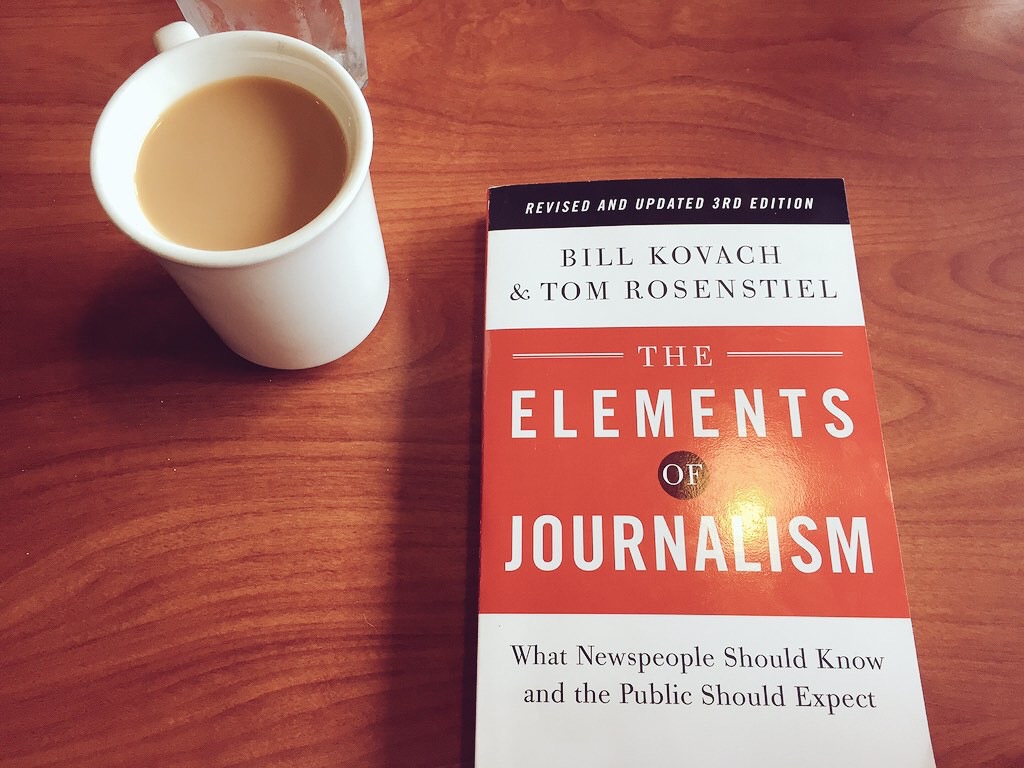
Social media is an unlikely strong asset to the elements of journalism. Photo by me | 2013

I met a small group of like-minded women that lived near San Francisco when I was maybe ten-years-old, living eight hours away. My parents didn’t particularly enjoy it, but they were like older sisters to me at the time.

We messaged through AIM chat like we were buddies that went to different schools. I can’t sit here and recall a conversation today, but I can discuss the impact it had to meet other creative people at that age.

To date, I don’t meet many other writers in my small town. When you’re a journalist, the circle gets even smaller. Therefore any support you get matters; remote support is so much more than one can think.

So here’s part of the inspiration I drew from–something that social media gave me and continues to give to so many others around the world: interactive engagement and consistent communication.

Also, thanks to Wikipedia for existing during those long nights with lonely, angry insomnia. Which actually was a little bit of asthma and sleep apnea too. But I digress.

Eventually I celebrated my 18th birthday at Bubba Gump Shrimp with my parents and two of my internet friends there. We all happen to follow each other on social media today. They do not know that I still have my gift from that day, almost a decade ago. A black, minimal yet strongly bound and empty notebook for me to write in.

That was the first push I had to follow a dream that seemed to be fading with the dying print media industry.

My internet friends and I are not close anymore but I get the comfort of knowing when I open my Instagram, I’ll see a post from up north or in South Korea. One of them got married in the past year and the pictures were breathtaking. In times like these, those thoughts are comforting.

The midpoint for a random but empowering kinship? A simple Linkin Park message board attached to the official website in 2001.

Next came designing Xangas, one of the first [and many] underground blogging platforms. And then, Myspace. I knew HTML, simple website design, blogging and photo manipulation before I left high school in 2010.

At such a young age, I never realized that I was a part of a prolific moment meant to change the way that humans interact forever. For so long, we were bound by our physical capabilities to move, to see, to feel.

Now, you can connect with someone hundreds of miles away. All of this with the touch of a button. In an era where internet bullying had just become a tangible pain [that now 59 percent of teenagers endure], I found solace from the bullying I experienced in public online.

This was unheard of at the time.

And the internet is still a very toxic place to inhabit. In fact, over three quarters of high school students two years ago did not understand the concept of media literacy, a Stanford University study found. People cannot tell between advertisements and the latter.

Since social media is mixed with all facets of communications, it’s clear that e-commerce is stepping on the toes of the press. Implementing a strong strategy to bring in various consumers through the means of education is imperative for survival.

That’s why I enjoy the career path I chose and the learning that comes with it. I am interested in how human interaction changes through the various modes of engagement over this particular modern age.

Since digital interaction is blowing up right now, it’s clear that addressing the digital divide was going to have to happen sometime. Media and digital convergence will continue to rise and the wealth gap will follow along with it.

Especially with the struggles we’re facing with COVID-19, also known as the Coronavirus. The digital divide is a staggering problem grown wildly out of control since the loss of net neutrality. COVID-19 makes it worse.

It’s clear that the use of internet and the products aligned with it [smartphones, laptops, etc.] has gone up, according to Pew Research Center and other internet study trends.

But the amount of unique consumers isn’t going up at all. Only half of the world has internet access. Why is that?

That means that our internet is designed for those who are privileged enough to afford it. That’s not right. The digital divide is real and it’s going to cause problems in an era where a pandemic changed the course of history.

Studying what these statistics mean for us is how those in the communications field can assist in helping businesses stay afloat.

I have gained a lot already from this program about what it takes to use the skills I enjoy, such as writing, and use them to better the lives of both small and big business. I hope to find out more about why social media works in the ways that it does. What does this mean for our future, especially while we are all stuck in self-isolation?

What does the rise of social media engagement reliance mean for the way we process physical emotions in reality? Can social media be a saving grace or is it wrapped up in a wealth disparity gap that we might never break down?

Whatever the case is, it’s 3 am on the west coast so I’m going to wrap this up, add in some outbound links and pictures later. This is the first thing that I’ve really finished since I started my own quarantine a month ago. It’s moments like this where I don’t feel as defeated.

I just want future generations, or even older generations to realize the good behind the internet and why we need to understand the impact of social media–mentally and culturally.

Every bit matters right now. And we’ve all got the time to read.

Even digital media nine years ago can be showcased on WordPress for those on a computer or those using a phone. Just like that, a picture can travel from a blog across the entire social media spectrum. The Brooklyn Bridge in New York City. Photography by me.

Based on your experience with WordPress, what are your impressions with working with WordPress—the pros and cons? It started as a blogging platform but has evolved—should it still be relegated for small blogs, or do you see enterprise use? Are there any blogs that you regularly follow? Pick one and critique it. Why do you like this blog? What is it about the content that makes you go back? How about the design/layout?

I learned the ins-and-outs of an almost daily student news publication during my time at Cal State Fullerton. I was on the editorial staff. Little did I know that an entire digital media spread was humanly possible to transfer from print to the web through a sole content management system.

It’s not effortless. It’s tedious. But the reach and possibilities that stem from WordPress are too immaculate to touch.

Any beginner can develop a website through this platform and become a business owner or a blogger. Or both. The management after is fairly seamless.

But friendly to everyone? Maybe not totally. That’s why there’s experts in WordPress though. We have to make money somehow.

The fact that every individual starts off with the same edit screen no matter what widgets they download makes it so that as a writer, I can easily take the skills and ideas put into another client’s website and repurpose it until my fingers fall off.

It’s like how these TikTok ferret videos of the SAME ferret keep appearing everywhere. Once it’s on the internet, it’s forever right?

Just like that, there’s a Tweet embedding into my blog post with the act of a copy-and-paste of a URL link. WordPress is teachable to a novice wanting to learn. Fixable when altering is needed. And it’s mobile-friendly with their own simple iPhone application. From blogs to media publications and even e-commerce websites, WordPress can do it all.

I feel like WordPress is the top of the list like how Adobe Premiere Pro is more well-known than Final Cut Pro. You’re paying for both the name and the goodies that come with it. This also low-key means that paying for good service prevails for a permanent revenue stream.

Even the crappiest, most mundane business can make money if they have the literacy or hire someone that harbors that capability.

With WordPress you can monetize in more than one way and expand it through sharing. But you have to know how to make all of that happen too… which is why using different tiers of paid WordPress services work for all business backgrounds.

WordPress propels small business consumerism to large markets. Think of it as like, going viral.

Downside? Those less skilled in the digital realm that lack those really good widgets are going to have some really boring pages. In the end, it’s about making minimalism pop. And WordPress captures that essence.

If you know how to work WordPress, you’ll embolden your chances of maintaining the type of clientele who doesn’t want to take the time to pick up a website and the subsequent blogging that comes along with it.

I know it’s going to sound crazy but I’m not big on following bloggers right now. I used to be huge on following artists on another platform we all know as Tumblr. It was mainly for the aesthetic and being able to talk through pictures. Sometimes, pictures being worth more than a thousand words is way better than actually having a thousand words to sift through.

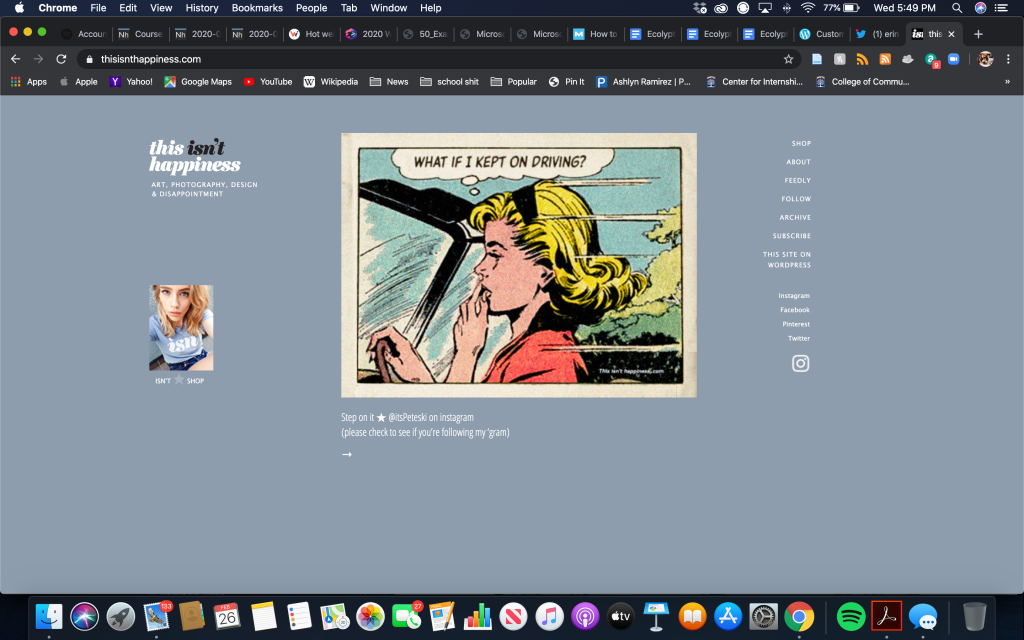
For example, look at the blogger on Tumblr known as user ‘thisisnthappiness’:

A theme is consistently followed that draws people in that focuses heavily on the visual aspect. In short it’s all about showing, not exactly telling.

Their blog is on Tumblr, has its own separate domain and is transferred to WordPress. That means the reach as an artist online is subsequently global. For example, this blogger has been around long enough to maintain these platforms and even open up an e-commerce section to make money off of instead of advertisements.

The fact that simplicity can tell a story is something that consumers vie for when consuming content online is very telling. With the options that WordPress offers to their users, it’s clear that their model is pertinent to content creation in the future.

Photo courtesy of Wikimedia Commons.

How many times will you check your social media platforms while reading this blog?Probably a bit–I can guarantee even the most anti-social is tapped in somehow. Media convergence is prevalent right now and it’s taken a whack at the digital divide.

So about the Big Five.

Everyone has one of the Big Five of social media: Facebook, Instagram, YouTube aka Google, Twitter and LinkedIn. They all cater to vastly different parts of the internet but at this point, they’re pretty vital to any part of the communications industry.

I’m not a big fan. I grew up outside and whatever, like every other millennial. But being able to navigate through each medium is way to have success as a multimedia journalist in this age, especially when those catalysts aren’t always used for the greater good.

I mean, I’m here to tell the truth and that’s where my loyalties lie. I’m only good at words and the Big Five that came with the rise of the internet have changed the way that words are taken in.

So it’s only natural to take what I’ve learned and apply them in other places. It’s constant trial and error. It’s a challenge. It’s pretty fun and exhausting at the same time.

Why care about the Big Five?

I can’t speak for everyone in my field but I do know that we all probably learned the same exact ethics to get where we are now. I want to adhere to those ethics while still using the Big Five in a way that is beneficial to those that come across my platforms.

Presidential candidate Bernie Sanders and his campaign are pinnacles in effective ways to use social media, even when social media giants might not completely be in tune with you.

Whether it’s through social media, email or cell phone, this presidential campaign is really hitting the ground running, relying on communication to get their point across.

Fighting back against the grain?

For example, let’s look at Twitter. I’ve discussed before how Twitter’s CEO Jack Dorsey harbors a soft side for conservatives and white nationalists. Even with supposed consistent moderation and a more supposed “paid political ads” ban, Twitter is still used daily by our current President in order to push his narratives.

In short, Twitter has a huge loophole that can’t be closed.

And his Twitter following continues to grow. At 66.9 million followers as of 6 pm PST, the only president with more followers than Donald Trump is Barack Obama, with just under 111 million followers to count.

I mean, our previous POTUS was a master at communication via social media. And he still continues to be. To say his tweets are drastically different than President Trump’s is a massive understatement.

Need I post more to show the difference? I feel like there’s this clear notion of catering to a certain audience. It’s either left or right. And in-between isn’t acceptable with either side.

While Obama pushes for unity, Trump is pushing for ratings like our country is another season of the Apprentice. We all know that Rasmussen has a huge conservative-leaning bias. Where are you getting your facts from, President? Seems like you’re picking and choosing a narrative to fit your fancy. Who is really the “fake news” then?

Honesty and transparency is absolutely everything nowadays.

I wonder how many jobs will turn me down over this opinion. But it’s really all common sense to me. Use your platform right and spread awareness across the nation.

Or the world.

Even Taylor Swift got on board with that one. Here’s just a recent example of it. We all know that she finally got political last election, too.

This means that being able to innovate journalism is the only way to beat this blatant growing use of citizen journalism as propaganda that the right has really latched onto. It’s not about the rights of who is conservative and who is considered liberal. It’s about basic human rights, as well as the need for truth across the board.

Facebook is another problem. We’ve seen Mark Zuckerberg in action, trying to run around questions from Congress time and time again.

And Facebook owns Instagram. Both monopolies are being represented by the same guy, ultimately.

This guy.

All memes aside, these big tech people don’t have everyone’s best interests in mind. That’s why it’s up to those in the communications industry to harness those tools and use them for the better of society.

Our children are at risk, too.

YouTube and Google struggled with the lasting impact of alarming videos seeping into children’s videos for a few years, along with the complicit nature behind executives. If you want to read more about the YouTube kid video debacle, check out this highly extensive Medium post by James Bridle here.

To be honest, the issue highlighted in the article above is what needs to be addressed. All of these things occur because we really don’t have a clue how to keep new age propaganda from spreading.

What happened to vigilance? We’re really out here questioning scientists over climate change but not questioning those that create content to rot out our brains?

Therefore, it only makes sense to push out saturation with more mindful content. In all reality, the job trickles down to content creators.

Enter journalism. We’ve seen how the Washington Post has managed to expand their reach into far parts of the internet that many haven’t touched. And now, people in the communications industry are starting to catch on.

Maybe we can’t teach media literacy to those that are on the older spectrum. You only want to know what you seek. But the younger generations? Ready to learn and do better than us. Our lives and the way they will end up all falls on them.

This is why so many journalists are jumping on TikTok.

This is why even President Trump has a Twitch.tv channel, even if he has barely used it yet. The greatest way to garner a relationship with the public is through online transparency. And the younger we get, the more we kind of seem to care about it.

If you can’t beat them, join them. If we’re able–as multimedia journalists–to break into a new market, we’re able to not only commercialize sustained journalism, but we can spread the truth.

TikTok is full of funny videos. Twitch.tv is an Amazon affiliate meant to cater to online streaming gamers. How do you spread news through these mediums? Through letting people get a slice of life as a reporter.

It really all comes down to conversation. People want to leave their two cents in real-time. That’s why Twitter, for example, is so vital for journalists.

Live commentary and updated breaking news is an amazing and useful way to connect to whatever community you’re local to.

I use this example a lot, but living in one of California’s major fire zones means that following journalists on different platforms via social media is a way that I can stay safe. It also means that I can contribute on the ground as a freelance journalist in order to protect and inform others through something as simple as a hashtag.

At this point, hashtags are universal and make life that much more accessible.

Look at what is happening in Hong Kong right now. Riots are prevalent. Citizens are getting hurt because they want democracy. If there wasn’t such a big societal need for the Big Five, would the world be able to know about this kind of obvious government corruption?

Just because we are America doesn’t mean that we aren’t vulnerable. The facade that we are devoid of problems is highly problematic. That’s another reason why it’s imperative to keep pushing against the norm.

Facebook is not a valid news source, sorry to all the Aunts and Uncles out there that think it is. But a valid news source can use Facebook to push an even more valid narrative. On top of that, it’s a way to communicate to readers and make their experiences better with each article or livestream.

It’s going to take time and effort. And to be honest, we really don’t have a lot of time left.

With climate change, homelessness and gun control looming over our heads, on top of another presidential election, it’s clear that moves need to be made in order to gain public trust, especially for those who feel alienated in modern society. Which happens to be both sides of the political spectrum.

We have to know how to use the Big Five for the sake of everyone with internet access. It’s all about humanity and survival of the fittest. Because we aren’t going anywhere.

Once one of the Big Five falls, another will pop up to take its place. Since this particular industry is subjected to constant change, learning how to stay ahead of the game is key to staying afloat.

I’m right there with the rest of the older millennials. Technology is an enigma that I’ve been forced to master and come to terms with. I’ll always be in the learning stage with this profession, although that’s really the fun in it.

But seeing the innovations in communication is the biggest reason why the industry draws me in. Connection is everything.

Some people are homebodies, and not by choice. Some have major social anxiety, like myself, where it’s far easier to make a difference behind a computer screen. Some people have double lives to lead–I’m talking about multiple careers in order to keep a roof over their heads.

Some people want to know more than what they’ve been told. Some people just want more personalization. Some people just want to buy things they might not see in real life.

Social media helps fuel relief in all of those areas, when used correctly. Overall, it’s really a full-time job to be an expert in this field. Since the rise of the Big Five, there’s now more side hustles than ever. If you can harness that side hustle with intricate techniques, you can have a following.

And having a following not only makes money, but has a lasting impact on those that adore what you do just as much as you.

We can’t get away from social media and the impact it has had on the media, marketing, advertising and the realm of public relations. So it’s like the old saying goes: if you can’t beat ’em, join ’em.

Being able to understand and harness these new catalysts for communications helps us understand how commercialization, personalization, entertainment and media have all intertwined.

I decided to jump into the world of print journalism. I’ve found through the years that I’ve also had to learn to master various other platforms as well.

Multimedia rules our generation and while it’s sometimes scary and a pain to learn, it’s something that every journalist needs to get in order to push their career forward. It’s truly something that is a gift and a curse.

In the easiest terms, it’s a way to document memories without having so much of it on paper. What you say or do on the internet is out there forever.

Right now America is watching the impeachment inquiries of President Donald Trump. You can watch it on the television. You can watch it online just about anywhere–Facebook, Instagram, YouTube, various media and probably even Twitch. I happened to catch it on Twitter.

Yes, a social media website. How does that happen? I’m sure I’m not the only one to see it, and the internet gives everyone a way to pay attention. Whether at work, in school or at home, there’s a way to check in on what pertains to your life.

Now social media can be personalized to a point where you can see information while doing other things. We’re all multi-tasking. It’s also a case of the second screen experience.

There’s little tools like Google Home and Amazon Alexa that will tell you news headlines in real time while you go about your day. There’s all these ways to stay tapped in.

When the information is good, it’s that much easier to put trust in the second screen experience. But I feel like just how many journalists now operate with a disclaimer in order to differentiate from their bias, it’s important that every other part of the industry does the same.

For the most part, it does happen. But there’s still a few bad apples here and there.

Twitter is also a place where we can now see real-time commentary. It’s a place where we’ve seen every part of the communications industry flourish.

Public relations has a fast way to react to damage control and everyone can effectively communicate with each other in a way never seen before the digital era. However, if the intentions of good aren’t there, we’re just looking at more propaganda.

For example, think about how big oil companies are trying to push the narrative that they’re looking for a “greener” route to do their business. It’s clear that there is not.

Or what about how private energy companies like Pacific Gas and Oil or Southern California Edison can continue to push that shutting off power during fires is only beneficial to the fact that they are no longer liable if there’s a massive natural disaster that might have been their fault?

Thanking people for their “patience” is really the bare minimum. However it’s all they can do to not make anymore people blow up on them.

There’s also the fact that because of social media and callout culture, there’s no reason to attempt to hide anything from the public anymore. If there’s a farce, expect it to be revealed. Like..in the case of Californian Governor Gavin Newsom. Taking money from those he has recently scorned.

Unfortunately Twitter is a place where misinformation is a problem. That’s why it’s up to those in our field to be able to make things clearer for those without the media literacy to spot a scam. And it’s important to be able to keep an open line between companies and those that use their services.

If we, as journalists, don’t continue to learn innovative ways to utilize social media, it’ll probably overtake us. With the next presidential elections looming, it’s clear that we need to be wary of what’s to come.

But with vigilance, it’s apparent that the world is ready for the truth to be told and for personalization to come with it.

Can you imagine a time before you could record your dogs every moment they do something remotely funny? Me either. But I’ve personally taken a step back from digital technology recently, for a time. Now my use is in full force. Dog multimedia all the time. Photo by Ashlyn N. Ramirez.

“What would your average day look like without access to digital technology?”

It’s hard to say whether or not I’ve been able to live a life without the use of digital technology. I guess that use was minimal while growing up. I enjoyed being outside and in the moment.

I mean, I even had a skateboard from Toys R’ Us. I was rockin’ on. At least I thought.

But in the end, I’ve really spent over two decades connected to some kind of screen. Even if it wasn’t initially an iPad or iPhone.

That want for catching things as they happen has transferred from one catalyst to the next. This is how journalism continues to adapt and evolve.

Considering how the news has recently jumped to this medium, it’s no wonder that multimedia journalists have to use a combination of digital technology and old school proficiency to do what they want to do.

Not everything is what it seems, but they all make for great examples.

When you have to focus on using your five senses to figure out something, some will come to realize that digital technology just makes the process faster. It’s still just as tedious though. Immediate doesn’t mean perfect.

Without digital technology, my online schooling wouldn’t be possible. Neither would my profession. Nothing would be instantaneous.

Therefore, I feel like I’d end up spending most of my time hanging out at home. Maybe even writing a crappy book because I’m really just that bored?

Sometimes it comes down to an existential moment.

A piece of mindfulness and enlightenment. Then you’ll appreciate the technology you have that much more.

Right before I started this graduate program, I took my first break from technology. And it wasn’t even that big of a break. If anything, I just stopped communicating through my phone. Only in person instead. It’s something that rejuvenated my life and helped me connect to my old self again.

And my old self always loves a good scoop, found through hard work and perseverance.

Never would I thought that at some point in my life, I would have access to research, data and statistics all in the palm of my hands. I always compliment Twitter and Reddit for their ability to quickly share news globally. It’s something that while many may not use those platforms still, there’s still enough buzz about them to keep them around.

But think about the scrutiny that comes with this gift. Everyone that’s a later millennial remembers the Monica Lewinsky scandal. It’s something that former President Bill Clinton has actually been able to recover from.

Our current president continues to use digital technology in order to bend the law for him, thus harming our democracy while getting his agenda. How is it that a women gets shamed online and loses everything?

All while our president is the center of a handful of investigative inquiries.

Democratic, indeed.

Digital technology often causes bias and misinformation. However, if we didn’t have it at all, there’d be no way to really keep a set of checks and balances in our country. We simply wouldn’t know who is running our country at all. Instead, we have to work off of.

The one thing about waking up and not touching your phone is that everything seems sweeter. Making that calendar, brushing your teeth and hair, a good exfoliating face wash…all of that has more meaning. It’s about the simple things. And when I took the time to slow down, I really got to catch up on a few things–my sleeping, free writing, watching Netflix, art, cleaning, cooking AND reading.

I even picked up photography again.

Catching things in the moment is one of my favorite past times. Even if it’s blurry. Not everything has to be so serious. Photo by Ashlyn N. Ramirez.

I don’t even remember the last time I read a book for pleasure. But I highly recommend The Book of Mindfulness. Suddenly, all this time I spent sitting on my phone was taken up with actually taking time to care for myself.

That way when I did start getting back online for school, I was more careful to really handle my time management the best I can.

Sure, I’m writing this in the middle of the night after a random spark of inspiration. Yes, I binge watched the Netflix series Prank Encounters. My fingers hurt from cracking them. I can definitely say that I am not stressed anymore though.

If you can let go from the necessity of needing an online presence, I feel like it’s ultimately that much easier to create one on your own without even trying.

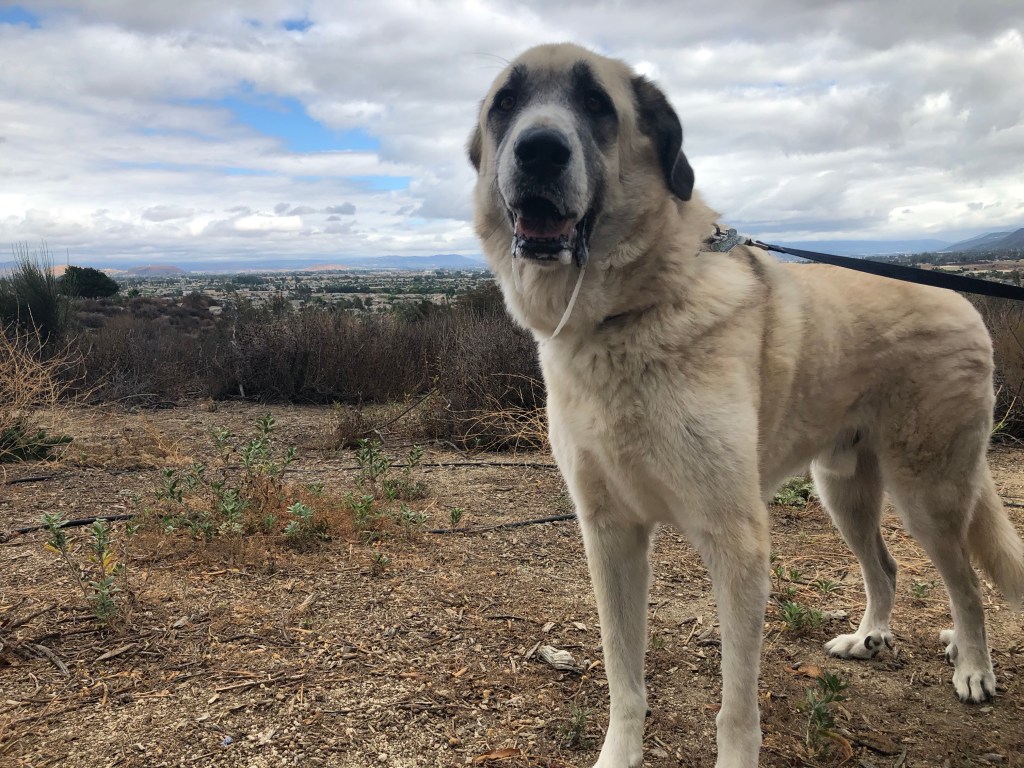
Social media is a way for everyone to connect–even for dog owners. Here’s a picture I shot of one of my dogs for his Instagram during a walk this month. Yes, my dog has an Instagram. And I’ve been able to find more dog owners that have the same breed. It’s great.

What’s the biggest impact social media has made on how we interact with one another?

Who do you talk to these days? And how are you talking to them the most?

For many, it’s through our smartphones. Asking for an Instagram username is like calling someone’s house phone back in the day and asking them on a date, or to come outside to hang out.

Interaction–something that has drastically changed over the past two decades. It’s crazy to think that the days of growing up outside as a child are massively different.

Everyone has a phone in their hand; I received my first phone in middle school. My younger sister? She had one in third grade. My mom’s reasoning was for safety. It was something foreign to me. The difference here is our age gap of seven years.

I’ve read every single Harry Potter novel. And I could read an entire novel in a day. I’m not special for it. I’m sure a lot of people have too. It’s just that now, that kind of dedication is rare, especially when your phone is lighting up every fifteen minutes with a new notification.

Since technology and social media altered our society’s attention spans, I’ve never been able to read a novel quickly since. I get bored easily and at some point, I’m going to check my phone. I have to even use my phone to go to sleep.

Not having access to social media is like cutting off one of my index fingers and an ear. Without it, I’ve lost a way to vitally interact with others. That’s one of the many cons of social media.

Now, harboring some kind of presence takes precedence over knowledge. It’s frightening for our future.

However, there’s those that have actually developed enough media literacy on their own to actually use their platforms to not only make people laugh or smile, but to bring awareness that impacts the global population in a million ways.

For me, Twitter has become the best place to find breaking news. Instagram has become a place for me to showcase my photography.

Thanks to social media, everyone can be a model, actor, artist and citizen journalist, to name a few things. A business can grow from local to worldwide if you’ve got the right marketing tactics.

While this has caused for saturation to accelerate in terms of actual talent in many fields, it’s also brought plenty of new talent that might have never been discovered before without the help of the internet.

Let’s talk about rapper and actress Cardi B. She gained her fame through social media by posting her life to Twitter and Instagram. She went from rags to riches, and then some.

She’s now considered one of the best female artists in the pop realm. Her openness and realism through various social media platforms is what makes her relatable.

Social media has really pushed forward commercialization for businesses and individuals alike, especially in the case of celebrities.

Think about the Kardashian family. Would they really be this famous if it wasn’t for them jumping on the social media bandwagon?

Kylie Jenner made an entire empire through her Instagram account before she turned 21 years old.

She’s become a staple for women across the country–a roundhouse millionaire, all thanks to social media. Without social media, there’s no way her makeup line would’ve flourished the way that it has.

It’s pretty common to see the younger generation have more than 1k followers these days. Life is measured by the likes you get online. If you’re able to push your passion out there to the right people at the right time, it could change your life for better or worse.

President Barack Obama used Twitter, Reddit and Instagram to stay connected to the general public. Now every Democrat running for office is adopting the same routes.

It’s a thing that other individuals, regardless of the field, have latched onto for the same reason.

An instant way to provide information and answers, social media has actually provided an easier catalyst for journalists to give out news consistently, 24/7.

As social media continues to change, it’s going to further change the way society interacts with others. On one hand, social media brings people together that might have not been able to interact before. Think about online dating, for example. Suddenly, the world is not that small.

When I was in fifth grade, I joined a Linkin Park message board for die-hard fans. I ended up staying friends with people I met on there till this day, even if we don’t live in the same part of California.

But then again, social media has also brought newfound body dysmorphia and isolation. Kids would rather sit on Youtube and TikTok instead of enjoying what’s probably the last decades of affluent nature.

Like I said, our lives are now dictated by the likes that we get. And when you can’t fulfill that satisfaction, you don’t want to associate with anything at all. At least some of us have that awareness. For others, they don’t know anything else.

Thanks to social media giants like Flickr and Instagram, I’m able to share these awesome sunrise photos that I’ve taken while hiking this year. Dropbox and Google Drive give photographers and other journalists a place to collaborate or share. La Cresta, California, July 2019.

After learning about the Conversational Prism, it’s just dawned on me how actually crazy it is that the internet impacted our worlds this much. And that impact continues to evolve every single day. Getting a job in the media means staying in the forefront of news. It’s hard, but it’s constantly exciting and doable.

I mean, how many people get to say they become a mini-expert in every topic given to them for a living? A simple way to put it, but it has its poetic justice.

Journalism is something that enthralls me. It speaks for the words I can’t compose.

Social media allows me to show photographs in new ways that I never thought were possible before. The mediums are now endless. The audience? Anyone who looks up your hashtag. This is the same morning as the picture taken above.

There’s so many platforms that allow us to connect in ways never imagined before. Once a huge computer filled a room while scientists scrambled to use it. Fast forward to present time and we’ve got miniature super computers in our hands.

Billions of people have internet access. But billions still don’t.

That number will continue to change with time.

Social media means that everyone gets a chance to take a fancy band picture and hope that their favorite artist sees it. Above: The pop-rock group LANY via the VIP section at the House of Blues in Anaheim, California. June 29, 2019.

Some platforms allow people to not only share pictures and video, but have at length conversations about a range of topics. Sites like Reddit have grown from their desktop base to a mobile app device.

It’s seamless to use and costs no money. It comes in handy when you want to talk about things or need advice regarding a specific topic. For example, I turned to Reddit when I first became gluten and dairy-free. Next Facebook.

Those places helped me find peace in my diet and ways to learn new recipes and tricks to cook at home. But what about when I just wanted to kill time?

Then there’s places like Telegram. Which allow a user to basically access an old school chat room through their phone. The amount of people that can be included in the same chat is hundreds.

It’s a place where people can get to know others across the globe with no boundaries. It’s a way to send pictures to others of places that hardly look like they exist.

It comes with cons though. If you have a mood disorder or body dysmorphia, you have to keep yourself in check at all times. Sometimes those that live the social media life can’t differentiate between fantasy and reality. It’s hard. But it’s possible to look at that negative in a positive route.

Just some tropics and underwater bungalows. No big deal. Taken at the Bora Bora Pearl Beach Resort in July 2017. Picture by Ashlyn N. Ramirez.

All in all, social media has sustained trends that are incredibly valuable to the media community. It’s something that we must hold onto and grow with as technology continues to change.

I’m excited to embark on that journey with everyone I’ve gotten to call my colleague.

Nov. 9, 2016. The day after Presidential Candidate Donald J. Trump was elected into office brought heightened demonstrations across the nation. Groups of protestors set their sights on vandalizing media property in Los Angeles. Photo by Ashlyn Ramirez.

President Trump’s win over former Secretary of State and First Lady Hillary Rodham Clinton is something that has not only left a permanent distaste for diehard progressives– it’s also the cause of newfound yellow journalism.

But this is my opinion. Take it how you will.

Journalists are here to report the truth without bias. But the Trump Administration has hurled a cesspool of vitriol for the past three years at anyone who has questioned them.

People have been fired. People have been hurt because of misinformation. That damage is irreparable. Does this mean that journalism has become saturated?

No one thought that another country would pierce the soul of democracy here. Unfortunately that’s exactly what happened. And with the recent findings behind Trump trying to coax Ukraine’s president into another election fraud, journalists like me are wondering how this is going to impact the future later.

I read in one of my textbooks that over 200,000 journalists have been laid off since the early 2000’s. As far as this year goes, about 7,200 journalists have been laid off so far.

Once I joined the Daily Titan, Cal State Fullerton’s student newspaper, I was made well aware of how the term “fake news” would change my future.

A closeup of Pro-Trump demonstrators’ signs on Cal State Fullerton’s campus March 13, 2017. President Trump hadn’t even been in office for three months. Photo by Ashlyn Ramirez.

Yes, I’ve been directly called this tasteless term, over this article linked here that I wrote. It’s insulting and dehumanizing as a student to see those leading your country effectively making your career more hostile and violent.

In fact, I had an entire Letter to the Editor written about a basic new piece I wrote almost three years ago. It was so crass that the editorial board heavily redacted it. We were flabbergasted. At this point, I can’t even find it online anymore. I guess it was that bad.

Part of this happened because I was a crucial asset to the editorial section–and also wrote countless opinion pieces that often denounced President Trump. The entire student body–or at least whoever read the paper– knew my name then. Speaking out as not only a journalist but a journalist of color has become increasingly harder over such a short period of time.

Video footage from a Pro-Trump demonstration–just months after the Trump Administration took office.

Writing those pieces has given me jobs. It’s also caused many to turn me away, especially in a part of California that isn’t even close to being blue. But even those that are blue can lack media literacy all the same.

Opinion is not news and it never has been. How much more can be done to inform a reader about what’s fact and what’s not?

Sure, you can throw a disclaimer on a piece. You can write that this is an opinion article. And it’s unlikely you’ll see an opinion piece grace the front page smack in the middle anyways.

However, you’re only going to see what your thoughts will allow. Just like those currently in power.

To this day, our President insists on attacking any news media that is not considered conservative. It’s disgusting and vile. It’s a very real threat to the First Amendment, our human rights and our democracy.

This is how the media became saturated to the point of a pop culture joke. Blogging exacerbated the lack of source credibility and those that aren’t fond of our country saw our weakness and took advantage of it. That’s why fighting back against “fake news” is more important than ever. But it’s a match that can only be strategically won.

No one knows everything. Even the media. That’s why objectivity and research are vital to make a sound, informed opinion. And then it’s time to spread information–fact checking is everything. Even if the current administration doesn’t care for any of it.

“Fake news” is a term that an entire newsroom will either laugh or roll their eyes at. But since the general public lacks the media literacy needed to really differentiate from what’s legitimate and what’s not, it’s a problem that has to be addressed through the next generations.

It’s going to take more than writing in your Twitter bio that your opinions don’t represent your work. Without passing down media literacy to the public, there’s no way journalism is going to ride out this wave.

It’s going to get messy. Even other countries are feeling the burn.

Trying to start a journalism career in a rapidly changing industry is hard enough. Once you add the threat of yellow journalism into the mix, things start to get more complicated. Combating a monster that was probably created through the acts of Russia and various Republican representatives was something no one ever thought would be a thing.

Now, what does this mean for future elections? The key to changing everything is awareness, facts and voting. Without any of these things, a president can become a tyrant. Just like how the government relies on checks and balances, journalists have to rely on their ethics. Everyone’s a skeptic. It’s a journalist’s job to localize and humanize their writing for the general public to pay attention.

I was taught to not even register to vote. Old school journalists take ethics to a level that isn’t really seen anymore. It’s something that future journalists must keep in mind. Times are changing with us, but our core stays the same. Yellow journalism has been around for quite some time and we, as journalists, have to get craftier at handling it.

Those that utilize the internet and social media to spread their views ultimately push credible sources out the window. It’s to the point where many people have become so skeptical that science isn’t even something they want to believe in.

This is a problem that can only be fixed with understanding reality.

The next time you see an aunt or uncle on Facebook posting links to bogus news sites, don’t call them out in person. If you can, teach through education. Not everyone is going to listen to sources that don’t cater to their needs, but there’s always a middle ground to stand on while defending yourself.

The change that has amassed through such advances like technology is something that has become ingrained in our society globally.

Views from the Tenaja Fire near Murrieta and Wildomar, California on September 7, 2019. Photography by Ashlyn N. Ramirez.

When the media merges with dozens of other mediums that can help push forward bits of information at the speed of light, it’s incredible what digital convergence has done over hundreds of years.

While many feared that these kind of advancements would topple the media industry, they’ve actually made it innovative and creative in a way that no one ever realized was possible. Think of every dystopian novel out there– the major fear was that technology would get into the wrong hands, thus getting out of hand.

Although that may have been the case in some ways, it’s not the only way to look at how our world has changed through simply being able to attain a mass amount of information in seconds.

Learning multimedia is not easy. To some it is first nature, to some it is a little bit of an unwanted appendage that you really grew to respect anyways. There’s a reason why some choose to learn in a class setting instead of watching youtube videos on their own. Trying to wing something doesn’t normally end with enticing results. This is where media literacy comes into play.

It’s a journalist’s job to be a watchdog. Without holding fast to that basic identity that has really help change the course of the entire world, it’s no wonder that most corporate media tends to end up slipping up at some point.

In a world that oftentimes only sees white and black, one must come to ponder why the United States ends up with problems so vast that many can’t help but scorn when they hear about what’s going on with politics or in their city lately. Because of social media, we’ve all become isolated.

What would you do in order to go against the grain? Is it wrong to not want to be complacent sometimes? Unfortunately Millennials, Generation Z and those after are stuck with footing the bill that has become climate change. Without digital convergence and media literacy, the world would be doomed.

Change is needed now, immediately, every single day. Without it, there is no future for journalism, or anyone for that matter.

I just watched a fire burn the hills behind the house I currently live in. The Tenaja fire in Southern California. That’s the impact of climate change. I packed my bags the second I saw smoke because after doing some calculations, I realized that the fire was barely 2000 acres from my house.

On September 5th, 2019, evacuations were ordered for Montanya Place, Bonita Place, Belcara Place and Lone Oak way, according to the Riverside County Fire Department in Southern California, about 60 miles south of Los Angeles and San Diego. Many residents who waited until it was mandatory to leave hurried to leave to avoid the looming smoke in the sky. Photo by Ashlyn N. Ramirez.

The fire stopped a bit over 1900 acres, according to reports from Cal Fire. The hills behind my house burned. With four animals at my house, what would I have done if I wasn’t ready when the first evacuation orders had came? It was a mess that I wasn’t planning on tackling.

Since then, there’s been a few outbreaks in the same exact area. And as some scientific models found online that are reposted through various weather journalists across the pacific, October is looking like it’s going to be dry instead of wet.

Without advancements that digital convergence has excelled with, there would be no way that I could have the media literacy enough to explain to you how it feels to predict a fire coming to the back door of your house. All through the means of checking government agencies’ websites, Twitter posts through hashtags and the local media.

My house is fine, but the thought of another fire happening always remains. Grim reminders of what Paradise, California went through are painful as I imagine another fire tornado coming down the hillside. But with vigilance comes safety. Knowing what you’re up against, thanks to the internet and media literacy, is life changing sometimes.

Even though Paradise is quite far from where I am, the way the suburbs are set up out here are almost the same. Homes tightly nestled against the mountain range, the Santa Rosa Plateau and the Cleveland National Forest. The amount of fire hazards out here are crazy. Throw in a little bit of monsoon weather that causes lightning strikes and boom! There’s fire weather for you.

I’m not great at math or science but I am a journalist fascinated with the phenomenon of climate change. It’s something that many people would know little about without the use of technology today.

Although many still don’t realize when there’s some bias in their news program, it’s important to support individuality and continue to champion the truth–for everyone.

Screenshots from NBC 4 News in Los Angeles, courtesy of Twitter.

As a journalist, you learn to look at things for both the big picture and the small. These are the things that help keep one objective enough to truly get culture. Without it, you’ll go complacent or misinformed.

Screenshots from NBC 4 News of the Tenaja Fire, courtesy of Twitter.

This is why it’s imperative to know digital convergence inside and out. It could save your life and your property sometimes. This kind of danger will continue as climate changes impacts us in ways we aren’t ready for.

Last year, I got to stay in the coolest Airbnb. It was a small, cozy cabin––sitting near a zoo, a quaint town, and a vast lake. That staycation has stayed with me well for the past year. It’s the inspiration for this post.


Welcoming overnight guests doesn’t require a guest suite or a redesign. Even when hosting in a small home or apartment, thoughtful preparation can create a cozy, relaxed space that truly feels like a retreat for your guests. A warm, inviting space isn’t about square footage. It’s about intention.

Simple touches can go a long way in a small home or an apartment. You can make guests feel welcome, relaxed, and genuinely cared for, without overextending yourself or your space, with a bit of prep and a thoughtful mindset.


1. Set the Stage: Prep the Guest Space with Comfort in Mind

You don’t need a dedicated guest room to create a cozy overnight setup. It’s about making what you do have feel intentional.

  • Simplify the basics: Clean sheets, a cozy blanket, and a pillow—even on a sofa or air mattress—go a long way. Experts recommend selecting an extra-tall air mattress (approximately 20 inches) to replicate a traditional bed and facilitate easier access (Food52) and (NY Mag).
  • Create a drop zone: A cleared chair, luggage rack, or wall hook gives guests a spot for bags and clothes. These small gestures offer a meaningful welcome (A Life Unfolding).
  • Lighting and privacy: Even battery-operated bedside lighting or lamps help make unfamiliar spaces feel safer and cozy (Tiny Canal Cottage).
  • Thoughtful extras: A water carafe, phone charger, or handwritten note adds personal warmth. (Into the Gloss) and (Tiny Canal Cottage)

2. Hosting in Small Homes and Apartments

With space at a premium, creativity and flexibility are key.

  • Multi-purpose furniture: Consider sofa sleepers, daybeds, trundles, or futons, because they maximize utility without sacrificing comfort  (Rent-A-Center Blog) and (NY Mag)
  • Functional living areas: Shared spaces can be transformed with foldable beds or cushions. Using rugs or screens helps define guest zones  (Food52) and (NY Mag).
  • Quick tidy-ups: Rather than deep-cleaning the entire home, focus on shared areas; declutter just what’s visible, which helps guests feel welcome (Rose Lounsbury).
  • Declutter smartly: Leave open drawer or hanger space so guests can unpack, and reduce clutter for a more organized, accessible environment (Worthing Court) and (Rose Lounsbury).

3. Stock the Bathroom with Essentials

You don’t need a spa to entertain. Thoughtful basics are more than enough.

  • Clean linens and toiletries: Provide towels, soap, shampoo, toothpaste, and extras like lotion, Q-tips, or disposable razors (Worthing Court) and (Southern Living).
  • Clear communication: Avoid awkward moments by ensuring there’s a plunger or spare toilet paper on hand (Into the Gloss).

4. Keep Mornings Simple and Self-Serve

Self-service eases stress for both host and guest.

  • Breakfast basics: Set out coffee, tea, and grab-and-go snacks like granola bars, fruit, or yogurt. Also, make fridge items clearly labeled “help yourself.” This autonomy helps guests start their day comfortably (The Crowned Goat) and (Southern Living).
  • Snacks and beverages: A small basket with healthy snacks or flavored water enhances convenience and hospitality (The Crowned Goat) and (Rent-A-Center Blog).

5. Communicate the Unspoken Rules

Clear, casual communication goes a long way.

  • Detail essentials: Share Wi-Fi info, where to find key items, and home quirks (e.g., sticky faucet). A framed sign or friendly text works well  (Wit & Delight).
  • Clutter-conscious hosting: Clear seating surfaces and pathways; this subtle consideration helps guests feel immediately relaxed (The Expert Beginner).

6. Build in Space, Together, and Apart

Balance connection with boundaries.

  • Offer shared time, like a meal, a walk, or a movie, but also emphasize they’re welcome to relax independently. This respect for personal space fosters comfort and goodwill.

7. When Guests Stay Longer

More extended stays may require extra structure.

  • Shared routines: Establish quiet times, optional shared chores, and boundaries for your own work or rest periods.
  • Communicate gently: A kind heads-up about expectations ensures everyone’s comfort through more extended visits.

8. The Finishing Touch: Small Gestures, Big Impact

It’s often the tiniest touches that linger.

  • Vintage etiquette, modern warmth: Even small traditions—like a handwritten thank-you note, a vase of flowers, or sitting with guests in a cozy setting—drove hospitality in the past, and they still resonate today  (Better Homes & Gardens) and (Good Housekeeping).
  • Make the entry inviting: A clear, inviting entryway sets the tone. Good lighting, space to sit, and scent can all help guests feel welcomed before they even step inside (Better Homes & Gardens) and (Southern Living).

Final Note:

Hospitality isn’t measured in square feet. It’s crafted through intention. Your care and preparation count. From clearing a chair for luggage to leaving a thoughtful note, these small preparations make guests feel not just welcomed, but genuinely at home.

Repotting plants this morning has me thinking about the work of crafting a story. Two were propagated, and two were replanted. That means new stories were created through tiny green succulent leaves, while others started a new chapter, in a new home, rising slowly from a drastic cliffhanger.

One has root rot, so I had to take special care to cut off the dead roots without damaging the structure. It reminded me of combing through something I wrote early in the morning, and finding parts to fix. Brushing off old soil is like cleaning and tightening up the story.

When you move a plant to new soil, you’re creating a new space for growth. Roots need room to breathe, nutrients to feed on, and a rosy foundation that supports them through seasons.

Writing (and editing) is the same. A narrative might already exist. However, to truly bring impact, it often needs fresh soil. Structure, clarity, and a stronger frame to hold the weight of ideas are what usually make a story pop.

Sometimes that means trimming back; other times, it means adding in what was missing. Both require patience, strength, and resilience to grow.

Putting on makeup feels far more tedious than writing. I enjoy it. Unfortunately, I’m not especially good at it. It remains a hobby, more than a craft. Still, makeup is a lot like writing a story. It moves in chapters, with parts that blend into one another through quiet transitions.

Think about every layer of mascara like the climax of a book you can’t seem to put down or look away from. The lipliner and lipstick are the takeaway, wrapping up a story so seamlessly.

Makeup tells stories, too. Some passages are cursive, delicate, and flowing; others are written in dark ink, bold and confident. There’s a dichotomy between fountain pens and ballpoint pens, like the contrast between eyeliner and lipstick, which holds the story structure together. Then there are the bright colors behind eyeshadow—the kind that make the eyes pop like exclamation points on a page.

Blush is like an adjective, and bronzer is the adverb supporting the text with grace.

I have so much respect for the meticulous women who shape their faces as if each brushstroke were an extension of themselves. They create narratives with color and precision, crafting a beauty I can only admire from the periphery.

I start my mornings early, but my problems with technology begin even sooner. Sometimes, I open and close my laptop and restart it because I cannot get the internet to cooperate with me. I run to restart the router. Luckily, I get on my cellphone to finish my call to my Chair. The baby is now crying, and usually I would want to cry too. But this is something I am used to, and I’m too busy taking notes to fall apart mentally. 

I am in the final year of my dissertation, focusing on Hispanic students at Hispanic-Serving Institutions. I’m fascinated by the Digital Divide Theory and its impact on marginalized students seeking technology access, user ability (digital literacy), and their perceptions of online course success. Pursuing my doctoral degree is a distinctive milestone and an assurance to give back to my community through knowledge and awareness. That, in itself, is both my end goal and my path to happiness.

On paper, this is research. In my heart, it’s personal. 

As a first-generation Hispanic college student, first-time mother, and communications professional, I have overcome challenges in health, identity, and access. I still struggle with my health as my ulcerative colitis progresses. But I persist. 

Now, ten months postpartum, I am more motivated than ever to finish my degree, for myself and my son. I want him to see what it looks like to keep going, even when the light at the end of the tunnel is too faint to make out. I want him to grow up knowing that knowledge is indispensable, education is power, and lifting others is a part of our purpose. These are key to an inevitable path to happiness.

I took time off after my C-section to recover physically and mentally, navigating postpartum depression without the safety net of paid leave. As a self-employed communications consultant, there was no paycheck waiting for me, no HR department checking in. Recovery happened in between diaper changes, dissertation edits, and client calls.

 I’ve gone the extra mile to manage recovery, parenting, and doctoral coursework, but like many women, especially women of color, I have done it quietly while balancing family life. I do not always have childcare readily available. I have health conditions that need monitoring, like my colitis and my asthma, which result in more routine doctor appointments than most at my age. 

My son accompanies me to appointments sometimes, and he enjoys chatting on the phone when I talk to my Chair, as if he already understands the importance of what I’m working toward. He is a good sport about it, and he loves to try to grab my fountain pens and “help” me type. 

I often feel empowered knowing I can be a mom, a writer, a consultant, and a student working on a degree that is statistically difficult to achieve. I am among the 16.7 percent of Hispanic students who earn doctorates, and 2.6 percent of disabled students who earn a doctorate in education. 

I know what it’s like to feel unseen in academic spaces, as if the systems around you weren’t built with you in mind. I aim to use this research to inform institutional practices that are more inclusive, accessible, and supportive of students from all walks of life.

This process has shaped me in ways I never imagined. It has made me more empathetic, resilient, and undoubtedly sure that the work I am doing matters, not just for me or my son, but for many others who deserve to thrive in higher education.

I’ve been the student who couldn’t rely on her Wi-Fi or cell signal, but I always found a way to make things work. Some people are more disadvantaged and are unable to do the same. I’ve learned what equity means when you’re living it, not just researching it.

My career goals are founded in service. I aim to utilize my research, writing, and strategic communication skills to influence policy, guide institutions, and champion the voices of historically underrepresented groups through education. I believe deeply in the power of storytelling, not only as a former journalist but as someone who has seen how narratives can shape access to opportunity. 

This journey has not been easy, but it has been transformative. My experiences are woven into every part of who I am. It has reminded me that you can still take the next step forward even when you’re exhausted, overwhelmed, or unsure. And those steps matter. 

Those steps lead towards a seat at the table.

Sometimes I hold my breath until it hurts. And then everything in my vision is shaking. But the shake isn’t fear, per se.

There are moments of anticipation that run through your veins like ice-cold rain—moments when you take the plunge, not because it’s comfortable, but because you want the result badly enough to face the shock.

The shock burns cold, tightening my body as I submerged myself for 90 seconds. Meditate, relax, and move forward. And start the life cycle all over again.

I’ve now gone from hot water (104 degrees, to be exact) to a violent burst of refreshing cold.

The truth is, nerves are just water, and we’re all vessels. How we carry the water, how we let it flow between our fingers, determines whether it moves us forward.

So, here’s to the plunge and the shock that comes with it.

Side note: cold plunges are about 48 degrees. And I’d do it again.

Technological convergence is daunting; something that many are unable to understand with the exacerbating gap separating the wealthy from those in poverty. And I’m not the only one struggling with the digital divide. The divide is vast like a black hole, swallowing up knowledge faster than it flies in.

Let’s acknowledge some facts regarding obstacles to equity.

Seventy-three percent of students find that lack of support from their educators remains a significant barrier to their success in online courses. This statistic indicates a crucial gap in the education system. It’s challenging to pinpoint a single strategy that can effectively adapt to public education, especially in this political climate.

However, one strategy can come into play more than others. That approach is rooted in servant leadership, which sits at the intersection of transformational and authentic leadership. 

Servant leadership is my favorite leadership style. Servant leadership is a powerful, emerging strategy in education that ensures that all students, particularly those from underserved communities, are supported to thrive. Unlike traditional top-down leadership models (transactional), servant leadership flips the script completely by focusing on empowering others, listening to their needs, and prioritizing their well-being.

It can be a game-changer for students facing barriers like the digital divide. And the digital divide is only going to become bigger as technological convergence evolves.

What Is Servant Leadership?
Servant leadership, a philosophy coined by Robert K. Greenleaf, emphasizes that leaders should prioritize serving those they lead (Greenleaf, 1970). Rather than focusing on personal power or recognition, a servant leader’s primary goal is to support others in their growth, development, and success. 

Greenleaf found that a servant leader has a social responsibility to be concerned about the marginalized and those less privileged. If inequalities and social injustices exist, a servant leader tries to remove them (Graham, 1991). 

A leader uses less institutional power and control while shifting authority to those being led in becoming a servant leader. Servant leadership values a community of care (CoC) because it provides a face-to-face opportunity for individuals to experience interdependence, respect, trust, and growth (Greenleaf, 1970)

This leadership style creates an environment where everyone can succeed by embracing principles of empathy, active listening, and shared responsibility. According to Northouse’s book on Leadership Theories (2021), “conceptualizing refers to the capacity that gives leaders the ability to browse through a multitude of problems without any creative downfalls on them or the team” (p. 261).

Adopting the servant leadership mindset can significantly improve student outcomes, particularly for those facing technology-related challenges. It’s well-documented that hyper-urban and rural areas often remain disconnected due to systemic discrimination, which limits access to essential resources (Cabral, 2018). 

Wang et al. found that exploring cultural elements happens when confronting and surpassing them through social and technological influence (Wang et al., 2014). Wang also found that political issues contribute to cultural norms (Wang et al., 2014). 

For example, as pointed out, a system of expectations surrounding societal organizational culture provides a standard of behavior for employees, providing a reason for leadership Behavior; thus, a relationship between “authenticity, morality, and organizational cultures aligns accordingly” (Schein, 1985)

Scholars like Greene and Murphy (2021) argue that many of these technological barriers stem from unstable or inadequate access. However, some researchers, including Kersch and Lesley (2019), suggest that these gaps in education could be mitigated through curricular changes designed to support students navigating these challenges better.

The Connection Between Servant Leadership and the Digital Divide:
There are many ramifications of the digital divide beyond access to technology. Support systems are needed to help students succeed in a digital world. Students from low-income backgrounds, particularly Hispanic and first-generation students, are often left behind because they don’t have the resources or guidance to navigate online learning environments successfully.

A servant leader in education doesn’t just stand at the front of the class or set policies from a distance; they listen to students’ concerns, offer guidance, and create spaces for growth

Assuring all students have access to the tools they need to succeed and listening to their voices when challenges arise is one of the most salient parts of the process. Servant leaders can close the gap between technology and students by providing support and encouragement.

How Servant Leadership Transforms the Learning Experience:

  1. Empathy Over Authority: Servant leaders approach education with empathy, understanding that each student has different obstacles to overcome. When students lack reliable internet or digital skills, empathy can translate into providing tangible solutions, whether it’s offering free access to tech resources or setting up one-on-one tech support sessions.
  2. Listening to Student Needs: Listening is a core aspect of servant leadership. Leaders in education must listen to the voices of students to understand their experiences with the digital divide. Servant leaders act on what they hear, making sure that students feel supported, whether it’s survey data or direct feedback.
  3. Creating a Community of Care: Servant leadership creates an environment that is safe and inclusive. Education starts with building a CoC where students feel valued and connected to their peers and to the technology that enables their success. This can be especially salient for Hispanic students attending Hispanic-Serving Institutions, where there may be a heightened sense of belonging when technology challenges are met with collaborative solutions.

Practical Steps for Implementing Servant Leadership in Education:

  • Provide Personalized Tech Support: Offering tutoring or assistance in navigating digital platforms ensures that students can fully engage with their courses, especially those without prior experience.
  • Collaborate with Students: Work with students to co-create solutions that address their digital struggles, from organizing community-driven tech drives to connecting them with local tech support services.
  • Mentorship and Advocacy: Serve as a mentor and advocate, not just for academic success, but for students’ digital fluency and access to technology. Ensure that all students have equal opportunities to succeed by advocating for policies that support digital equity.

As a result, the digital divide isn’t an insurmountable mountain. An increasingly digital world can be made more successful by educators and institutions adopting servant leadership principles. 

Similarly, empirical studies have shown that when educators matched servant leadership with followers who desired it, this type of leadership had a positive impact on performance and organizational citizenship behavior (Meuser et al., 2011; Otero-Neira et al., 2016; Ozyilmaz & Cicek, 2015). 

In doing so, we can create a future where technology serves as a tool for inclusion and opportunity, rather than a barrier to achievement. It’s not about how hard it is to climb the mountain; it’s about the run back down. The digital divide is something we have to learn to live with, and awareness in education equals awareness in the workplace. Vital progress of pedagogy starts in the praxis.

References

Carbajal, Jose (2018). “Patriarchal Culture’s Influence on Women’s Leadership Ascendancy,” The Journal of Faith, Education, and Community: Vol. 2: Iss. 1, Article 1. Available at: https://scholarworks.sfasu.edu/jfec/vol2/iss1/1

Graham, J. W. (1991). Servant leadership in organizations: Inspirational and moral.

Leadership Quarterly, 2, 105-119.

Greenleaf, R. K. (1970). The servant as leader. Westfield, IN: Greenleaf Center for Servant Leadership.

Hu, J., & Liden, R. C. (2011). Antecedents of team potency and effectiveness:

Examining goal and process clarity and servant leadership, Journal of Applied Psychology, 96(4), 851-862.

Northouse, P. G. (2019). Leadership: Theory and Practice (9th Edition). SAGE Publications, Inc. (US). https://reader2.yuzu.com/books/9781071834473

Schein, E. H. (1985). Organizational culture and leadership, by Edgar H. Schein. san … – JSTOR. JSTOR. Retrieved February 26, 2023, from https://www.jstor.org/stable/258322

Schein, E. H. (2004, July 8). Organizational culture and leadership. Google Books. Retrieved February 25, 2023, from https://books.google.com/books/about/Organizational_Culture_and_Leadership.html?id=THQa4txcMl4CWang, V. X., Russo, M. R., & Fay, K. M. (2014). Collective transformation of three generations of Chinese adult learners in K–20 education. In Adult and continuing education (pp. 824–838). IGI Global. https://doi.org/10.4018/978-1-4666-5780-9.ch107


Introduction

Leadership isn’t about holding a title in today’s rapidly changing workplace; it’s about influencing, motivating, and empowering others (Reed & Klutts, 2019). While many leadership models are presented as stand-alone solutions, the reality is that no single style works in every situation.

The most successful leaders take a blended approach — combining elements of servant leadership, transformational leadership, authentic leadership, and emotional intelligence to adapt to their teams’ needs.


Core Leadership Approaches That Work Together

1. Servant Leadership

Servant leadership flips the traditional hierarchy: leaders serve first, lead second. This style prioritizes empathy, active listening, and the well-being of others (Greenleaf, 1970, 1977). Servant leadership builds trust, creates an environment for loyalty, and helps teams thrive in modern workplaces.

Key Benefit: Creates a culture of care and mutual respect, boosting employee engagement and retention.


2. Transformational Leadership

Transformational leaders lead by example through vision, innovation, and motivation (Bass & Avolio, 1994). They encourage personal and professional growth, often driving organizations to adapt and evolve in competitive industries.

Key Benefit: Encourages change readiness and fosters a shared sense of purpose.


3. Authentic Leadership

Authentic leadership is grounded in transparency, moral integrity, and self-awareness (Walumbwa et al., 2008; Azanza et al., 2013). Authentic leaders build strong relationships by being open about challenges, admitting mistakes, and aligning actions with values.

Key Benefit: Builds deep trust and credibility with teams.


4. Emotional & Social Intelligence

Emotional intelligence (EI) involves recognizing and managing your emotions while understanding and influencing others (Tucker et al., 2000). Social intelligence complements EI by helping leaders navigate complex interpersonal dynamics.

Key Benefit: Strengthens communication, conflict resolution, and team collaboration.


Why Blending Leadership Styles Works

Research consistently shows that combining leadership theories leads to stronger outcomes in the praxis:

  • Authentic leadership increases job satisfaction and team commitment (Bamford et al., 2012; Leroy et al., 2012).
  • Servant leadership, when aligned with employee values, boosts performance and reduces turnover (Meuser et al., 2011; Ozyilmaz & Cicek, 2015).
  • Emotional intelligence equips leaders to handle conflict, navigate change, and foster psychological safety (Boyatzis et al., 2006).

By utilizing these approaches, leaders can create pedagogy catered to inclusive, adaptable, and resilient organizations.


Practical Tips for Leaders

  1. Assess your team’s needs before choosing a leadership approach.
  2. Lead with empathy, but balance it with clear expectations.
  3. Be transparent about decisions and challenges.
  4. Invest in emotional intelligence training for yourself and your team.
  5. Model adaptability — shift your style as situations change.

Conclusion

No single leadership theory can address every challenge. By blending servant, transformational, authentic, and emotionally intelligent leadership, leaders can inspire trust, drive results, and build teams that thrive, even when times feel more uncertain than ever.

If you want to improve retention, harbor innovation, and create a culture of trust, start by expanding your leadership toolbox.


References

  • Azanza, G., Moriano, J. A., & Molero, F. (2013). Authentic leadership and organizational culture as drivers of job satisfaction. Revista de Psicología del Trabajo y de las Organizaciones, 29(2), 45–50.
  • Bass, B. M., & Avolio, B. J. (1994). Improving organizational effectiveness through transformational leadership. Sage.
  • Boyatzis, R. E., Smith, M. L., & Blaize, N. (2006). Developing sustainable leaders through coaching and compassion. Academy of Management Learning & Education, 5(1), 8–24.
  • Greenleaf, R. K. (1970). The servant as leader. Greenleaf Center.
  • Greenleaf, R. K. (1977). Servant leadership: A journey into the nature of legitimate power and greatness. Paulist Press.
  • Meuser, J. D., Liden, R. C., et al. (2011). Servant leadership and follower outcomes. The Leadership Quarterly, 22(2), 344–361.
  • Northouse, P. G. (2021). Leadership: Theory and practice (9th ed.). Sage.
  • Ozyilmaz, A., & Cicek, S. (2015). Servant leadership in for-profit organizations. Journal of Management & Organization, 21(3), 263–290.
  • Reed, B. N., & Klutts, A. M. (2019). A systematic review of leadership definitions. American Journal of Pharmaceutical Education, 83(9).
  • Tucker, M. L., Sojka, J. Z., et al. (2000). Training tomorrow’s leaders. Journal of Education for Business, 75(6), 331–337.
  • Walumbwa, F. O., Avolio, B. J., et al. (2008). Authentic leadership: Development and validation. The Leadership Quarterly, 19(2), 241–272.

Written in 2023, expanded in 2025

Being a leader in education doesn’t often come with a personal handbook. Or if it does, it’s outdated; ill-equipped for the complexities of 21st-century classrooms and communities. As we continue to confront widening disparities in educational access, especially in the wake of the COVID-19 pandemic, one truth becomes clear: effective leadership isn’t just about policies or protocols. It’s about people, and the ability to lead with empathy, community, and transformation in mind.


Leadership in the Age of Digital Learning

The pandemic redefined what it means to teach and learn. As online learning became the norm, issues like internet accessibility rose to the surface, especially in rural and low-income areas where connectivity is often limited or unreliable. But beyond technology gaps, we also saw cracks in leadership communication, especially between administrators and educators.

Outdated systems, hierarchical thinking, and transactional leadership styles have created barriers that make it difficult for teachers and students to advocate for their needs. These gaps in communication are more than logistical—they’re structural. They reflect a need for new leadership paradigms that meet today’s challenges with empathy, collaboration, and innovation.


Instructional Leadership and the 21st Century Classroom

In a 1999 study of over 800 U.S. teachers, researchers found that educators’ expectations of leadership often clashed with the realities of administration. More recently, the Journal of Organizational and Educational Leadership reaffirmed the belief that school outcomes are closely tied to leadership effectiveness. The takeaway? Instructional leadership must go hand-in-hand with technological transformation and digital literacy.

Teachers need leaders who do more than manage: they need leaders who listen, collaborate, and help create space for professional reflection and growth. These are the hallmarks of transformational leadership, as opposed to transactional leadership, which focuses more on compliance, control, and routine.


Transformational vs. Servant Leadership: A Needed Blend

According to Hu & Linden (2011), transformational leadership builds confidence and work advocacy, but it’s servant leadership—with its focus on selflessness and empathy—that enhances both satisfaction and effectiveness in teams. When combined, these leadership approaches foster a culture of trust, transparency, and empowerment across all levels of education.

As Peter G. Northouse (2021) notes, leadership rooted in empathy and community connection is essential for long-term cultural change. It empowers teachers, administrative staff, and students, particularly those from marginalized backgrounds, who go on to shape the American workforce.


Creating Lifelong Learners and Leaders

Leadership in education isn’t just about student test scores or teacher evaluations. It’s about nurturing lifelong skills like digital literacy, critical thinking, and emotional intelligence. And it’s about ensuring every stakeholder, especially those in underserved communities, has equitable access to the tools and support they need to succeed.

The literature shows a clear need for stronger communication between principals and teachers. When leaders and educators collaborate toward shared goals of inclusivity and equity, they create ripple effects that extend far beyond the classroom.


DEI and the Need for Cultural Change

Diversity, equity, and inclusion (DEI) aren’t just buzzwords. They’re essential frameworks for reshaping a system that has historically privileged transactional over transformative leadership.

Transformative, adaptive leadership aligned with DEI principles is especially urgent in a post-pandemic world where disparity gaps have widened. While DEI work remains underdeveloped in many educational settings, it offers a path forward; one grounded in soft skills, compassion, and the recognition that authentic leadership starts with human connection.


Final Thoughts

To move toward a more inclusive and effective educational system, we need more than curriculum updates or policy changes. We need leaders who understand that communication, empathy, and community are the foundations of success, not just for students, but for educators and administrators alike.

As we reevaluate the leadership values necessary for the future, one thing is clear: no relationship in education can remain purely transactional. Leadership must mean something. And it must start with listening.

In 2019, I bought my first domain. It wasn’t for my business, a brand, or even a blog that was ready for the world. I just knew I needed a space that was mine. I needed a blank slate that I could shape entirely on my own terms.

I already had a marketing portfolio. But this was different. It was a place to process, to reflect, to write what I wanted without worrying about SEO or structure—a place to yell into the void. Once upon a time, over 1,000 people followed my Tumblr for the same reason. Not a lot, but enough to feel like someone was listening. Maybe even helped by something I wrote, and I wouldn’t have known.

At the time, I was juggling freelance gigs, grad school, and the sense that I wasn’t doing enough. Not successful enough. Not published enough. Contracts were ending, my confidence was shot, and I felt like I was treading scalding hot water. But I could still build this tiny digital corner where I could show up without needing permission. Just me, my writing, and whatever I was working through.

That website has quietly housed a vast collection of writing samples, portfolio pages, late-night freewrites, and a substantial number of drafts that never saw the light of day. I was able to write through a divorce that almost derailed my career. I ultimately completed my master’s degree in Journalism Innovation during one of the most challenging periods of my life. 

Sometimes, I feel like you can hear my heart beating through the words I’ve written there. I don’t know how to do anything else but write, which, honestly, weirds people out that I feel that way. I’m not a math person. What can I say?

Sometimes my mom asks why I still pay to keep my website up. And the answer never changes: because it matters to me. Because even when I’ve felt lost, that site has been a quiet promise to keep going. A digital piece of myself, reminding me I’m still here, still writing, and still building.

And lately, the views have started stacking up again. In the past week alone, I’ve seen a 125% increase in traffic and a 179% jump in visitors.

Maybe that’s not much in the grand scheme of things.

But it’s something.

It’s mine.

The U.S. economy added just 33,000 jobs in July 2025, according to the Bureau of Labor Statistics. That’s a drastic drop from June’s revised total of 194,000 jobs. For context, economists expected around 175,000 new jobs. We fell significantly short.

July’s report signals a broader slowdown in job growth. While one month doesn’t define a trend, many professionals are understandably anxious. When growth slows, layoffs often follow. Freelancers feel the squeeze. Recent grads face fewer opportunities. Hiring freezes kick in.

So what can we do in times like these?

Servant Leadership Is More Important Than Ever

In tough economic times, good leadership matters more. But not the traditional top-down kind. Now is the time for servant leadership.

Servant leaders put people first. They provide support, empathy, and stability. They coach, uplift, and guide without ego. They ask, How can I help?

And they recognize that hope is a strategic advantage.

If you’re in a position of leadership right now, consider how you can create clarity and calm for your team, your peers, or even your online community. Compassion-driven leadership is needed in this very moment.

Learn Instead of Just Earn: Why Literacy Is the Key

When jobs are scarce, learning becomes survival. But we’re not just talking about college degrees. In today’s world, we need multiple forms of literacy:

  • Digital literacy — How systems work, how content flows, how to use platforms like LinkedIn and Indeed
  • Media literacy — Understanding how information is framed and shared online
  • Platform literacy — How to navigate job boards, remote hiring, and gig platforms

The goal? Know how everything works. Learn how the systems move so you can move through them, and around them if necessary.

If You’re Out of Work: What to Focus On

1. Keep updating your portfolio. Even if you’re not currently employed, you can keep working on projects, freelance tasks, writing samples, or mock case studies. Employers want to see momentum and proof that you’re still growing. Consider a writing challenge for your blog (like what I’m doing right now) or create a collection of social media posts that drive engagement for a marketing or SEO role.

2. Stay open to freelance or contract work. Many employers are cutting full-time roles but still need help. Contract gigs can fill in financial gaps and keep your skills sharp. Yes, freelancing means buying your own health insurance. But it also means flexibility and survival. Right now, survival matters.

3. Don’t underestimate your effort. You’re not alone. Many talented people are in the same position. For example, one job I applied to a couple of weeks ago had 954 job applicants. Another one had over 1600. The U.S. has over 330 million people, and only 33,000 new jobs were added. That’s not on me or you.

4. Keep working on that small business. Staying busy is best, and while staying busy does not always mean being profitable, it does mean that there is a way to contribute to your community. And in turn, the community will support you. For those who sell goods, consider farmers’ markets. Get chronically online. Open that Etsy or Shopify. Interact with others online and watch how organic engagement draws people in.

5. Have empathy for yourself. It’s okay to be tired. It’s okay to feel stuck or stagnant. Sometimes, you find yourself meditating, but you might wonder why you’re being still when you need to be working. It’s okay. Just don’t confuse stillness with failure, because we aren’t failures. We are surviving. And if you’re trying, you’re doing more than enough.

If You Have a Job: Hold It Carefully, But Strategically

If you’re currently employed, be mindful of how you contribute. Help others where you can. Be someone who uplifts. But also: keep your options open. Update your resume, refresh your skills, and quietly prepare for what’s to come, which will probably include further drastic economic instability.


Sources: